 English
 中文简体
Content
- 1 Paper vs plastic straws: serving time and cost per cup decide the winner, not the sustainability label
- 2 Strength: where paper actually fails, and where plastic quietly does
- 3 Taste: what customers are actually reporting when they say a paper straw "ruins" the drink
- 4 Cost: the unit price is the smallest part of the number that matters
- 5 Material and manufacturing: the specifications that separate a good straw from a bad one
- 6 Plastic straws: still the benchmark for strength, with a narrowing compliance window
- 7 PLA and other plant-based options: the middle path, with its own rules
- 8 Choosing the right straw for each menu item
- 9 Regulation and contract pressure across the main export markets
- 10 Purchase checklist for a first or repeat order
- 11 Frequently asked questions
- 11.1 How long does a paper straw actually last in a drink?
- 11.2 Why does a paper straw make the drink taste different?
- 11.3 Are plastic straws cheaper in real terms?
- 11.4 Can paper straws be used in hot drinks?
- 11.5 Are PLA straws stronger than paper straws?
- 11.6 Do compostable straws break down in a normal bin?
- 11.7 What is the most common cause of straw complaints?
- 11.8 How should paper straws be stored before use?
Paper vs plastic straws: serving time and cost per cup decide the winner, not the sustainability label
A 6 mm three-ply paper straw typically starts to soften somewhere between 12 and 20 minutes after it goes into a cold drink. A 6 mm polypropylene straw with the same wall thickness keeps its shape for as long as the cup stays on the table. Almost nothing else in this comparison matters more. Taste complaints, breakage rates, reorder friction and the true cost of each finished serving all trace back to that single gap between paper and polymer.
That gap is why the debate so often goes in circles. Paper wins the first sip and the packaging brief. Plastic wins minute thirty and the operation sheet. A buyer who only reads the sustainability page will over-order paper and then watch it fail in a large iced latte. A buyer who only reads the unit price will under-order paper and then deal with a chain account that has a plastic reduction target written into its contract.
| Measure | Paper straw | Plastic straw (PP) |
|---|---|---|
| Indicative bulk price | Higher, driven by raw paper and lamination | Lower, driven by high-volume extrusion |
| Wet strength window | 12–25 minutes in cold, non-frozen drinks | Hours, effectively unlimited within a serving |
| Behaviour in hot drinks | Softens quickly above roughly 60°C, glue lines may open | Holds shape; wall may flex but does not break down |
| Taste carry-over | Noticeable when uncoated or poorly lined | None in normal use |
| Most common failure | Delamination at the mouth end, then collapse | Creasing or splitting after being bitten |
| End-of-life reality | Recyclable or compostable depending on coating | Technically recyclable, rarely collected at scale |
Strength: where paper actually fails, and where plastic quietly does
Paper straws rarely fail in the middle. They fail at the mouth end, where a combination of pressure, saliva and repeated compression opens the ply structure. Once one layer lifts, liquid travels between the plies and the softening accelerates. The straw does not snap; it folds inward and the drink becomes hard to draw. From the customer's side this reads as a defective product even though the straw did exactly what a paper straw is designed to do.
Plastic straws fail differently, and mostly for reasons the material cannot control. A polypropylene straw that has been chewed will crease at the bite point, and a crease becomes a crack within a few minutes. Flexible straws with a corrugated section are even more exposed: the bellows is the first place to split when someone bends it back and forth. Neither failure is moisture related, which is why plastic straws hold their performance far longer in the same cup.
Why the paper ply count matters more than the paper weight
A two-ply paper straw is usually adequate for water and soft drinks consumed quickly. Three plies give noticeably better resistance to collapse and are the default for iced coffee, where the drink is often finished slowly. Four-ply constructions are heavier, cost more and can feel harder to draw through because the inner diameter is effectively reduced unless the straw is re-specified at a larger bore.
The coating matters at least as much. A water-based barrier coating slows absorption for a short window and keeps the paper outlook clean. A PLA-lined straw gives a stronger initial barrier and aligns with compostability claims, but the lining is sensitive to heat and to long storage in humid warehouses. Uncoated straws absorb fastest and are best reserved for short, low-value servings or for markets where compostability is the headline requirement.
| Construction | Best suited to | Typical limits |
|---|---|---|
| 2-ply, water-based coating | Water, soft drinks, quick-serve formats | Softens early; avoid creamy or thick drinks |
| 3-ply, water-based coating | Iced coffee, cold brew, juices | Best balance of cost and resistance for most menus |
| 3-ply or 4-ply, PLA lining | Brands with compostable packaging claims | Heat sensitive; store below 30°C away from humidity |
| 4-ply, heavy barrier | Thick smoothies, milkshakes, blended drinks | Higher unit cost; check bore diameter for flow |
Plastic straw behaviour that buyers often overlook
Polypropylene is the default material for straight and flexible straws because it bends without cracking and tolerates both cold and hot contact. Polystyrene gives a clearer, harder finish and is used where appearance carries weight, but it is more brittle and will split instead of flexing. For thick drinks, a larger bore expressed in millimetres is more important than the polymer choice: a 10 mm or 12 mm straw reduces the suction effort that causes customers to chew or crush a smaller straw in the first place.
One operational detail matters for both materials: straws stored in a warm, humid back-of-house absorb moisture before they ever reach a customer. Paper straws stored this way start the serving already compromised, and the failure window shortens by several minutes. Cartons should stay sealed until use and sit away from dishwashers and steam tables.
Taste: what customers are actually reporting when they say a paper straw "ruins" the drink
The paper taste people describe is rarely the fibre itself. It comes from three places: the raw pulp grade, the adhesive used to bond the plies, and the barrier coating that meets the liquid. Cheaper straws using recycled pulp with a heavy adhesive line give a distinct cardboard note within a minute or two of contact. Better paper stock with a clean, low-odour adhesive and a thin water-based coating is far less detectable, and most tasters cannot identify the difference in a blind sample of a cold, sweetened drink.
Sensitivity rises with three variables. First, temperature: a warm drink releases more volatile compounds from the paper, which is why hot tea and coffee are the harshest test. Second, drink clarity: sparkling water and light spirits carry no flavour of their own to mask the paper note, so faults show immediately. Third, dwell time: the longer the straw sits, the more the coating breaks down and the more the paper contributes. A fast iced drink served in a busy café hides a great deal; a long, slow negroni does not.
Matching straw to drink so taste never becomes a complaint
- Clear sparkling drinks and cocktails: choose the cleanest available pulp grade and a good barrier layer, or move to PLA for a neutral profile.
- Creamy and blended drinks: thicker walls and larger bore, because customers draw harder and stay longer.
- Hot drinks: paper is generally the wrong tool above roughly 60°C; a barrier-coated paper straw may survive a short serving, but plastic, PLA or a direct-lid design is more reliable.
- Children's servings: shorter lengths and smaller bores reduce chewing, which is a common cause of early paper failure.
Taste testing is worth doing before a launch, not after. Run three unmarked samples of the same drink with an uncoated paper straw, a coated paper straw and a plastic straw in front of five colleagues. The result usually reshuffles the specification list faster than any quote comparison.
Cost: the unit price is the smallest part of the number that matters
Paper straws cost more per unit than plastic, and that will not change. The gap comes from the raw material, the ply lamination, the coating line and the slower production speeds involved. In bulk paper typically lands at two to four times the price of a comparable polypropylene straw, with the exact multiple moving with diameter, ply count, coating type, printing and order volume. Printed or customised paper straws widen the gap further because the print run adds setup cost that only amortises across large quantities.
The mistake is stopping the calculation there. The number that belongs in a menu costing sheet is cost per finished serving, which incorporates the failure rate, the replacement straws sitting in a self-service dispenser, and the labour involved in handling complaints. A paper straw that fails at minute fifteen in a large iced coffee can generate a second straw, a refill or a review, and any one of those erases the savings on dozens of straws.
Order volume changes the picture more than material choice
Small orders distort every comparison. A 5,000-piece paper straw order in a special colour can price above a 100,000-piece order of the same item by a wide margin, and the same is true for PLA. Consolidating straw sizes across a menu, standardising on one or two diameters, and combining straws with the rest of a disposables order usually does more for landed cost than switching material to save a fraction of a cent.
Freight and packaging count too. Paper straws are bulkier per unit than plastic straws of the same bore, so a container holds fewer pieces and the per-piece freight contribution is higher. Individually wrapped straws add a further layer of cost and a further layer of paper, which matters if the brand is making a packaging reduction claim. Loose-packed cartons are the cheapest route but slow down service at the counter, so the right answer depends on the service format rather than on the price list alone.
| Cost element | Paper straw impact | Plastic straw impact |
|---|---|---|
| Unit purchase price | Higher | Lower |
| Replacement rate | Higher in slow or thick drinks | Low unless chewed |
| Freight per piece | Higher due to bulk | Lower |
| Storage space | More space needed per piece | Compact |
| Shelf life and humidity risk | Real; sealed storage required | Minimal |
| Brand and contract value | Often positive | Can be a compliance risk |
Material and manufacturing: the specifications that separate a good straw from a bad one
Two suppliers can quote the same "3-ply paper straw, 6 mm" and deliver products that behave completely differently. The differences live in the paper grade, the adhesive, the coating weight, the winding tension and the drying control. Winding tension is the one most often missed: a straw wound too loosely will delaminate early no matter how good the paper is, because liquid finds the gaps between plies within the first few minutes.
Paper straw specifications worth writing into a purchase order
- Paper grade and food-contact compliance, with the migration test report attached to the order.
- Ply count and nominal wall thickness, stated in millimetres rather than described as "heavy".
- Coating type and weight, specified per square metre, plus the temperature and humidity limits for storage.
- Adhesive type, confirmed as food-contact compliant and low-odour.
- Tolerance on inner and outer diameter, typically within plus or minus 0.2 mm for reliable lid fit.
- Length tolerance and end-cut quality, since a rough cut catches on the lip and on lid slots.
- Carton quantity, wrapping format and minimum order quantity per diameter.
 Custom Printed Paper Straws for FoodserviceFSC-certified paper straws with controlled winding, custom print and packaging choices for cold drinks in foodservice and retail.View Product →
Plastic straws: still the benchmark for strength, with a narrowing compliance window
Polypropylene remains the reference point for straw performance. It is dimensionally stable, does not absorb liquid, resists mild acids in soft drinks and holds its shape in a cup for as long as the customer is likely to sit there. Straight, flexible, spoon-straw and jumbo formats are all available in the same material, which keeps stock lists simple and service consistent. For venues with thick drinks, high covers and short service windows, the operational case for plastic is straightforward.
The constraint is regulatory rather than technical. Many markets now restrict single-use plastic straws, and several large chains have removed them regardless of local rules. The practical result is a split catalogue: plastic where performance is essential and no rule forbids it, and paper or plant-based where the contract or the market demands an alternative.
Flexible, straight, spoon and jumbo formats
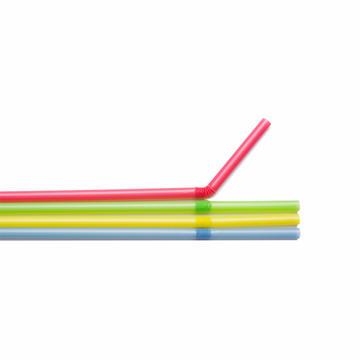
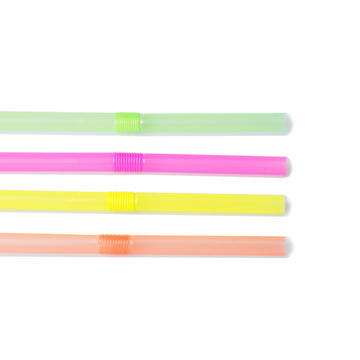
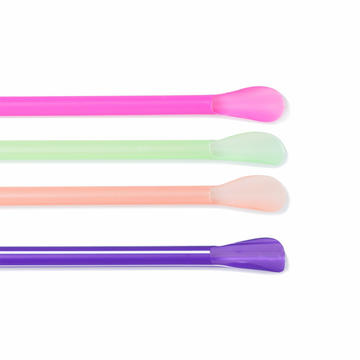
Flexible straws suit cups with lids and any serving where the angle matters, but the corrugated section is a weak point after chewing. Straight straws are the cheapest and most common format. Spoon straws handle blended drinks and desserts where a spoon is not supplied. Jumbo straws at 10 mm and above are the right choice for bubble tea and thick smoothies, where a narrower bore forces customers to draw hard enough to crush the straw.
 PP Jumbo and Giant Straight StrawsCompare six BPA-free PP jumbo and giant straight straw models, wrapped or unwrapped, for hot and cold drinks.View Product →
PLA and other plant-based options: the middle path, with its own rules
Polylactic acid straws sit between paper and plastic in most practical respects. They look and feel close to plastic, deliver a neutral taste and hold up well in cold drinks, which makes them popular where a brand wants to remove conventional plastic without accepting paper's short wet-strength window. The trade-off is heat sensitivity: PLA softens at a relatively low temperature, so it belongs in cold applications and needs protection from summer warehouse heat and direct sunlight during transport.
Compostability claims also need care. PLA composts industrially under controlled conditions, not in a home compost heap and not in a landfill. If the straw carries a compostable logo, the packaging must state the correct disposal route, or the claim becomes a compliance exposure rather than a marketing asset. Buyers in markets with strict green-claims rules should confirm the certification behind the logo before printing it on a menu.
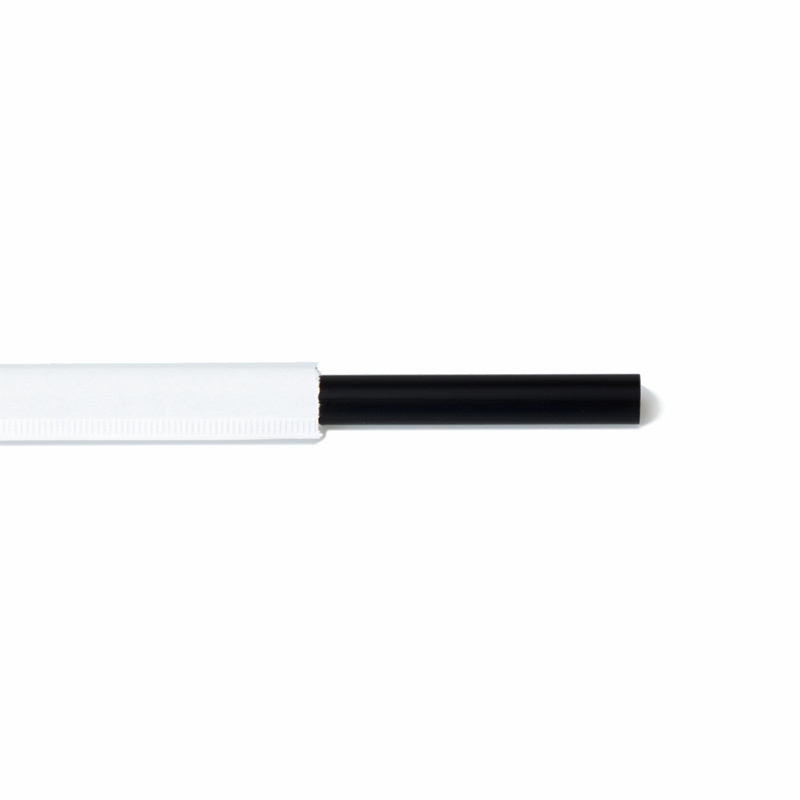 Plant-Based PLA Straight Drinking StrawsPlant-based PLA straws in multiple diameters and lengths for cold drinks; verify industrial compost disposal before making claims.View Product →
Most straw problems are specification problems, not material problems. A drink served in a 700 ml cup with a wide lid needs a bore large enough to deliver acceptable flow; a narrow straw makes the customer work, and a customer who works will chew. Get the diameter right and the material argument becomes far easier to settle.
| Drink type | Recommended bore | Preferred material | Why |
|---|---|---|---|
| Water and soft drinks | 5–6 mm | Paper 2-ply or 3-ply | Short dwell time, low cost sensitivity |
| Iced coffee and cold brew | 6–8 mm | Paper 3-ply or PLA | Longer dwell time demands a better barrier |
| Juices and smoothies | 8–10 mm | Paper 4-ply or PP jumbo | Thickness needs flow and strength |
| Bubble tea and blended drinks | 10–12 mm | PP or wide-bore paper | Toppings must pass; suction must stay low |
| Hot coffee and tea | Not recommended | Lid-based design or PP | Heat degrades paper and PLA quickly |
| Cocktails and spirits | 5–6 mm | PLA or premium paper | Flavour neutrality matters most |
Service format changes the specification
Counter service, drive-through, delivery and self-service dispensers all create different failure patterns. A delivery order may sit in a bag for twenty minutes before the customer takes the first sip, which consumes most of a paper straw's usable life before the drink is even opened. For delivery-heavy menus, packing the straw separately and asking the customer to insert it at the point of drinking — rather than pushing it through the lid at the counter — is a cheap change that reliably extends performance.
Regulation and contract pressure across the main export markets
The European Union's single-use plastics rules restrict the placing on the market of plastic straws within member states, and several national governments have gone further. The United Kingdom applies its own restrictions, and a number of US states and municipalities have adopted local bans or opt-in requirements. Canada has introduced restrictions on certain single-use plastics including straws, with limited accessibility exemptions. The result is not one global rule but a patchwork, and a product that is compliant in one market may be non-compliant in another.
Compliance pressure also arrives through channels other than legislation. Chain accounts write plastic reduction commitments into supply agreements, certification schemes audit packaging composition, and public procurement tenders increasingly score single-use plastic reduction. For a supplier, this means the same customer may need paper in one market and PP in another, and the catalogue has to be able to serve both without a change of supplier.
Before quoting a paper solution into a new market, confirm three things in writing: whether plastic straws are restricted, whether the paper straw's coating qualifies as recyclable or compostable under local definitions, and whether the customer contract already specifies a composition requirement.
Purchase checklist for a first or repeat order
- Confirm the drink types and the average dwell time before choosing a material.
- Set the bore diameter against the drink, not against the cup size.
- Request samples of the exact construction you intend to buy, in the exact colour.
- Run a twenty-minute soak test using the real drink, not water.
- Check the food-contact test reports for the paper grade, adhesive and coating.
- Ask for the storage temperature and humidity limits and check your warehouse against them.
- Confirm diameter tolerance so lids and dispenser bins fit without adjustment.
- Compare landed cost per piece including freight, not the ex-works price.
- Check minimum order quantities per diameter before finalising the menu.
- Verify any compostable or recyclable claim against the certification document, not the artwork.
Two practical habits cut complaints faster than any specification change. First, store straws sealed and away from heat, which protects paper and PLA alike. Second, put the correct straw in front of the correct drink at the point of assembly: a 6 mm paper straw in a thick smoothie will fail regardless of how good the straw is, while a 10 mm bore in the same drink will satisfy most customers even with a paper construction.
Frequently asked questions
How long does a paper straw actually last in a drink?
Most three-ply coated paper straws remain comfortable to use for 15 to 25 minutes in a cold drink. Thick drinks, hot liquids, heavy chewing and long dwell times shorten that window considerably. Uncoated or two-ply straws can fail noticeably earlier.
Why does a paper straw make the drink taste different?
The paper taste comes from the pulp grade, the adhesive and the coating rather than from the paper fibre alone. Low-odour adhesives and a thin, well-applied barrier coating reduce the effect to the point where most tasters cannot detect it in a cold, sweetened drink.
Are plastic straws cheaper in real terms?
Per unit, yes, usually by two to four times compared with paper. Per finished serving, the gap narrows once replacement straws, complaint handling and contract requirements are included. In fast, high-volume cold service the gap stays wide; in slow-served or delivery-heavy service it can close substantially.
Can paper straws be used in hot drinks?
They can survive a very short exposure, but they are not the right choice above roughly 60°C. Heat accelerates softening and can open the glue lines. Plastic, PLA in some constructions, or a lid designed for direct drinking is more reliable for hot beverages.
Are PLA straws stronger than paper straws?
In cold drinks, generally yes. PLA behaves much closer to plastic, delivers a neutral taste and resists moisture well. Its limitation is heat: it softens at a relatively low temperature and must be stored and transported away from high heat and direct sunlight.
Do compostable straws break down in a normal bin?
No. Industrially compostable materials need controlled composting conditions. In landfill or in a home compost heap the process is very slow. The packaging should state the correct disposal route, and the claim should be backed by a certification document.
What is the most common cause of straw complaints?
Bore diameter matched to the wrong drink. A narrow straw in a thick drink forces customers to draw hard, crush the straw and chew it, which causes failure in both paper and plastic. Getting the diameter right removes most of the complaint volume before the material question is even raised.
How should paper straws be stored before use?
Sealed in the original carton, below roughly 30°C and away from dishwashers, steam tables and damp back-of-house corners. Paper and PLA both absorb ambient moisture, and a straw that starts the serving already hydrated will fail several minutes earlier than it should.