
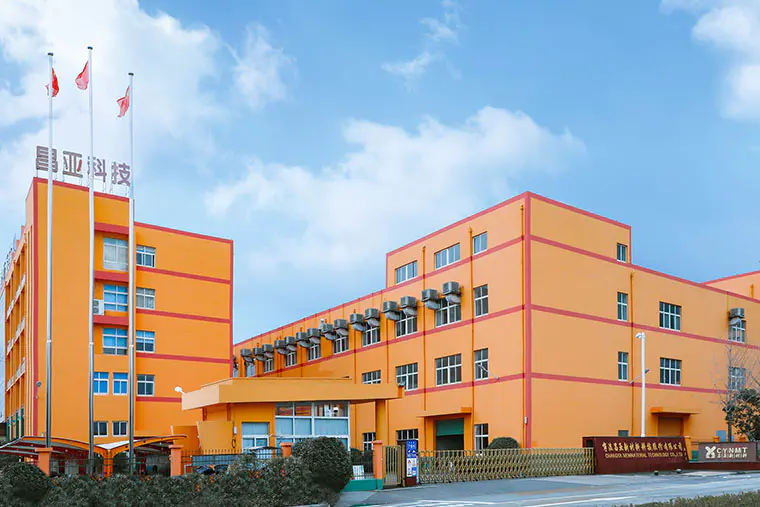
Changya New Material Technology Co., Ltd. was founded in 2013, and the group is headquartered in Ningbo, China. It is a limited liability company integrating R&D, production and sales. As China Disposable Plastic Plates Manufacturers and Disposable Plastic Bowls Factory, the company mainly produces paper PLA & Plastic disposable tableware, such as straw, cutlery, microwaveable box, hinged box, cup, carry out bag, plate, dinning kit, etc.
Changya New Material Technology Co., Ltd. has developed rapidly since its establishment, with a growth rate of over 30% each year, and has now become an enterprise in the field of high-quality disposable food and kitchen supplies in China. Changya products are mainly sold in the international market, and more than 90% of the products are exported to many regions such as Europe, the United States, and Australia. Changya adopts strict quality control standards for its products and has won a variety of international certifications, including BRC, GMP NSF, ISO 22000, and GMP, and it has passed LFGB, FDA, and other food safety tests. At the same time, it is a member of the international human rights organizations BSCI and Sedex. It has wide recognition and a good reputation in the international market.
The Material Shortlist: Six Options Behind Most Takeout Cutlery Orders Start wi...
View MoreA paddy fiber fork leaves the mold at around 60 °C, still soft enough to flex a...
View MorePaper vs plastic straws: serving time and cost per cup decide the winner, not t...
View MoreFor a 95°C curry with a 20-minute delivery window, bagasse is the safer default...
View MoreThe Short Answer: Biodegradable Is Broad, Compostable Is Specific Every compost...
View MoreOak, ash, pine, cedar, yew, and alder are the woods that should never be used f...
View MoreChangya New Material Technology Co., Ltd. is a China-based manufacturer of disposable foodservice products, producing paper, PLA and plastic tableware since 2013. Our Plates range covers paper plates, crystal (PS) plates, and bowls & trays, supplied to distributors, foodservice chains, event caterers and private-label programmes across Europe, the United States and Australia. We combine in-house R&D, tooling and production with food-safety systems including BRC, GMP, NSF, ISO 22000, HACCP, FSC, FDA and LFGB testing, so each plate specification is matched to its serving condition, not just its diameter.
We structure the Plates category around three product families. Each family addresses a different balance of cost, rigidity, heat tolerance and presentation, and we quote them as separate lines so a mixed container can be built around actual menu use.
Moulded pulp and paperboard plates for hot and cold menu items. Available in white, uncoated and floral printed designs, round and rectangle scalloped shapes. Suitable for catering, picnics, canteens and delivery where lightweight stackability and print branding matter.
Polystyrene (PS) plates with a clear, glass-like finish for cold dishes, desserts, buffets and formal events. The rigid structure supports loaded plates and gives a premium table presentation without the handling cost of real glass.
Injected and thermoformed bowls and trays for soups, sides, meal kits and takeaway. Custom shapes, depths and lid options are available beyond current models, with material choice matched to hot-fill or cold service.
Plate selection starts with the food, not the product photo. Grease, moisture, heat and load weight each push the specification toward a different substrate. We use the following application logic when preparing a proposal.
| Product family | Typical material | Best-fit service | Key selection variables |
|---|---|---|---|
| Paper Plates | Moulded pulp / paperboard, coated or uncoated | Hot and cold catering, picnics, canteens, delivery | Coating type, plate diameter, rim depth, print design |
| Crystal Plates | Polystyrene (PS) | Cold dishes, desserts, buffets, weddings, events | Diameter, clarity, rim profile, load rigidity |
| Bowls & Trays | PP, PS, paperboard, pulp | Soups, sides, meal kits, takeaway combos | Capacity, depth, lid fit, heat resistance, nesting |
For hot menu items above 70 °C with high fat content, we generally recommend a coated paper plate or a PP bowl rather than an uncoated pulp plate. For cold display and event service, PS crystal plates give the clearest presentation and hold shape under load. Where a single programme mixes hot mains and cold sides, we can quote a split container across two families.
Every plate line is defined by a small set of dimensions and performance points. Confirming these at quotation stage avoids tooling changes after artwork approval.
We produce standard plate models and develop custom shapes, sizes and prints under OEM/ODM programmes. Custom work typically covers printed paper plates, branded crystal plates for event hire companies, and bowls or trays with non-standard depths or lid interfaces. Tooling feasibility, artwork separation and minimum order quantities are reviewed together so the design stays inside a workable production window.
For distributors building a private-label range, we can align plate diameters and pack counts with your existing catalogue so the new line drops into current shelf and pallet plans. Printed designs are proofed before mass production, and colour targets are agreed against a physical sample.
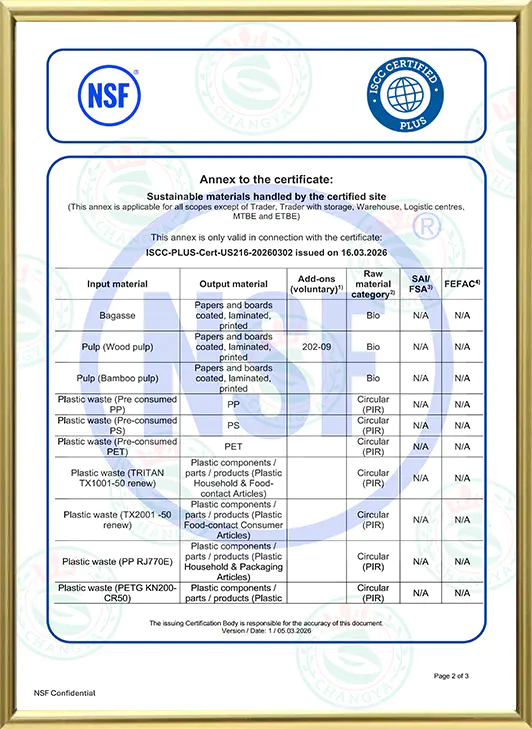
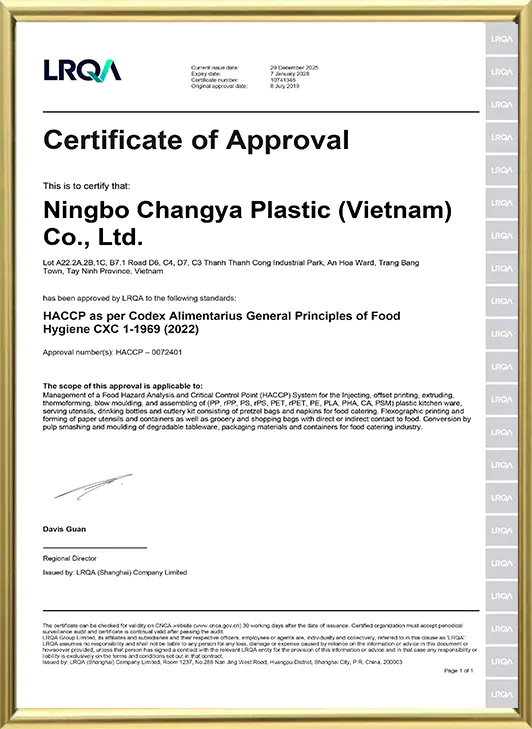
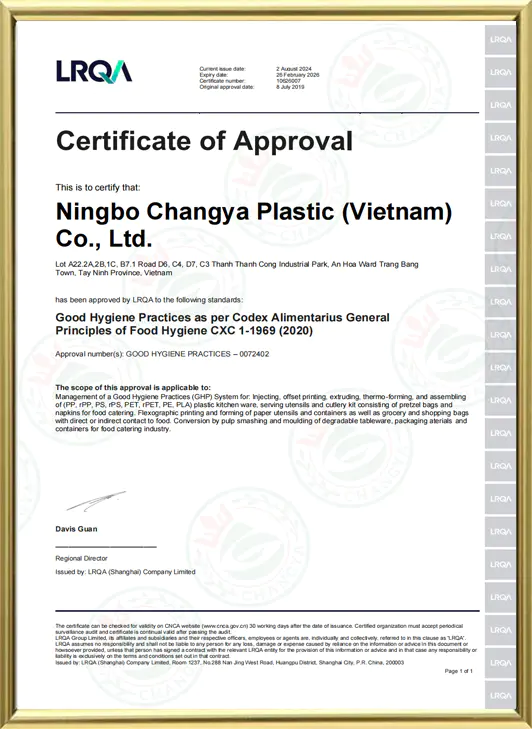
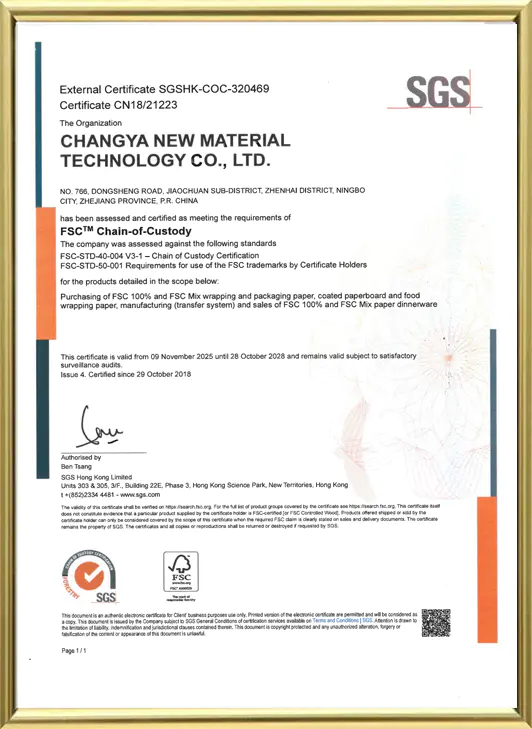
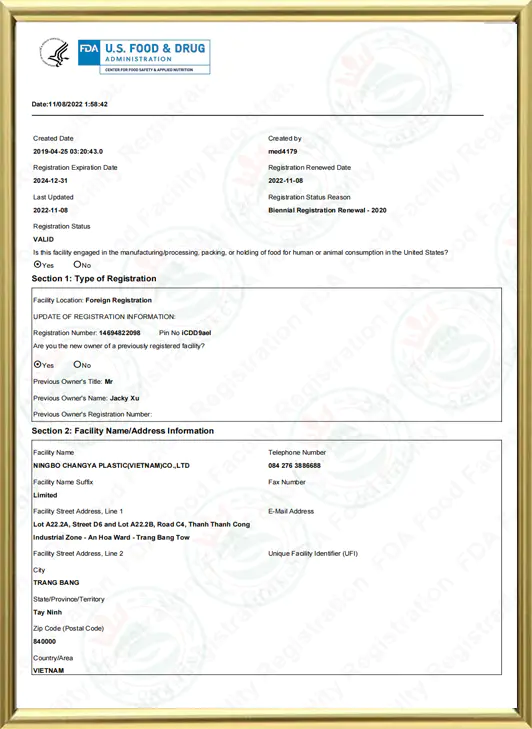
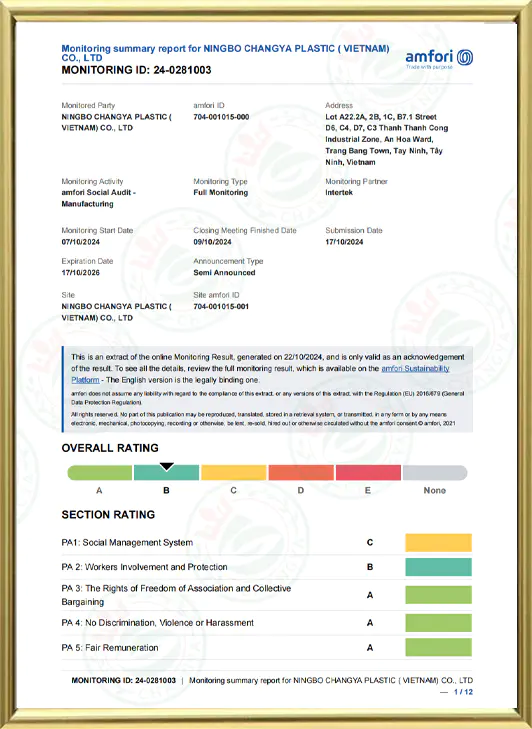
Plates are food-contact products, so our quality system is built around incoming material control, in-process inspection and finished-goods checks. Changya holds BRC, GMP, NSF and ISO 22000 certification, operates HACCP-based process controls, and holds FSC chain-of-custody for paper-based lines. Products are tested against FDA and LFGB food-contact requirements, and our facilities are audited under BSCI and Sedex membership.
For project acceptance, we agree the inspection points with you before production: dimensional check on diameter and rim depth, visual check on print registration and surface defects, and pack-count verification. Batch records and test reports for the relevant standard are issued with the shipment documentation.
Our headquarters and R&D centre are in Ningbo, China, and our Vietnam production base in Tay Ninh Province covers 80,000 m², with further phases under construction. The Vietnam site supports paper product manufacturing and product development, which gives us a second production location for programmes that need regional supply or origin diversification. Capacity for a specific plate line is confirmed against your annual volume, order pattern and packing format during quotation.
A workable plate quotation depends on a short but specific set of inputs. When these are clear, we can propose the right family, size and packing without back-and-forth.
Plates are usually ordered alongside cutlery, cups and straws so a single container covers a full table setting. Our Cutlery range includes PLA, PP, PS, paddy fibre and wooden options, and our Straws range covers PLA, paper and plastic types. These can be consolidated with plates and bowls into mixed containers to reduce freight and handling.
We produce paper plates from moulded pulp and paperboard, crystal plates from polystyrene (PS), and bowls and trays in PP, PS, paperboard and pulp. Material choice is matched to the serving temperature and menu.
Yes. Printed paper plates are part of our standard OEM/ODM offer, including floral and custom designs. Artwork is proofed and colour targets are agreed before mass production.
Crystal plates are made of PS and are intended for cold dishes, desserts and buffet presentation. For hot menu items, we recommend a coated paper plate or a PP bowl instead.
Our quality system holds BRC, GMP, NSF and ISO 22000 certification, with HACCP-based controls and FSC chain-of-custody for paper lines. Products are tested to FDA and LFGB food-contact requirements.
Yes. We produce injected and thermoformed bowls and trays and welcome custom shapes, depths and lid interfaces. Feasibility and tooling are reviewed against your volume and packing requirements.
Send your menu temperature range, required diameter or sample, annual volume, print artwork and destination market. We will confirm the product family, packing format and the applicable food-contact standard, then issue a configuration and price.

PLA straws have significant advantages in raw material selection, which stems from their u...
The biodegradability of PLA straws is one of its significant advantages in the field of en...
Copyright © Changya New Material Technology Co., Ltd.All Rights Reserved.
OEM/ODM Disposable Plastic Plates Manufacturers

 English
 中文简体


