

Changya New Material Technology Co., Ltd. was founded in 2013, and the group is headquartered in Ningbo, China. It is a limited liability company integrating R&D, production and sales. As China Disposable Paper Plates Manufacturers and Printed Paper Plates Suppliers, the company mainly produces paper PLA & Plastic disposable tableware, such as straw, cutlery, microwaveable box, hinged box, cup, carry out bag, plate, dinning kit, etc.
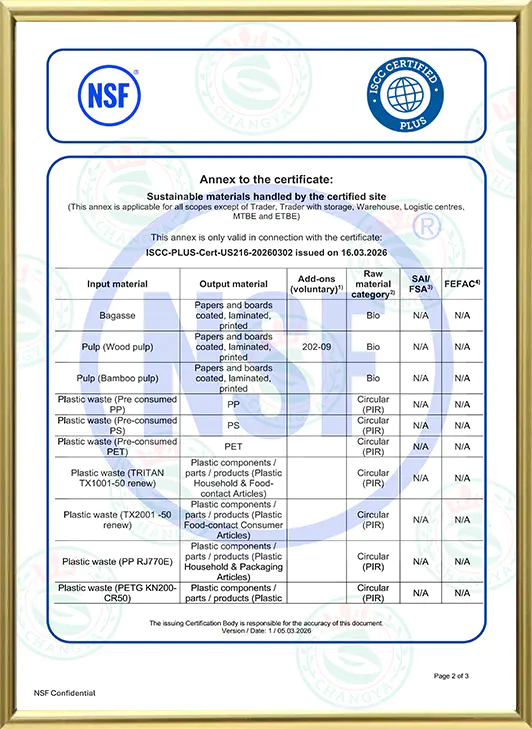
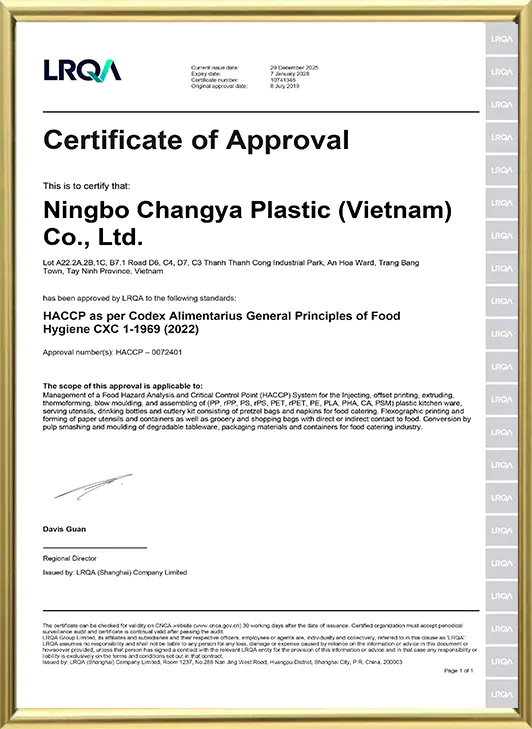
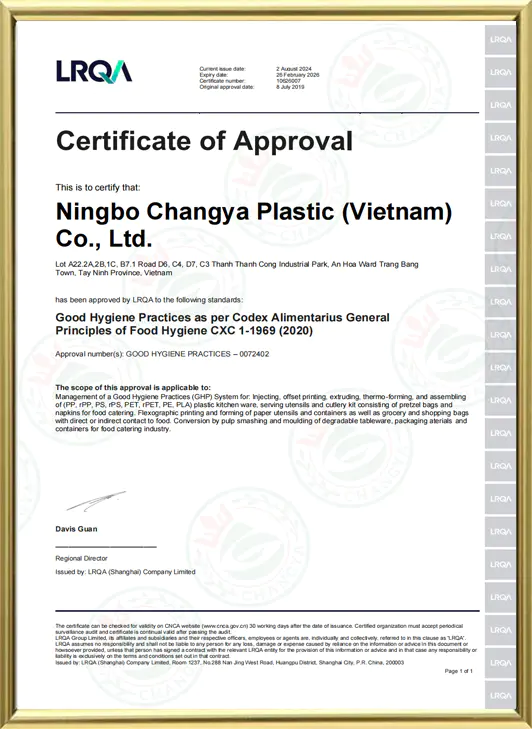
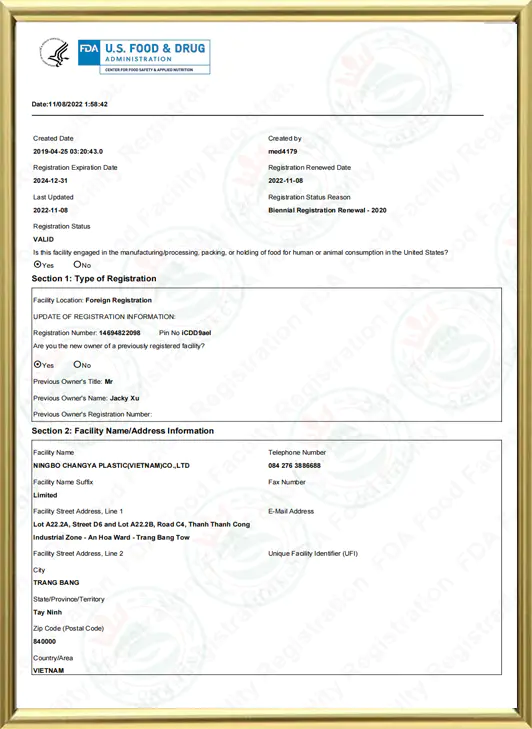
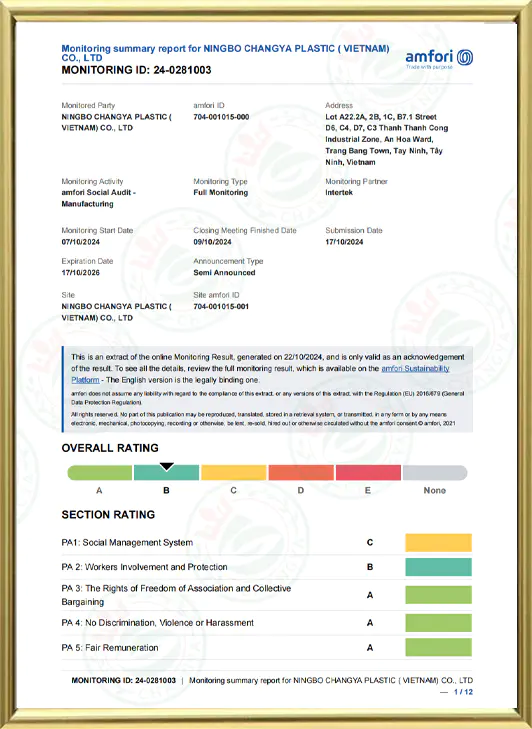
Changya New Material Technology Co., Ltd. has developed rapidly since its establishment, with a growth rate of over 30% each year, and has now become an enterprise in the field of high-quality disposable food and kitchen supplies in China. Changya products are mainly sold in the international market, and more than 90% of the products are exported to many regions such as Europe, the United States, and Australia. Changya adopts strict quality control standards for its products and has won a variety of international certifications, including BRC, GMP NSF, ISO 22000, and GMP, and it has passed LFGB, FDA, and other food safety tests. At the same time, it is a member of the international human rights organizations BSCI and Sedex. It has wide recognition and a good reputation in the international market.
For a 95°C curry with a 20-minute delivery window, bagasse is the safer default...
View MoreThe Short Answer: Biodegradable Is Broad, Compostable Is Specific Every compost...
View MoreOak, ash, pine, cedar, yew, and alder are the woods that should never be used f...
View MoreThe Short Answer: Birch, Beech, and Hard Maple Birch, beech, and hard maple are...
View MoreSwitching to wooden cutlery sounds like a simple sustainability win. But after ...
View MoreImagine a caterer serving grilled chicken and roasted vegetables from a buffet ...
View MoreChangya New Material Technology Co., Ltd. is a Paper Plates manufacturer based in Ningbo, China, producing disposable printed and uncoated paper plates alongside our wider paper, PLA and plastic tableware range. Founded in 2013, we supply foodservice distributors, restaurant chains, caterers and retail private-label programs across Europe, the United States and Australia, with more than 90% of output exported.
Our paper plate range covers decorative floral print, large plain white service plates, uncoated eco-oriented plates and rectangle scalloped formats. Each format is specified around the meal being served: hot or cold food, grease load, holding time, rim strength and the presentation standard of the venue.
We manufacture four paper plate formats that cover the majority of disposable dining situations, from buffet service and outdoor events to takeaway sides and retail multipacks.
| Plate Format | Typical Use | Surface / Print | Configuration Focus |
|---|---|---|---|
| Floral Design Paper Plates | Events, catering, party retail, hospitality | Decorative print, coated face | Print registration, colour consistency, pack count |
| Professional Large White Paper Plates | Main-course service, buffets, canteens | Plain white, coated | Diameter, rim depth, load capacity, rigidity |
| Eco-Friendly Uncoated Paper Plates | Dry foods, bakery, snacks, eco-positioned retail | Uncoated, natural board tone | Board grade, grease behaviour, fibre sourcing |
| Rectangle Scalloped Paper Plates | Platters, sharing boards, dessert and canapé service | Scalloped edge, coated or uncoated | Tray footprint, edge profile, nesting in packs |
Paper plate performance is decided by three variables: board grade, coating and formed shape. A coated plate resists water and grease migration better than an uncoated one, which matters for sauces, dressings and hot menu items. Uncoated plates suit dry or low-moisture foods and support a natural, fibre-visible presentation.
We select board and coating against the actual menu and holding time rather than a generic grade, and we confirm the food-contact surface before print or forming is approved.
A paper plate specification is only useful when every dimension is tied to a filling line, a display unit or a customer expectation. Our proposals state the following values explicitly.
Printed paper plates are a visible brand surface. We work from supplied artwork or develop a print layout around the plate's usable face, keeping the rim and base clear where food contact and forming stress are highest. Floral and seasonal designs are produced as repeatable print programs so reorders match the approved reference.
Customization is handled through the plate format itself: diameter and tray footprint, rim profile, scalloped or round edge, coated or uncoated face, and pack configuration for retail or foodservice channels. Where a program needs a coordinated table setting, we match plates with our Paper Cups and Wooden Cutlery ranges so the full set ships on one specification.
Paper plate production runs on formed-paper lines in our Ningbo operation, with group manufacturing capacity extended through our Vietnam production base in Tay Ninh Province. That dual-site structure supports volume programs and gives us room to schedule repeat orders alongside new tooling.
Before a paper plate program ships, we agree the acceptance basis with the customer and test against it. Typical acceptance covers dimensional check on a sample lot, visual inspection for print and forming defects, a loaded-hold check using the customer's actual food type, and pack count verification.
Documentation supplied with production includes the approved specification sheet, artwork proof, packing specification and the relevant food-safety test reports and certificates for the material used. Pre-shipment samples are retained against the approved reference so reorders can be checked without renegotiating the standard.
Paper plates are light but bulky, so carton and pallet configuration drives freight cost as much as the plate itself. We define sleeve count, carton size and pallet stacking to suit the customer's warehouse and shelf format, and we keep the pack specification fixed between orders so retail planograms and foodservice par levels stay valid.
For distributors holding stock across several plate formats, we coordinate the range so cartons share pallet dimensions where possible, simplifying receiving and storage.
A paper plate quotation is prepared from the working conditions, not from a catalogue number. The following inputs let us propose the right format, board and pack the first time.
| Project Input | Why It Matters |
|---|---|
| Food type, temperature and holding time | Sets coating, board grade and rim depth |
| Plate size or tray footprint | Defines tooling and portion presentation |
| Print artwork and colour reference | Drives plate preparation and proofing |
| Channel: foodservice, retail or distributor | Determines sleeve and carton format |
| Target volume and delivery schedule | Sets production planning and site allocation |
| Compliance and certification requirements | Confirms test reports and fibre documentation |
Yes, when the plate is specified for it. We match coating weight and board substance to the food temperature, grease level and holding time, then verify with a loaded-hold check using your actual menu item. Uncoated plates are reserved for dry or low-moisture foods.
We produce printed plates from supplied artwork, including floral and seasonal designs, with the print area laid out around the plate's usable face. Artwork proof and colour reference are approved before production, and the approved proof is retained for reorders.
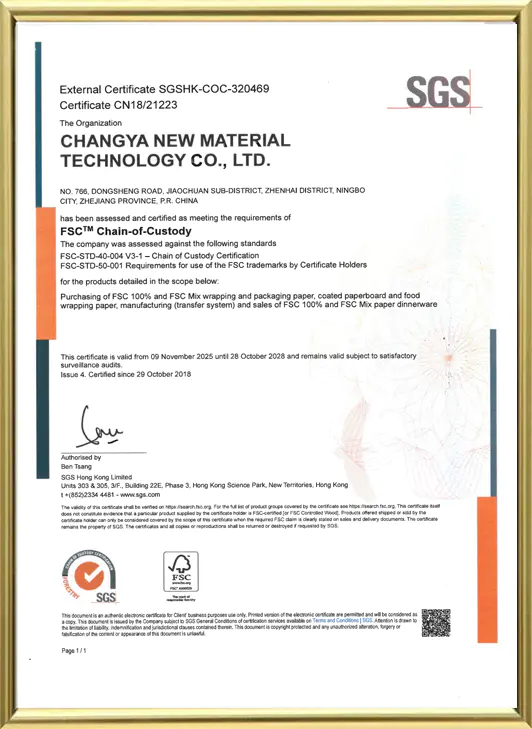
Our quality systems hold BRC, HACCP, ISO 22000, GMP and NSF certification, and our materials are supported by FDA and LFGB food-contact testing. FSC-certified fibre is available where chain-of-custody documentation is required, and we are a BSCI and Sedex member.
Yes. Plates can be coordinated with our Cups, cutlery and straw ranges so a foodservice or retail program receives a matched set on one specification and one delivery schedule.
Packing is defined per program: units per sleeve, sleeves per carton, carton dimensions and pallet pattern. Because plates are bulky relative to their weight, we optimise the carton and pallet layout to reduce freight cost while keeping retail shelf formats intact.
Plate size or tray footprint, food type and temperature, print requirement, channel, target volume and any certification needs. With those inputs we can propose a format, board and pack and return a configured quotation.

PLA straws have significant advantages in raw material selection, which stems from their u...
The biodegradability of PLA straws is one of its significant advantages in the field of en...
Copyright © Changya New Material Technology Co., Ltd.All Rights Reserved.
Custom Disposable Printed Paper Plates Manufacturers

 English
 中文简体


