 English
 中文简体
中文简体Imagine a caterer serving grilled chicken and roasted vegetables from a buffet line. The first thing a guest notices is how the fork feels and whether it bends or cracks when they take their first bite. Now imagine a meal delivery service packing a pasta bowl. The order has to stay elegant, hygienic, and easy to eat even after a short drive. In both cases, wooden cutlery can make a strong impression, but it has to be chosen with care.
Is wooden cutlery good? The honest answer is that it is good for many applications, but not as a universal replacement for all disposable cutlery. It has excellent heat resistance, a pleasant natural texture, and a simpler end-of-life story than plastic. It also has real limits around moisture, splintering, and cost. This guide looks at those limits from a manufacturer's point of view, so you can decide where wood belongs on your table.
Our company has produced disposable tableware since 2013, including paper, PLA, and plastic products alongside wooden cutlery. If you want to understand the manufacturing and quality background behind that claim, take a moment to read our company profile.
What Wooden Cutlery Actually Is
Wooden cutlery is not a single product. It includes forks, knives, spoons, and stirrers made from natural wood, most commonly birch or bamboo. Birch is popular because it has a straight grain, a light color, and a smooth surface that feels comfortable in the hand. Bamboo offers another renewable option, although the material is generally a bit harder and can vary more in color.
Wooden cutlery starts as raw timber that is cut into thin pieces, dried to control moisture, and then shaped into utensils. The shaped pieces are sanded, sorted, and sometimes treated with a light food-safe oil or wax. The treatment matters less than the quality of the sanding. A well-made piece has no rough patches, no hairline cracks, and no visible splinters. The thickness at the handle and the neck must also be enough to resist pressure when someone cuts into a firm piece of food.
For a closer look at the production floor, see how wooden cutlery is made step by step.
What Makes Wooden Cutlery Good in Practice
There are several practical reasons why restaurants, caterers, and households keep coming back to wooden cutlery. These reasons are not just about marketing appeal. They affect the eating experience from the moment the product is opened to the moment it is thrown away.
Heat Tolerance
Wood does not melt or bend when it touches hot food. A plastic fork can soften when eating a hot rice bowl or a plate of steaming noodles. Wood stays rigid because it is a stable natural material. At normal serving temperatures, which are typically between 60 and 95 degrees Celsius, wood remains comfortable to hold and structurally sound. It only begins to burn or char at much higher temperatures, which is not relevant for single-use cutlery used on cooked food.
Rigidity and Strength
Wooden forks and spoons feel more solid than many thin plastic alternatives. Birch is a dense hardwood, so it holds its shape when you press it against meat, vegetables, or a firm pasta fill. A well-designed wooden fork should not flex excessively at the tines. That rigidity makes it easier for people to cut food with the side of a fork or lift a heavy portion without the handle bending.
No Metallic or Plastic Taste
Wood is neutral in flavor. It does not leave a metallic aftertaste like some aluminum or stainless steel tools, and it does not add the faint chemical note that some people notice with low-cost plastic cutlery. This makes wooden cutlery a good choice for delicate dishes where taste matters, such as cold pasta salads, fruit plates, and desserts.
Natural Aesthetics
Wooden cutlery has a clean, natural look that works well with kraft paper boxes, compostable packaging, and modern food presentation. It can make street food feel more artisanal and a catering display look more intentional. The color of birch also photographs well, which is why wooden cutlery is common in food photography and social media content.
Simple End-of-Life Story
Wood is biodegradable in natural environments. It comes from renewable trees, and it does not need to be separated from organic waste with the same urgency as plastic. In a home compost, a birch fork will eventually break down. This is a major advantage for buyers who want to reduce plastic use without relying on an industrial recycling system that may not exist in their area.
The Limitations You Need to Know
Wooden cutlery is not perfect for every meal. The same properties that make it natural and renewable also create some limitations. Being clear about these limits is the best way to avoid complaints from customers or dinner guests.
Moisture Absorption
Wood is porous. It absorbs liquids, oils, and moisture from food. This is not a safety problem when the product is used once and then discarded, but it affects texture. A wooden spoon left in a bowl of soup for thirty minutes will feel softer than it did at the start. The spoon will not melt or fall apart, but the portion near the surface may swell slightly. For this reason, wooden cutlery performs best when food is eaten within a reasonable serving time.
Splinter Risk in Low-Quality Products
Poorly produced wooden cutlery can have rough edges, broken fibers, or tiny cracks that create splinters. This risk is highest with very thin pieces or products made from reclaimed pressed wood. Solid birch cutlery with proper sanding is much safer. A buyer should always check the surface quality, especially around the fork tines and the spoon bowl, before ordering a large quantity.
Higher Cost Than Standard Plastic
Wooden cutlery usually costs more than basic PP or PS cutlery. The raw material is more expensive and the production process includes drying, sanding, and sorting steps that are not needed to the same extent for injection-molded plastic. The price difference can be worth it when presentation matters, but it may not make sense for every high-volume breakfast or casual dining operation.
At a Glance: Pros and Cons of Wooden Cutlery
| Aspect | Wooden Cutlery | What It Means in Practice |
|---|---|---|
| Heat tolerance | High | Handles hot meals without melting or bending. |
| Moisture resistance | Low | May soften if left in liquid for a long time. |
| Stiffness | High | Feels solid and can lift hearty foods with less flex. |
| Splinter risk | Depends on quality | Smooth birch pieces are safe; rough or cracked pieces are not. |
| Chemical additives | Minimal | No plasticizers or synthetic colorants needed. |
| End-of-life | Biodegradable | Breaks down faster than plastic in compost or soil. |
| Cost | Higher than basic plastic | More expensive per piece, but adds perceived value. |
How Wooden Cutlery Compares With Other Materials
Wood is only one option among many. The right material depends on the menu, the packaging, the local waste rules, and the eating time. The table below compares wooden cutlery with other common single-use materials across the factors that matter most.
| Material | Heat Tolerance | Moisture Resistance | Stiffness | End-of-Life |
|---|---|---|---|---|
| Wood | High | Low | High | Biodegradable |
| Bamboo | High | Low | High | Biodegradable |
| PLA | Medium | Medium | Medium | Industrial compost |
| PP cutlery | Medium to high | High | High | Recyclable in some areas |
| PS cutlery | Medium | High | High | Waste-to-energy or recycling |
These are general performance ratings, not laboratory specifications. A specific piece of cutlery can perform better or worse depending on its thickness, design, and finishing quality.
Practical performance chart
The following chart is a practical visual comparison based on how wooden cutlery performs in typical dining situations.
As the chart shows, wood is strongest in heat tolerance, rigidity, and biodegradability. Its weakest point is moisture resistance. That single weakness should guide how you use it.
Is Wooden Cutlery Good for Hot Food and Soups?
Wooden cutlery is generally a very good choice for hot food. It can handle grilled meats, roasted vegetables, rice bowls, noodles, pasta, and most cooked dishes without losing its shape. The handle stays cool enough to hold, and the fork tines do not bend when pressed into a steak or a firm piece of fish.
For soups, stews, and liquid-heavy dishes, the answer is more complicated. A wooden spoon is perfectly fine for a quick meal. If a customer eats the soup within ten to twenty minutes, the spoon will remain functional. However, if the soup sits in the container for a long time before it is eaten, especially in a sealed delivery bag, the moisture can soften the wood. The spoon may still work, but it will feel less crisp and comfortable.
For takeout meals that may travel for more than thirty minutes and are expected to be eaten directly from the container, a moisture-resistant option such as PLA or PP might be a better match. The decision depends less on whether wood is good and more on whether it is good for your specific delivery model.
Safety, Hygiene, and Food-Contact Compliance
Is wooden cutlery safe for food? Yes, when it is made from food-grade raw materials and produced under clean conditions. Solid wood does not require the same additives as plastic. There are no plasticizers, softeners, or synthetic colorants to migrate into food. This makes it attractive for anyone who wants to minimize chemical exposure in short contact packages.
Because wood is porous, some people worry about bacteria. In single-use service, the risk is very low because the product is used once and then discarded. The piece does not have time to accumulate bacteria in the same way a reused kitchen spoon would. The bigger safety concern is poor surface quality. A rough or cracked piece could create a small splinter. That is why a good supplier should inspect each batch for smooth edges, consistent thickness, and visible defects.
Food-contact compliance is also part of the picture. Look for wooden cutlery that meets FDA food-contact requirements or EU LFGB standards. Our manufacturing facilities follow BRC and ISO 22000 quality systems, and we take part in Sedex and BSCI social audits. These certifications do not automatically make a wooden spoon safer, but they make it much easier to verify that raw materials, hygiene controls, and processing conditions are managed consistently.
What to Look for When Choosing Wooden Cutlery
Wooden cutlery is not one uniform product. A thin, light fork from one supplier can feel completely different from a thicker, heavier fork from another. The best way to evaluate a supplier is to request samples and test them with the actual dishes you plan to serve.
A simple checklist for wooden cutlery
- Confirm the wood species: birch is common, but bamboo and other hardwoods are also available.
- Check the surface: run a finger along the edges and tines to detect rough fibers.
- Bend the piece gently: it should not flex dramatically in the handle area.
- Ask about thickness and weight: heavier pieces usually provide a more stable feel.
- Ask for food-contact certificates: FDA, LFGB, or equivalent documentation from the supplier.
- Check whether cutting oils, wax, or other surface treatments are used.
- Consider packaging: bulk boxes are economical, while individual wrapping provides extra hygiene for airlines, hospitals, and caterers.
If you are looking for a practical starting point for cafes, caterers, and delivery kitchens, a three-piece birch set offers a good balance between size and usability.
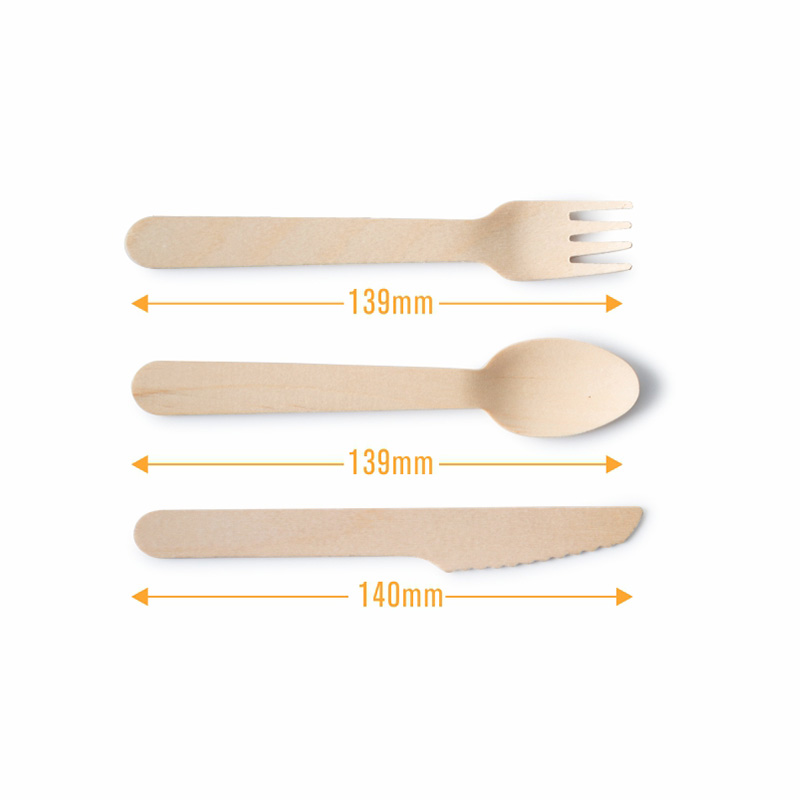 3-Piece Disposable Birch Cutlery Set for Cafes and CaterersThis three-piece birch set suits cafes, caterers, and delivery kitchens that need practical, biodegradable cutlery. Its balanced size works well for meals served soon after preparation, making it a reliable choice for quick-service venues.View Product →
When Wooden Cutlery Is the Right Choice
Wooden cutlery works best when the meal is eaten relatively soon after it is prepared and served. That makes it a natural fit for dining rooms, event catering, office lunches, wedding buffets, food festivals, and takeout orders with quick delivery times.
For dry or lightly sauced dishes, wood has no serious disadvantages. Grilled meat, sandwiches, salads, appetizers, roasted potatoes, baked pastries, and fruit trays all work well with wooden forks and knives. In these situations, the natural look also elevates the presentation of the food.
For high-moisture meals, think about the time between packing and eating. If a meal contains broth, sauce, or soup and will be delivered over a long distance, a wooden spoon might soften. In that case, test the product with the full delivery window rather than assuming it will hold up. Sometimes the solution is simple: choose a thicker spoon or use a different material for the worst-case delivery route.
Environmental Impact: Does Biodegradable Actually Matter?
Wooden cutlery has a clearer environmental narrative than plastic because it comes from a renewable resource. A tree can be replanted, and a birch fork does not depend on fossil fuels for its basic structure. The manufacturing process is also shorter and less chemical-intensive compared with the process used to create and mold plastic resin.
Biodegradable, however, does not mean invisible. In a backyard compost pile with warmth, oxygen, and moisture, birch cutlery will break down over several months. In a dry landfill, it can remain intact for years because decomposition slows dramatically without oxygen and moisture. That is a general fact about all compostable materials, not just wood.
If you plan to market wooden cutlery as compostable, ask the supplier whether the product has been certified under a recognized standard such as EN 13432 or similar. Certification makes the environmental claim easier to verify. If your operation does not have access to an industrial composting facility, wood still performs well in many waste-to-energy systems because it burns cleanly and releases biogenic carbon.
For a complete disposable set designed around biodegradable service, the following birch set is a useful option.
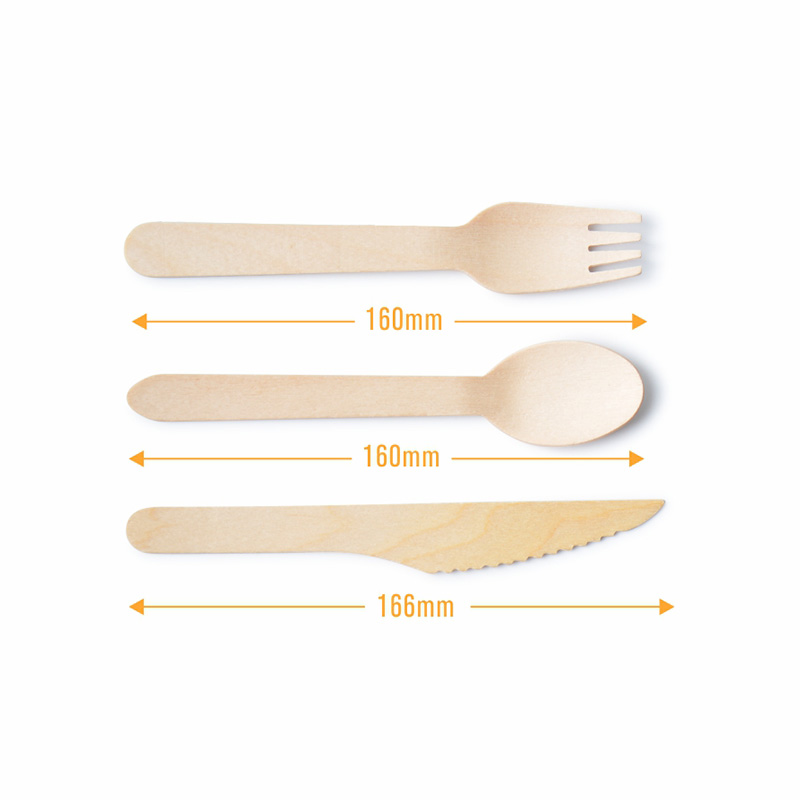 Disposable Biodegradable Birch Cutlery Set for Complete ServiceOffered as a complete disposable set built around biodegradable service, this birch option supports dining rooms, events, and takeout orders. Keep it sealed and dry to preserve its smooth finish and appearance.View Product →
How to Store and Handle Wooden Cutlery
Wooden cutlery is easier to store than many people expect, but moisture is still the main concern. Keep the product in its original packaging or a sealed cabinet to protect it from humidity. If the storage area is very humid, the wood can absorb moisture from the air and begin to swell or develop a rough surface. This is rarely a health issue, but it can affect how the product looks and feels.
Temperature is less critical. Wooden cutlery does not melt in warm environments and does not become brittle in normal cold conditions. Still, it is best to avoid direct sunlight and prolonged heat exposure. A dry, shaded storeroom or warehouse is ideal.
There is no strict shelf life for solid wood, but older stock may pick up dust or a slight odor if stored beside strong-smelling products. Check the packaging conditions and rotate inventory normally. For large orders, ask the supplier how long the product has already been in transit or storage before it arrives.
Wooden stirrers for coffee and tea service
Wooden stirrers are a small but important part of disposable tableware. They are long enough for hot drinks, smooth enough to stir without scratching cups, and they do not leave a papery taste. They are a good choice for coffee shops, office pantries, and catering stations.
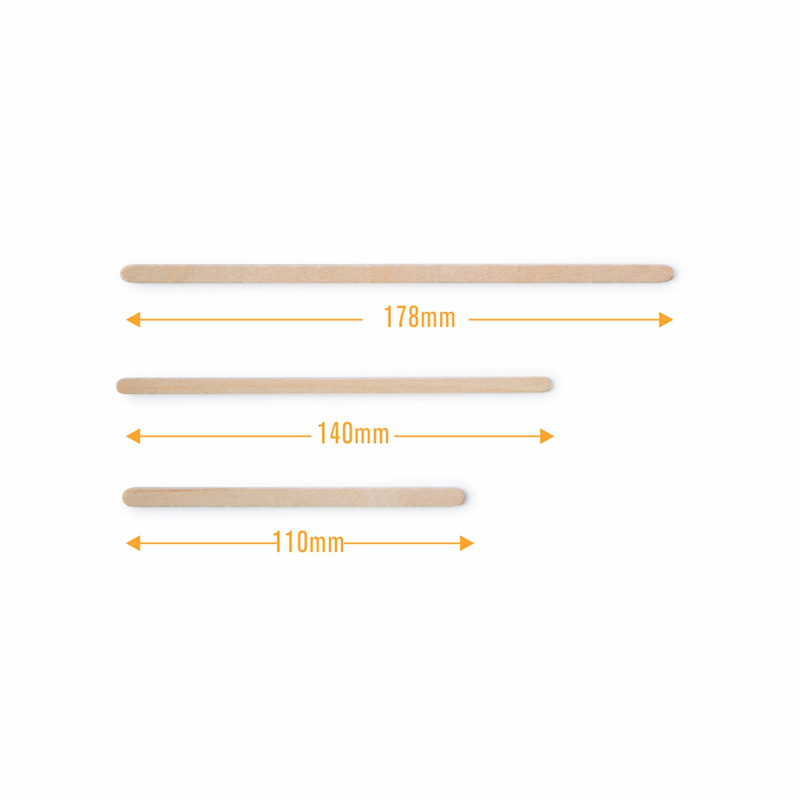 Disposable Birch Stirrer Set for Hot and Cold DrinksThese birch stirrers are long enough for hot beverages, smooth for stirring without scratching cups, and free of papery taste. They fit coffee shops, office pantries, and catering stations, though wood costs more than standard plastic alternatives.View Product →
Cost and Buying Considerations
The price of wooden cutlery varies significantly based on material, thickness, finishing quality, packaging, and order volume. In general, wood costs more than standard PS or PP cutlery. The gap narrows when you compare wood with premium compostable alternatives such as PLA or molded fiber products.
For a restaurant, the extra cost can be justified by presentation and customer reaction. Wooden cutlery adds a handcrafted feel to a meal that plastic cannot match. For an operation serving thousands of meals a day, the cost difference may be too high if the local market does not require an alternative to plastic. Each buyer has to calculate the total cost of the meal experience, not just the price per fork.
Another buying consideration is packaging. Individually wrapped wooden cutlery costs more than bulk cutlery but offers better hygiene for room service, hospitals, airline meals, and premium delivery boxes. If the cutlery is meant to be visible in a buffet line, bulk presentation might be enough. If it is sealed inside a meal kit, a wrapper protects it during transport.
Frequently Asked Questions
Is wooden cutlery better than plastic?
For hot meals, natural appearance, and lower environmental impact, wooden cutlery is often better than plastic. For long exposure to liquid or low-cost high-volume service, plastic may still perform better. There is no single best material for every meal.
Does wooden cutlery splinter?
Quality wooden cutlery should not splinter when used normally. Splinters are more common with thin, poorly sanded, or cracked pieces. Check the tines, edges, and handle finish before buying a large quantity.
Can wooden cutlery be used for hot food?
Yes. Wooden cutlery can handle hot grilled food, pasta, rice, vegetables, and fried dishes without melting or bending. It is less ideal for foods that sit in liquid for a very long time because the wood may become soft.
Is wooden cutlery recyclable?
Wooden cutlery is biodegradable and can sometimes be composted, but it is not usually collected in standard household recycling bins. Check local waste rules. In many areas, wooden cutlery is treated as organic or general waste.
How long does wooden cutlery stay fresh in storage?
Solid wood does not spoil quickly, but it can absorb moisture, dust, or odors if stored incorrectly. Keep it in a dry, clean, well-ventilated area and avoid long exposure to direct sunlight or high humidity.
A Quick Buying Checklist for Wooden Cutlery
Before placing an order, compare samples from different suppliers using the same menu items. A product may look good in the carton but fail when used with a hot, oily dish.
- Test the fork with firm food to see if the tines bend.
- Test the spoon in a hot beverage for at least ten minutes.
- Run a napkin across the surface to check for loose fibers.
- Ask whether the wood is food-grade solid wood or pressed material.
- Confirm the supplier can provide the required certificates and testing reports.
- Ask for a finished sample that has been through the same printing, wrapping, and shipping process as the final order.
Final Verdict: Is Wooden Cutlery Good Enough?
Is wooden cutlery good? Yes, for most meals that are eaten within a reasonable time and at a normal serving temperature. It is heat resistant, stiff, visually appealing, and biodegradable. It also avoids some of the chemical and waste concerns associated with petroleum-based plastic. The main drawbacks are moisture sensitivity, potential splinters in low-quality products, and higher cost than basic plastic cutlery.
If you run a restaurant, catering service, or meal delivery operation, wooden cutlery is worth testing against your actual menu. Serve the same dish with a plastic fork and a wooden fork, then wait ten minutes and compare the experience. That simple test will tell you more than a stack of product descriptions. A good supplier will send samples, confirm the wood species, and clearly explain how the product behaves under real conditions. With those details, you can make a decision that balances presentation, performance, cost, and sustainability.