 English
 中文简体
For a 95°C curry with a 20-minute delivery window, bagasse is the safer default. For a 70°C baked pasta, a cold drink, or a dry snack, heat-resistant PLA can be the cleaner fit. The decision is not simply "which material is greener"; it is which material keeps its shape, seal, and surface at your actual serving temperature, fat level, and holding time.
Bagasse molded fiber
Best fit: hot rice, noodles, curry, soup, fried food, catering trays, and takeaway meals that stay above 85°C for a short service window.
Watch: uncoated surfaces can wick oil; thin walls can soften with long steam exposure; confirm the grease barrier and microwave claim.
Heat-resistant PLA
Best fit: warm bowls, pasta, room-temperature meals, cutlery, cold cups, and chilled desserts where rigidity and clarity matter.
Watch: "heat-resistant" is not a single standard; test the exact grade at your food temperature and holding time.
Standard PLA
Best fit: cold drinks, salads, fruit, desserts, dry snacks, and ambient food service below roughly 50–55°C.
Watch: hot soup, oily curry, and microwave reheating can push standard PLA past its softening point.
That distinction matters because "hot food" is not one temperature. A fried chicken box may be packed at 75°C but cool quickly. A sealed soup bowl can stay above 85°C for 40 minutes. A catering tray may be held in a warming cabinet. Each case places a different demand on the material, the lid, the seam, and the coating.
Why Bagasse and PLA Behave Differently With Heat
Bagasse is the fiber left after sugarcane juice is extracted. In tableware production, the fiber is mixed with water, molded under heat and pressure, dried, and often coated or treated to improve water and grease resistance. The result is a dense fiber structure with natural thickness. It does not rely on a thermoplastic melt point in the same way PLA does. That is why many bagasse bowls and plates can hold hot, moist food without immediately losing shape.
PLA is a polyester made from lactic acid. Standard PLA is rigid, clear or white, and easy to thermoform or injection mold. Its weakness is heat: common grades begin to soften around 55–60°C. Heat-resistant PLA grades are crystallized or modified to raise that limit, sometimes into the 80–100°C range. But the improvement depends on grade, wall thickness, food load, and exposure time. An 85°C dish held for 15 minutes is a different test from an 85°C dish held for 90 minutes.
For buyers, the practical result is simple: bagasse is often more forgiving with hot, oily, saucy food; PLA is often more precise for cold or warm food where clarity, tight tolerances, and clean molding matter. Materials such as our bagasse bowls and trays are built around that fiber-first logic. Heat-resistant PLA products, including heat-resistant PLA cutlery, take the opposite approach: they use modified polymer grades to reach a higher working range while keeping the crisp finish and low weight of molded plastic.
Indicative heat bands, not universal ratings
These bands are indicative. A supplier's actual limit can move up or down with coating, density, lid fit, food fat content, and test method. Always ask for a test report for the exact item and food contact condition.
Hot-Food Scenarios: Where Bagasse Wins, Where PLA Fits
The best way to compare bagasse and PLA is to stop treating "hot food" as a category and start treating it as a set of service conditions. The following scenarios are the ones buyers ask about most often.
Curry, stew, and soup
Better default: bagasse bowl with a tested leak-resistant lining or a PP lid system. Standard PLA is usually too soft for long hot-liquid holding. Heat-resistant PLA may work for shorter windows, but the seam and lid fit are the weak points.
Key test: fill at 90–95°C, seal, tilt for 30 seconds, then hold for 30–45 minutes and check for deformation, wicking, and lid lift.
Rice, noodles, and grain bowls
Better default: bagasse or a blended fiber container. The food is hot, heavy, and often saucy. Molded fiber handles the load and steam better than thin standard PLA.
Key test: stack two filled containers for 20 minutes. Check whether the base bows, the lid pops, or condensation softens the wall.
Fried chicken, tempura, and chips
Better default: bagasse with a grease-resistant treatment, or a paperboard tray with a liner. PLA is non-absorbent, but hot oil and trapped steam can make a thin PLA clamshell feel slippery and flexible.
Key test: place fried food at 80–90°C into the closed pack and inspect after 15 and 30 minutes for oil marks, sag, and condensation drip.
Pasta, casseroles, and warm bowls
Better default: heat-resistant PLA or bagasse. If the dish is 70–80°C and not swimming in liquid, heat-resistant PLA can offer better print clarity and a tighter molded finish.
Key test: run the actual sauce, not water. Tomato, cream, and oil behave differently at the seam and rim.
Microwave reheating
Better default: a container explicitly labeled microwave-safe. Bagasse can be suitable for short reheating when specified; standard PLA should not be microwaved. Heat-resistant PLA may still deform in oily food or uneven microwave fields.
Key test: use a domestic microwave at medium power for 60–90 seconds, stir, and repeat. Check the base center, not only the rim.
Cold drinks and chilled desserts
Better default: PLA or PET for clarity and rigidity. Hot-food performance is not the deciding factor here. Bagasse is better reserved for dry or ambient baked goods unless a barrier is added.
Key test: condensation and lid fit after 30 minutes in an ice bath or cold display.
The Real Failure Points in Hot-Food Packaging
Material data sheets rarely show the failure that matters on a delivery route. In practice, hot-food packs fail in three places: the base, the seam, and the lid interface. A material can be heat-resistant on paper and still fail as a finished product because the wall is too thin, the lid is mismatched, or the coating breaks down under grease.
Softening and bowing
Standard PLA loses stiffness as temperature rises. A bowl that feels rigid at room temperature can flex when filled with 85°C curry. Once the base bows, the lid seal opens and leakage becomes more likely.
Oil wicking
Bagasse is fiber-based. Without an effective grease barrier, hot oil can migrate into the wall, leaving dark patches and weakening the structure. Coated grades and liners reduce the risk, but the coating must match the food and the local composting requirement.
Seam creep
A hot liquid puts pressure on the bottom seam and side wall. Thin PLA seams can creep under load; bagasse seams can open if the molded fit is poor. The seam is usually more important than the raw material claim.
Condensation drip
Hot food releases steam. A closed lid traps it, and condensed water can drip back onto fried food or soften a fiber surface. Venting, lid design, and stack height often solve what a material change cannot.
This is why a supplier's sample should be tested as a filled pack, not as an empty shell. Ask for a trial that uses the real food, the real fill weight, the real lid, and the real holding time. A 10°C difference or an extra 15 minutes can expose a weakness that a short bench test misses.
Bagasse vs PLA: A Practical Comparison Table
| Performance area | Bagasse molded fiber | Standard PLA | Heat-resistant PLA |
|---|---|---|---|
| Typical hot-food range | Often suited to 90–100°C short contact; some dense grades claim up to 120°C dry heat | Usually best below 50–60°C | Often rated 80–100°C depending on grade and wall thickness |
| Hot soup or curry | Good when lined and leak-tested | Not recommended for long holding | Possible for short windows; seam and lid must be validated |
| Grease resistance | Depends on coating or barrier; uncoated fiber can wick oil | Non-absorbent surface, but heat softening remains a risk | Non-absorbent, though hot oil can still affect stiffness |
| Microwave reheating | Suitable only when explicitly labeled microwave-safe | Not suitable | Check the exact grade and food fat content; do not assume |
| Rigidity and stackability | Good when wall density and rim design are correct | High at room temperature; lower with heat | Good in warm conditions if the grade is designed for it |
| Surface and print | Natural fiber texture; print is possible but less crisp | Clear, smooth, and precise | Clear or white, with good molded detail |
| End-of-life positioning | Fiber byproduct; industrial compostability depends on coating and certification | Industrial compostable in certified systems, not home compost | Varies by grade and certification; verify the claim |
| Common buying risk | Assuming all bagasse is grease-proof or microwave-safe | Using standard PLA for hot delivery food | Treating "heat-resistant" as a universal temperature rating |
Temperature and Time Testing Before You Buy
A useful supplier trial should mimic the worst realistic condition, not the best one. If your delivery area is 30 minutes from the kitchen, test at 45 minutes. If the food is fried and saucy, test with both oil and sauce. If the pack is stacked three high in a thermal bag, stack it. The goal is to find the point where the pack stops being reliable, then choose a material with margin.
A simple four-stage trial
- Fill at service temperature. Use the real food and the real fill weight. Record the center temperature at packing, not only the surface temperature.
- Seal and handle. Close the lid as staff would, then tilt, shake gently, and stack the pack. Check for immediate leakage and lid lift.
- Hold for the upper time limit. Keep the pack in a thermal bag or warming environment for the longest expected delivery or holding time. Inspect at 15-minute intervals.
- Check after cooling. Some failures appear after the food cools: fiber delamination, coating peeling, base warping, or a lid that no longer grips.
Record five results: center temperature, hold time, visible deformation, oil or water migration, and seam integrity. A material that passes at 80°C for 20 minutes may fail at 90°C for 40 minutes. That difference is often more useful than a generic "heat-resistant" label.
Questions to put in a supplier request
- What is the recommended maximum continuous service temperature for this exact item, not the material family?
- Is the item tested with fatty, acidic, and aqueous food simulants under the relevant food-contact standard?
- Does the lid use the same material, and is the lid fit tested after hot filling?
- Is the grease barrier PFAS-free, and does the coating change the compostability claim?
- Can the supplier provide FDA, LFGB, BRC, ISO 22000, or other relevant documentation for the production site?
- What is the recommended microwave instruction, if any, and what power level and time were tested?
For a hot-food program, the answer should be item-specific. A supplier who answers only at material level is asking you to carry the risk. A supplier who answers with wall thickness, coating, lid fit, test method, and holding time is giving you something you can verify.
Cost, Sustainability, and the Hidden Trade-Offs
Bagasse often costs more per unit than basic plastic, but it can be close to coated paperboard once printing and barrier treatment are included. Heat-resistant PLA usually sits above standard PLA because the modified grade and tighter process control cost more. The lower sticker price can disappear when a thin standard PLA pack leaks, forces a remake, or generates a complaint. The real comparison should include the full pack: base, lid, liner, sleeve, bag, and the labor cost of a failed order.
Sustainability claims also need care. Bagasse uses agricultural fiber left after sugar production, which is a useful resource story. But a bagasse bowl with a plastic lining or a heavy grease barrier is not automatically compostable. PLA is industrial compostable only in certified conditions; it is not a home compost material. Heat-resistant PLA may carry a different certification or none at all. Buyers should ask for the certificate that matches the finished item, not the raw resin.
Cost rule of thumb: compare cost per successful serving, not cost per case. A cheaper pack that fails one order in fifty can cost more than a higher-priced pack that ships cleanly.
There is also a storage cost. Bagasse absorbs moisture from humid air, so cartons need dry storage and sealed pallets. PLA is sensitive to heat during storage and transport; a container left in a hot truck can arrive distorted. Neither material is difficult to manage, but both need storage rules that match the local climate.
Product Options for Hot-Food Programs
A mixed material strategy usually works better than a single-material rule. Use bagasse or plant-fiber packaging where the food is hot, heavy, and saucy. Use heat-resistant PLA where the food is warm, the presentation matters, or the pack needs a precise molded fit. Then standardize lids, labels, and carton counts so the kitchen does not have to relearn every pack.
For sealed hot meals, a one-compartment microwaveable container with a tested lid can reduce the risk of base bowing and seam leakage. It is a practical reference point when you compare bagasse and heat-resistant PLA for delivery and reheating.
 One-Compartment Microwavable PP Meal Prep ContainersBPA-free polypropylene containers with leak-proof lids, available in 800 ml and 1000 ml sizes for wholesale meal prep and reheating.View Product →
For hot-food service where cutlery must stay rigid in warm conditions, plant-fiber cutlery is a useful bridge between molded fiber and plastic. It can pair with bagasse bowls without introducing a second material story at the table.
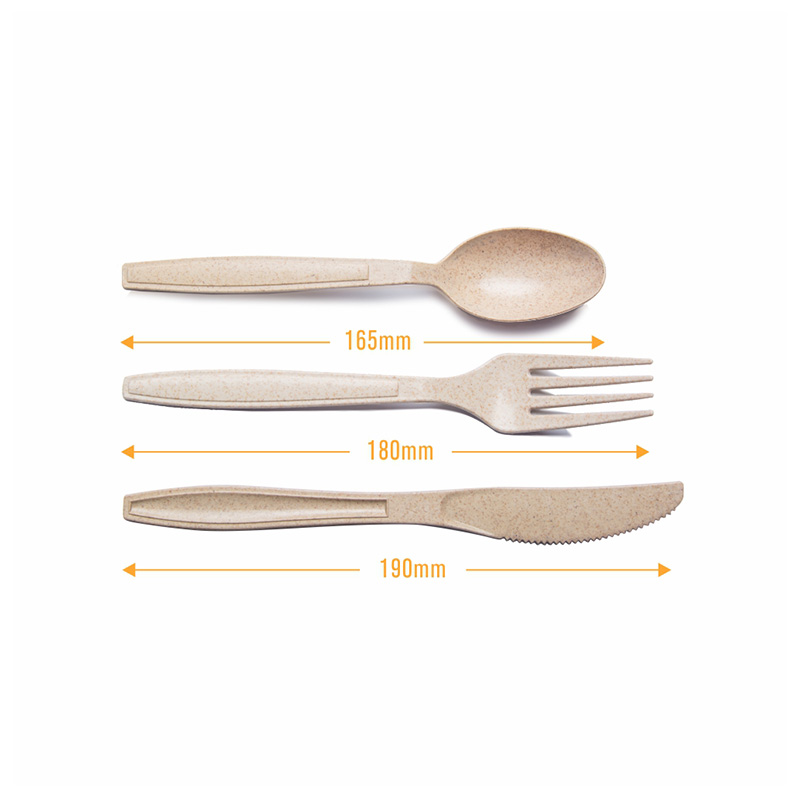 Three-Piece PF Disposable Cutlery Set for Food ServiceKnife, fork, and tea spoon in PF material for takeaway and food-service use, offered as a wholesale disposable set.View Product →
For warm dishes, sides, and catering use, heat-resistant PLA cutlery gives a clean finish and consistent geometry. It is not a substitute for a heat-rated container, but it helps complete a pack where the food is warm rather than boiling.
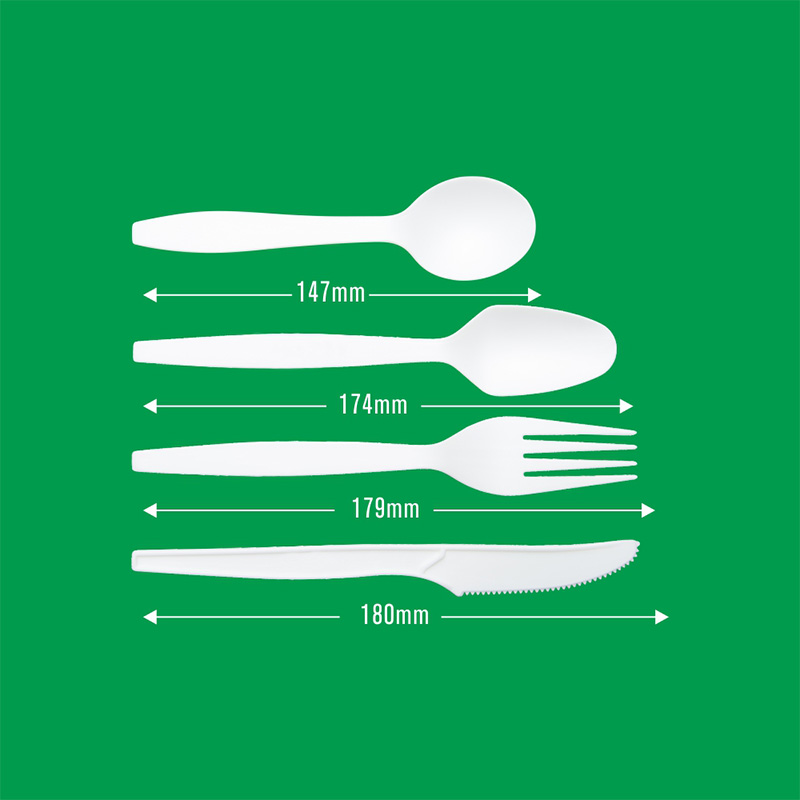 PLA Knife, Fork and Spoon Cutlery SetsBiodegradable PLA cutlery sets with knife, fork, tea spoon, and soup spoon options, heat-, cold-, and grease-resistant for wholesale food service.View Product →
The buying decision should still be based on the food contact surface and the seal. A strong container with a weak lid fails. A good lid on a thin base also fails. Treat the product as a system, and ask for a filled-pack trial before committing to a full order.
Buyer's Checklist for a Mixed Material Program
Use this checklist to keep the comparison practical. It works for a restaurant group, a catering kitchen, a meal-kit operation, or a food manufacturer that needs a hot-fill pack.
Define the temperature
Measure the center temperature at packing and the maximum holding time. Do not use a generic "hot food" label.
Define the food chemistry
Record fat, acid, water, salt, and sauce level. Curry and vinegar dressings stress a pack differently from rice.
Test the full pack
Test base, lid, liner, and label together. A material change without a lid review is not a complete test.
Check the claims
Match compostability, microwave safety, and food-contact claims to the finished item and the destination market.
Plan storage
Keep bagasse dry and PLA cool. Storage conditions belong in the purchase specification, not only in the warehouse.
Set a failure standard
Define acceptable leakage, deformation, and oil migration before the trial. Otherwise every result becomes a debate.
FAQ: Bagasse and PLA Tableware for Hot Food
Is bagasse better than PLA for hot food?
For food above roughly 85–90°C, especially soup, curry, rice, and oily dishes, bagasse is usually the safer choice because molded fiber holds its shape better than standard PLA. For warm food around 70–80°C, a heat-resistant PLA item can be a good fit if the exact grade and lid system have been tested. The answer depends on temperature, fat, and holding time, not the material name alone.
Can standard PLA hold hot soup?
Standard PLA is generally not the right choice for hot soup or long hot-liquid holding. Common grades soften near 55–60°C, and a filled bowl puts load on the base and seam. A heat-resistant PLA grade may improve the range, but it still needs a leak test with the actual soup at the actual serving temperature.
Is bagasse microwave-safe?
Only when the finished item is explicitly labeled microwave-safe and tested for that use. Bagasse can be suitable for short reheating, but grease, sugar, and uneven microwave heating can create hot spots. A bagasse bowl that is fine for 60 seconds of reheating may not be fine for several minutes of high-fat food.
Does heat-resistant PLA mean it can go in the microwave?
No. Heat resistance in a material data sheet does not automatically mean microwave approval. Microwave heating is uneven, and oil or sugar can reach temperatures well above the food's average. Check the supplier's microwave instruction for the exact product, and test with the real food.
Which material handles greasy food better?
PLA has a non-absorbent surface, so it does not wick oil in the same way fiber does. Bagasse can handle greasy food well when it has a suitable grease barrier or liner. The risk with bagasse is an uncoated or under-specified wall; the risk with PLA is heat softening. For hot fried food, a tested bagasse pack or a heat-rated alternative is usually more reliable than thin standard PLA.
Can bagasse and PLA be composted the same way?
No. Bagasse is a fiber material, and its compostability depends on coatings and certification. PLA is compostable in certified industrial systems, not in a home compost bin. Heat-resistant PLA may have different certification. Buyers should ask for the certificate for the finished product and confirm that the local waste system accepts it.
What is the most important test before buying?
A filled-pack hold test. Use the real food, the real fill weight, the real lid, and the longest expected holding time. Inspect for leakage, base deformation, lid lift, oil migration, and seam failure. A supplier's material report is useful, but the filled pack is what your customer actually receives.
Should a hot-food program use only one material?
Not necessarily. A mixed program can be more reliable: bagasse for hot, saucy, heavy meals; heat-resistant PLA for warm dishes, cold cups, and cutlery; standard PLA for chilled or ambient items. The key is to document which pack goes with which food and to keep the lid and sealing method consistent.