 English
 中文简体
中文简体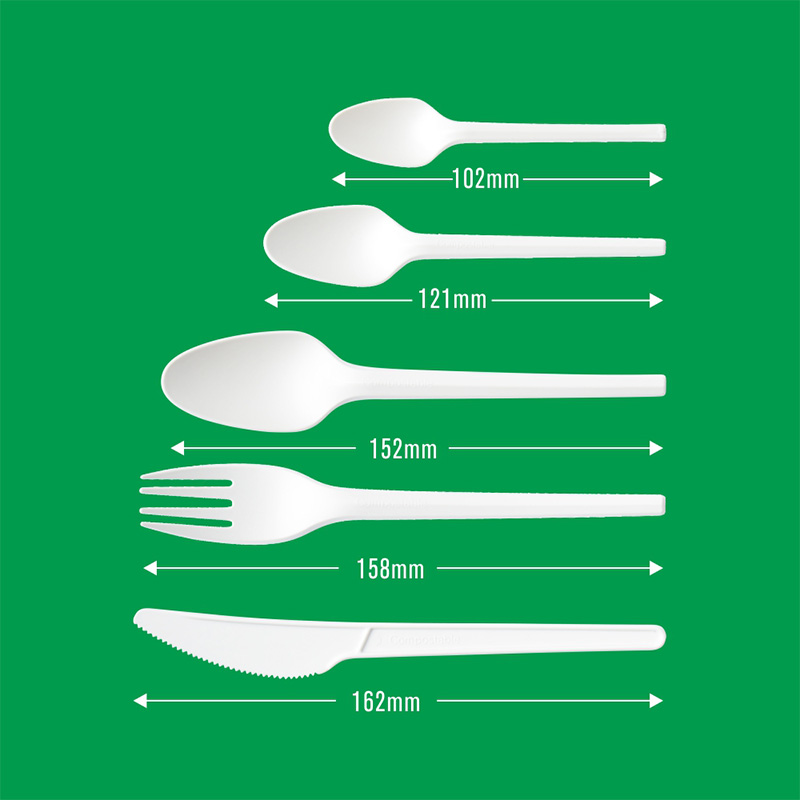
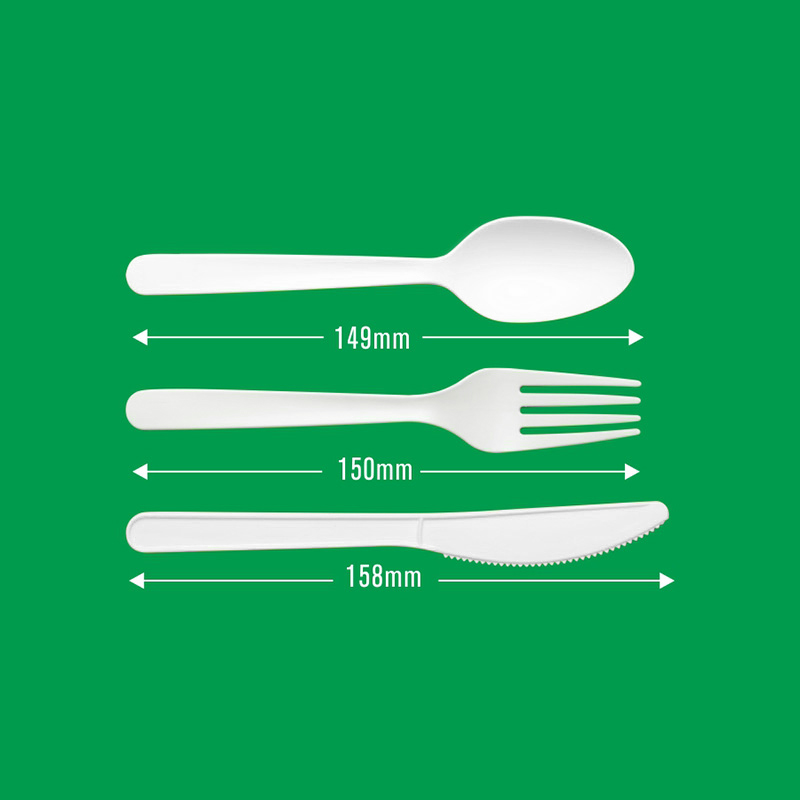
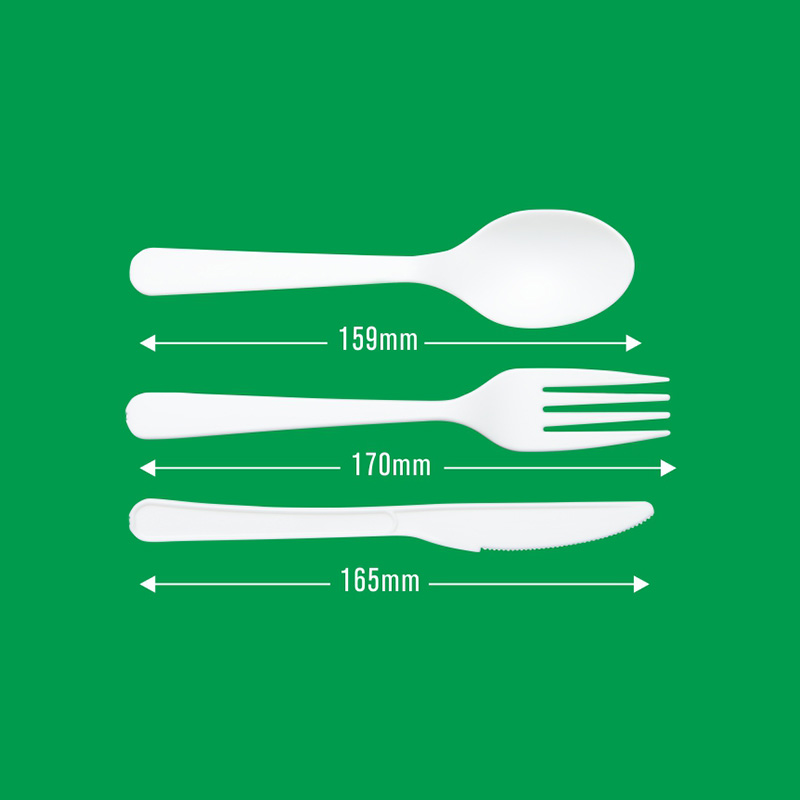
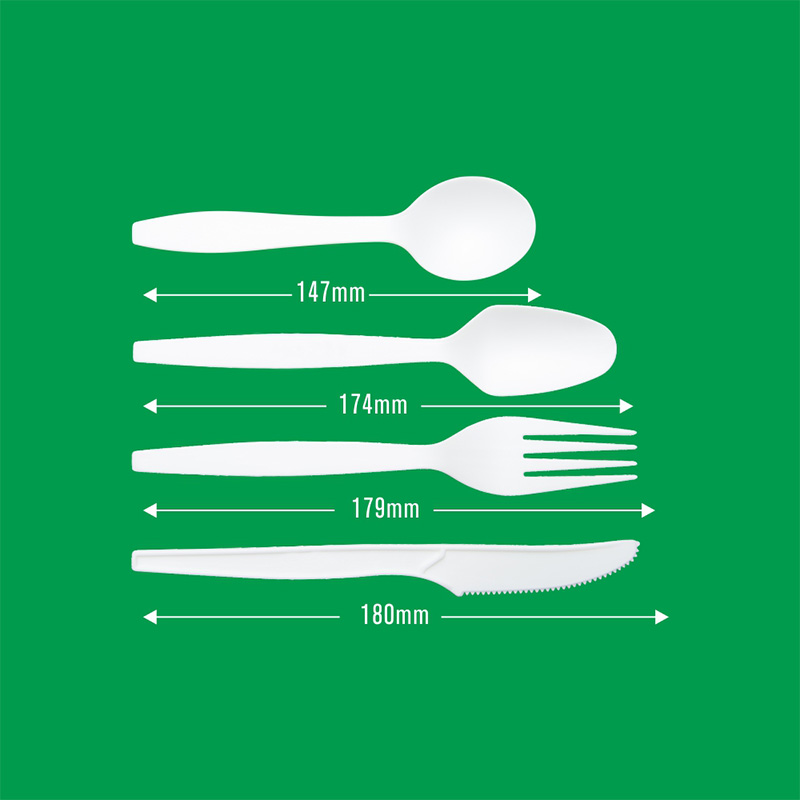
Crystallised for Heat
Controlled crystallisation raises the heat deflection temperature well above that of standard PLA, so stirrers and spoons hold their shape in espresso drinks, lattes, teas and hot chocolate.

Stirrers, mini spoons and dessert forks made from crystallised PLA that stay rigid in hot coffee and tea. Plant-based, certified compostable where tested, and sized to fit the cup, saucer and pastry plate.
Explore more compostable and disposable food service products from the same manufacturing group.
Why ordinary PLA struggles in a hot cup, how crystallisation changes that, and which coffee-shop utensils benefit most.
Heat resistant PLA coffee cutlery is a family of small single-use utensils — stirrers, mini spoons, tasting spoons and dessert forks — made from polylactic acid that has been processed to tolerate hot drinks. Standard PLA is a wonderful material for cold use, but it begins to soften at roughly 55 – 60 °C, which is well below the temperature of a freshly poured espresso, americano or tea. A stirrer made from ordinary PLA can bend in the cup before the sugar has dissolved. Heat resistant PLA solves that problem.
The trick is crystallinity. In its normal state PLA is largely amorphous, meaning its molecules are arranged randomly and the material softens early. When the polymer is nucleated and heat-treated under controlled conditions, the chains organise into ordered crystalline regions, which raises the heat deflection temperature substantially. The resulting product is often described as CPLA, and it typically remains rigid in beverages up to around 85 – 90 °C. The cutlery looks slightly more opaque or matte than clear PLA, which is a visible sign that crystallisation has taken place.
For a café, that translates into very practical benefits. Baristas can drop a stirrer into a latte at the counter and hand it over without worrying that it will curl. Customers can stir a hot chocolate with a mini spoon, then rest it on the saucer without it drooping. And because the product is plant-based and certifiable for industrial composting, the same utensil that fits the cup also fits a sustainability policy that rules out wooden splinters and plastic stirrers.
The production route begins like any PLA product: plant starch is fermented into lactic acid and polymerised into resin. For heat resistant parts, however, the resin is blended with a nucleating agent — often a mineral or a bio-based additive — that helps crystals form quickly. The material is then injection moulded in a heated mould, and the part is held at a controlled temperature for long enough to develop crystallinity before it is ejected.
This extra residence time is why heat resistant cutlery costs slightly more than standard PLA. It also explains why the mould design is critical: thin stirrers need to fill completely and then crystallise without warping, while spoon bowls must stay smooth and free of sink marks. Cycle times, mould temperatures and part geometry are all tuned together, and sample parts are tested in hot water to confirm they hold shape.
Buyers should still be realistic about limits. Heat resistant PLA is designed for hot drinks and hot food at normal serving temperature; it is not an oven-safe or dishwasher-safe product. It can also be affected by very hot soups left standing for a long time. A simple field test — stirring a freshly boiled drink for one minute and then checking for bending — gives a reliable answer for your own operations.
For many coffee shops, a heat resistant stirrer or spoon is a small decision with a large impact. The utensil is touched by every customer, is seen next to the brand's cup, and is often the item that people notice first if it fails. A rigid, plant-based, composting-friendly option strengthens the brand without adding complexity to service.
Finally, think about the whole beverage kit. A heat resistant stirrer often travels with a lid, a sleeve and sometimes a sugar sachet. Choosing items from a single plant-based family means the entire cup can be handled in the same organic bin at the end of the drink. Ask your supplier to propose a matched package of lid, stirrer and sleeve so that colour, finish and disposal advice work together, and so that staff are not faced with a mixed bag of materials at the counter.
Standard coffee cutlery formats are listed below. Length, colour, wrapping and packing can be customised on request.
| Material | Crystallised PLA (CPLA) derived from renewable plant starch |
|---|---|
| Product Types | Stirrer, mini spoon, tasting spoon, cake fork, dessert spoon |
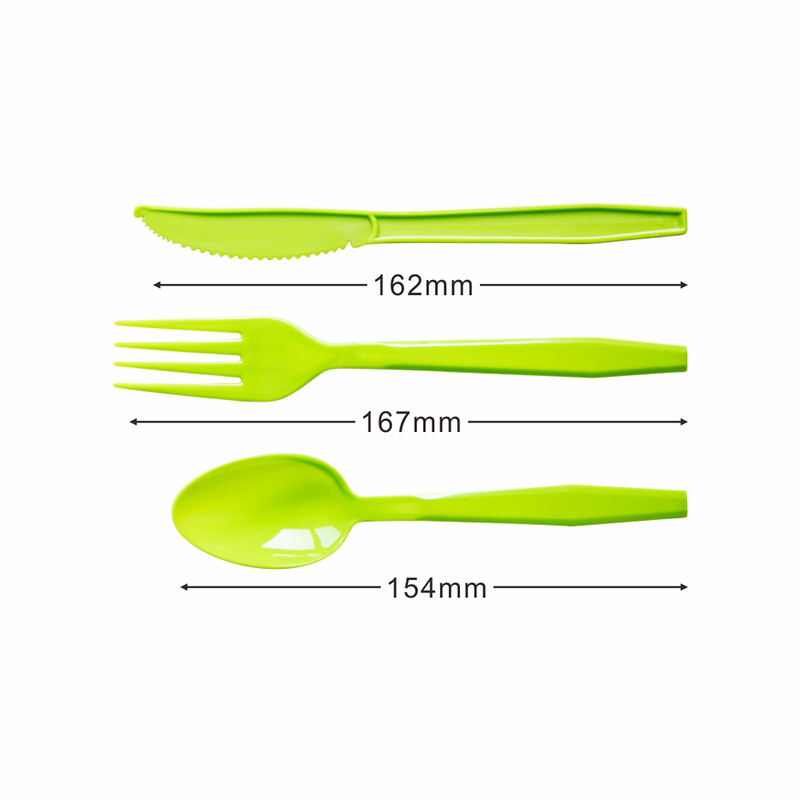
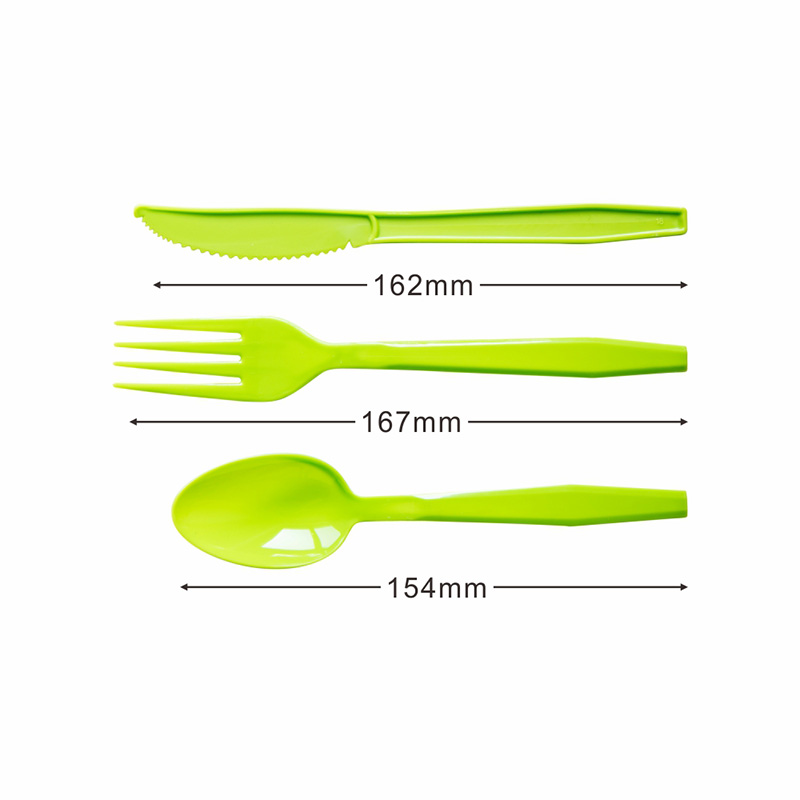
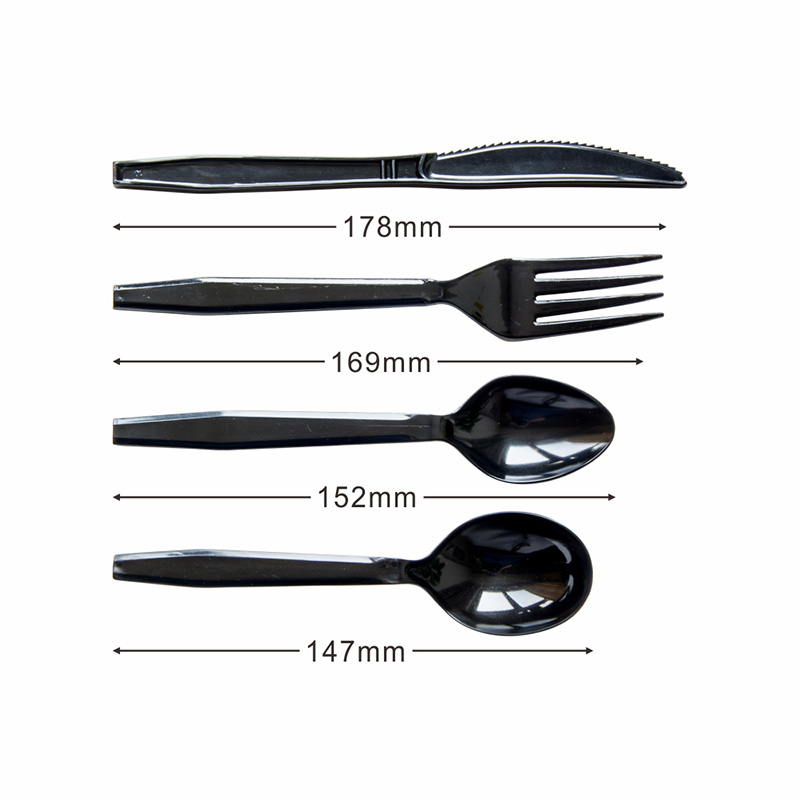
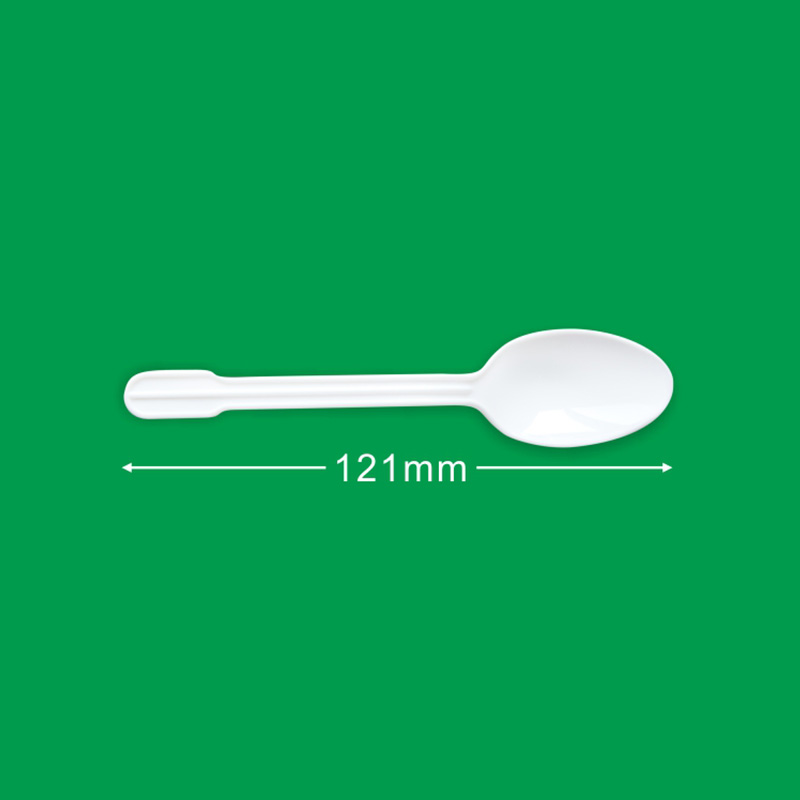
| Length | 90, 110, 130 and 150 mm standard options |
| Heat Resistance | Rigid in beverages up to about 85 – 90 °C for normal service |
| Color | Matte white, black, kraft tone or custom matching |
| Finish | Smooth, burr-free edges with a matte, slightly textured grip |
| Weight | Approximately 0.8 – 3 g per piece, depending on type |
| Packing | Bulk bags, dispenser boxes, individually wrapped or sleeve packs |
| Certification | EN 13432 / ASTM D6400 / OK Compost (depending on item) |
| Lead Time | Usually 18 – 30 days after artwork and deposit confirmation |




Made for the moment the cutlery meets the cup — hot, quick and visible to every customer.
Controlled crystallisation raises the heat deflection temperature well above that of standard PLA, so stirrers and spoons hold their shape in espresso drinks, lattes, teas and hot chocolate.
Unlike wooden stirrers, the moulded surface has no grain, no fibres and no splinters. The edge is smooth against the lip and the stick does not absorb coffee or leave a woody taste.
Stirrers for takeaway cups, mini spoons for espresso and macchiato, tasting spoons for desserts and cake forks for pastries — one material family covering the entire counter.
Produced from renewable corn starch and supported by EN 13432 and ASTM D6400 documents where certified, giving your compostable message a verifiable base.
Thin sections are designed to be stiff enough to stir thick drinks without adding unnecessary weight. Each piece uses only the material required, keeping cost and shipping volume under control.
Individually wrapped sticks, printed sleeves and colour-matched handles let the cutlery reinforce your café identity instead of looking like a generic add-on.
We work with distributors, hospitality groups and retail brands across multiple markets and regions.
















Eight strengths that shape how we develop, manufacture and deliver heat resistant compostable PLA cutlery at scale.
A recognised voice in the sector, participating in the development of industry standards and supported by growing demand for degradable materials at home and abroad.
R&D, production, manufacturing, sales and service are integrated under one organisation, creating an efficient and sustainable operating ecosystem.
Continuous investment in new technology and production, with targeted material development supported by academic expertise in polymer and materials science.
A broad product line paired with strong design and high customisation capability, so different industries can receive products built for their specific needs.
Intelligent production workshops and automated mechanical equipment keep output consistent and lead times predictable, even at high volume.
A global outlook with service to customers worldwide. Group headquarters in Ningbo, China, and a production base in Vietnam.
More than a decade of focus on quality, with international awards and manufacturing carried out strictly to the highest industry standards.
A diversified core management team drawn from benchmark companies in different industries, forming a distinctive corporate DNA.
A recognised position in the industry with participation in the formulation of industry standards, alongside domestic and global support for the environmentally friendly degradable sector.
R&D, production, manufacturing, sales and service are integrated to create an efficient and sustainable enterprise operation ecology.
Vigorous investment in the development and production of new technologies, with targeted technology development supported by professors from the Institute of Materials of the Chinese Academy of Sciences.
An extensive product line with excellent product design and high customisation capability, producing tailored products for the different needs of various industries.
Intelligent production workshops and automated mechanical production equipment create an industry-efficient enterprise.
Positioning global and serving the world, with the group headquarters in Ningbo, China, and a base in Vietnam.
Thirteen years focused on quality, with numerous international awards and manufacturing carried out strictly in accordance with the highest industry standards.
A diversified core management team with professionals from benchmark companies in different industries and management teams in diversified fields, forming a unique corporate DNA.
Heat resistance is confirmed through hot-water immersion tests, while compostability is supported by independent laboratory certification for the base material.
Heat resistant cutlery has two claims to prove: that it tolerates hot drinks, and that it is genuinely compostable. Each is supported by testing and by routine checks at the production line.
European standard for packaging recoverable through composting and biodegradation.
US standard specification for compostable plastics, including disintegration and biodegradation requirements.
Independent scheme confirming suitability for industrial composting streams, depending on the certificate holder and item.
Materials produced to meet food-contact requirements for single-use utensils in the target market.
Sample pieces immersed in hot water for a set time and checked for deflection, discolouration and distortion before release.
Selected certifications and awards that support our compostable and food-contact product range.






How a crystallised PLA stirrer compares with the two most common alternatives at the coffee counter.
Wooden stirrers are cheap and widely accepted, but they can absorb liquid, leave a woody taste and release small splinters, particularly when the cup is hot. Plastic stirrers perform very well in heat, but are now restricted in many cities and are an obvious target for customers who dislike disposable plastics.
Crystallised PLA offers a middle path. It is stiff enough to stir thick drinks, smooth enough to avoid splinters and compostable under industrial conditions. For cafés that sell hot drinks as their main product, it provides a plant-based option that does not droop or soften in the cup.
The table below compares material origin, heat behaviour, taste impact, splinter risk and branding potential. It is a convenient checklist when comparing offers from different suppliers.
| Attribute | CPLA | Wooden Stirrer | Plastic Stirrer |
|---|---|---|---|
| Raw material | Renewable plant starch | Birch or bamboo wood | Petroleum-based |
| Compostable | Yes, industrial | Yes | No |
| Hot drinks | Good to about 85 °C | Acceptable | Excellent |
| Taste transfer | None | Possible | None |
| Splinter risk | None | Possible | None |
| Surface | Smooth, matte | Grained, dry | Smooth, glossy |
| Printed branding | Wrapper or stick | Limited | Limited |
| Cafe acceptance | High | Mixed | Restricted |
Any place where the cutlery will meet a hot drink, a warm dessert or a hand-held pastry.


Changya New Material Technology Co., Ltd. was founded in 2013, and the group is headquartered in Ningbo, China. It is a limited liability company integrating R&D, production, and sales. As China Heat Resistant PLA Coffee Cutlery Manufacturers and Wholesale Heat Resistant PLA Coffee Cutlery Factory,, the company mainly produces paper, PLA & plastic disposable tableware, such as straws, cutlery, microwaveable box, hinged box, cup, carry-out bags, plates, dining kits, etc.
Changya New Material Technology Co., Ltd. has developed rapidly since its establishment, with constant growth each year, and has now become an enterprise in the field of high-quality disposable food and kitchen supplies in China.
Two manufacturing bases with automated production lines and strict quality control at every stage, from raw material to finished carton.

















Choose utensil type, length and colour to match your cup range and counter, then add the packaging that suits your service.
Select stirrers only, or add mini spoons, tasting spoons and cake forks in a single order so the whole coffee counter shares one material and one look.
Pick lengths to suit espresso cups, regular takeaway cups or tall latte glasses. A stirrer that reaches the bottom without leaning out is a small but valued detail.
Matte white, black and kraft tones are standard. Brand-matched colours and tinted finishes can be produced to order and sampled in advance.
Individual paper or compostable film wrapping keeps utensils clean for takeaway and carries your logo, offer or QR code.
Inner boxes sized for common counter dispensers speed up daily restocking and minimise handling by staff.
Combine stirrers with lids, sleeves or sugar sachets in a pre-assembled kit for delivery programmes and events.
A six-dimension comparison of heat resistant PLA, wooden and conventional plastic coffee utensils. Scores are relative to the best performer in each dimension (5=best).
Strong rigidity, no taste transfer and a favourable environmental profile. Cost is above wood because of the crystallisation step.
Low cost and a natural look, but can add a woody taste, soften when soaked and offers few branding options.
Best on cost and heat performance, but lowest eco-rating and increasingly restricted at the point of sale.
How heat resistant PLA compares with wood and plastic on end-of-life time and carbon footprint.
Approximate time to break down under ideal conditions for each material. Values are indicative and vary by environment.
Indicative cradle-to-gate CO₂ equivalent per kilogram of material. Lower is better.
From plant sugar to a wrapped straw on a café counter — five stages that define the quality of the finished product.
Plant sugars from corn starch or sugarcane are fermented by bacteria to produce lactic acid, the building block of the polymer.
Lactic acid molecules are linked into long chains to form PLA resin, which is then pelletised for easy handling and transport.
The resin is melted and pushed through precision dies to form straw tubes with a consistent wall thickness and smooth surface finish.
Tubes are cut to length, the ends are finished to remove burrs, and samples are checked for straightness, diameter and appearance.
Each straw is sealed into its own paper wrapper — plain or printed — then counted into inner boxes and master cartons.

From plant harvest to certified disposal — the full journey of a heat resistant PLA coffee utensil.
Plant starch from corn or sugarcane is fermented into lactic acid, which is polymerised into PLA resin.
The resin is blended with a nucleating agent so crystals can form quickly during moulding.
Utensils are moulded in a heated tool and held to develop crystallinity, giving the part its higher heat resistance.
Stirrers and spoons are placed into hot drinks and desserts, where they stay rigid for the length of service.
Used with the cup and food waste, the utensil breaks down in industrial composting into water, CO₂ and biomass.
With two manufacturing bases and long-standing export partnerships, our heat resistant PLA utensils reach customers across five main regions.
Heat resistant PLA is more stable than standard PLA, but it is still a bio-based polymer and benefits from careful storage. Unsupported thin shapes like stirrers can warp if stored in very hot rooms or pressed under heavy loads.
Keep cartons in a cool, dry area away from sun, ovens and espresso machines. A storeroom shelf is ideal; the top of a coffee machine is not. If cartons sit near a heat source over weeks, edge pieces may curl slightly.
At the counter, dispenser boxes keep stirrers upright and clean, and individually wrapped sticks are the best choice for takeaway. Staff should refill dispensers with clean hands and avoid touching the part that goes into the cup.
If your café composts, choose paper or compostable outer packaging so cups, lids, utensils and food waste can go into one organic stream. Clear signage at the disposal point removes confusion and improves recovery rates.
Tell us the diameter, length, color and wrapping you need. Our team will reply within 24 hours with pricing, packing details and delivery time.
PLA straws have significant advantages in raw material selection, which stems from their u...
The biodegradability of PLA straws is one of its significant advantages in the field of en...
Disposable PP Cutlery is an upstart in the catering industry, and its lightweight design h...
Copyright © Changya New Material Technology Co., Ltd.All Rights Reserved.
Wholesale Heat Resistant PLA Coffee Cutlery Manufacturers
