 English
 中文简体
中文简体
Built-In Insulation
The air gap between layers slows heat transfer, so hands stay comfortable and drinks stay hot longer, even on cold days.

Two-layer paper cups with an insulating air gap that keeps drinks hot and hands comfortable, with no sleeve needed. A solid feel, a smooth printing surface and lids for every size.
Explore more compostable and disposable food service products from the same manufacturing group.
How two layers of paperboard create an insulating air gap, why that removes the need for a sleeve, and what to consider when choosing a double wall cup.
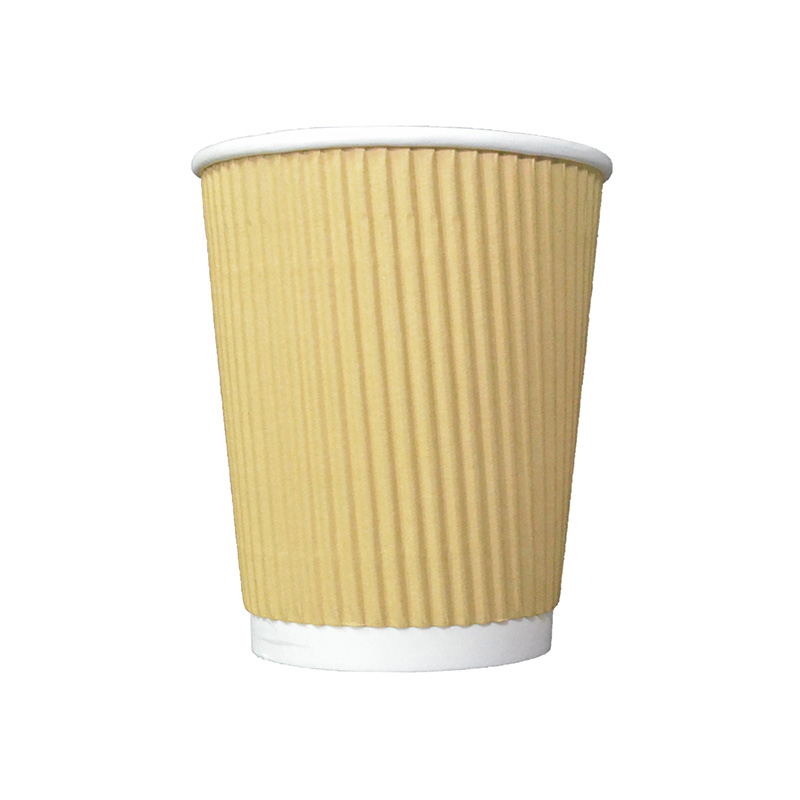
Insulated double wall paper coffee cups are hot beverage cups made from two layers of paperboard: an inner cup that holds the drink and an outer wall bonded around it, leaving a thin air gap between them. That small layer of trapped air is a good insulator. It slows the transfer of heat from the drink to the outside of the cup, so the hand holds a comfortably warm cup instead of a scalding one, and the drink stays hot for longer.
The result is a cup that performs like a cup with a sleeve, but without the extra part. A single wall cup is cheap and light, but it needs a corrugated sleeve or a double-cupping habit to protect hands from hot coffee. A double wall cup is sold as a single unit, which removes the need to buy, store and apply sleeves, and removes the extra waste. Baristas can serve the cup straight from the machine without reaching for another item.
The outer wall is also a canvas. It is smooth and wide, and can be printed in full colour or left in natural kraft. Many brands choose a plain white or black outer wall, which gives a premium impression and is easy to print. A matte finish gives a soft, modern feel. Because the cup is two layers thick, it also feels solid in the hand and does not collapse under a firm grip, which gives customers a sense of quality from the first touch.
Start with the drinks. Espresso-based drinks and teas in 8 and 12 ounce sizes are the most common double wall orders, since customers hold them for longer and appreciate the extra insulation. Very small cups for espresso may not need double wall, while large 16 and 20 ounce cups for latte and chai benefit from the added grip and heat retention.
Next, compare the cost. A double wall cup costs more than a single wall cup, but less than a single wall cup plus a sleeve. If you already provide sleeves with every hot drink, a double wall cup can reduce total packaging cost and speed up service. If you serve most drinks without sleeves because customers drink on-site, single wall may be fine.
Consider the lining and disposal. Standard cups use PE lining, which is hard to separate from the paper in recycling. PLA-lined versions are available for industrial composting where facilities exist, and water-based barrier coatings can offer a plastic-free alternative for some uses. Choose the lining that matches your waste stream and tell customers where the cup should go.
Finally, think about the brand. Because the outer wall is separate from the inner cup, it is easy to print and can carry bold designs without affecting the inner surface. A seasonal design, a sleeve-free premium look or an embossed pattern can set your cup apart on the street. For many cafés, the cup is the most visible piece of marketing they own.
Thermal comfort is only part of the story. The two-layer structure also makes the cup more rigid, which reduces the chance that a firm grip will squeeze lid and drink out of the top. For brands with drive-through service, that sturdiness is valuable because cups are handed through windows, placed in holders and passed between hands several times before the first sip.
Typical double wall cup configurations are listed below. Size, outer finish, lining and printing can all be customised.
| Material | Food-grade paperboard, inner cup 220 – 260 gsm and outer wall 180 – 230 gsm |
|---|---|
| Lining | PE lining or PLA lining on the inner wall; water-based barrier option |
| Wall Construction | Inner cup bonded to outer wall with an air gap |
| Sizes | 4, 8, 12, 16 and 20 oz standard options |
| Rim Diameter | 62 mm, 80 mm and 90 mm, matched to standard lids |
| Heat Range | Suitable for hot drinks up to about 95 °C |
| Outer Finish | Plain white, kraft, black, matte or gloss; embossing optional |
| Printing | Plain or up to six colours on the outer wall |
| Packing | Sleeves of 25 / 50 cups, packed in master cartons |
| Lead Time | Usually 25 – 40 days for stock; 35 – 50 days for printed |




A cup that is comfortable in the hand, steady in the grip and ready for the brand, without needing anything added.
The air gap between layers slows heat transfer, so hands stay comfortable and drinks stay hot longer, even on cold days.
One cup replaces cup plus sleeve. That saves purchasing, storage and handling, and cuts waste at the same time.
Two layers of board feel substantial and resist squeezing, which customers read as quality, even with a simple plain design.
The smooth outer wall takes up to six colours, matte or gloss, so seasonal designs and brand patterns look sharp.
Rim diameters match standard sip and flat lids, in plastic, PLA or paper, so the cup works with your existing lid supply.
Heat-sealed seams and carefully formed bases keep the cup leak-free. Samples from each lot are tested with hot water.
We work with distributors, hospitality groups and retail brands across multiple markets and regions.
















Eight strengths that shape how we develop, manufacture and deliver double wall paper cups and hot beverage packaging at scale.
A recognised voice in the sector, participating in the development of industry standards and supported by growing demand for degradable materials at home and abroad.
R&D, production, manufacturing, sales and service are integrated under one organisation, creating an efficient and sustainable operating ecosystem.
Continuous investment in new technology and production, with targeted material development supported by academic expertise in polymer and materials science.
A broad product line paired with strong design and high customisation capability, so different industries can receive products built for their specific needs.
Intelligent production workshops and automated mechanical equipment keep output consistent and lead times predictable, even at high volume.
A global outlook with service to customers worldwide. Group headquarters in Ningbo, China, and a production base in Vietnam.
More than a decade of focus on quality, with international awards and manufacturing carried out strictly to the highest industry standards.
A diversified core management team drawn from benchmark companies in different industries, forming a distinctive corporate DNA.
A recognised position in the industry with participation in the formulation of industry standards, alongside domestic and global support for the environmentally friendly degradable sector.
R&D, production, manufacturing, sales and service are integrated to create an efficient and sustainable enterprise operation ecology.
Vigorous investment in the development and production of new technologies, with targeted technology development supported by professors from the Institute of Materials of the Chinese Academy of Sciences.
An extensive product line with excellent product design and high customisation capability, producing tailored products for the different needs of various industries.
Intelligent production workshops and automated mechanical production equipment create an industry-efficient enterprise.
Positioning global and serving the world, with the group headquarters in Ningbo, China, and a base in Vietnam.
Thirteen years focused on quality, with numerous international awards and manufacturing carried out strictly in accordance with the highest industry standards.
A diversified core management team with professionals from benchmark companies in different industries and management teams in diversified fields, forming a unique corporate DNA.
Cups are filled with hot water for a set time and checked for leaks, deformation and outer wall temperature to confirm insulation performance.
A hot cup has to be safe to hold and safe to drink from. Documents cover paperboard, lining and inks, and tests cover leaks, rim and insulation.
US food-contact regulations applying to paperboard, linings and inks used in beverage cups.
European framework regulation for materials in contact with food.
Compostability certification for PLA-lined cups, where tested as a system.
Cups filled with hot water and the outside temperature measured to confirm insulation.
Side seams, bases and rim dimensions checked on samples from every lot.
Selected certifications and awards that support our compostable and food-contact product range.






How a double wall cup compares with a single wall cup with a sleeve and with a plain single wall cup.
Single wall cups are cheap, but hot drinks can burn the hand. Adding a sleeve solves the heat problem, but it adds another item to buy and discard, and it needs a staff step.
Double wall cups combine the cup and the insulation in one item. They are slightly more expensive per cup, but the total cost can be similar to single wall plus sleeve, and service is faster and cleaner.
The table on the right compares insulation, handling, cost and waste, helping you decide which format fits your menu and service.
Brand impression is another difference. A double wall cup with a matte black or kraft finish looks like a premium product on the street, and customers often assume the coffee is of higher quality, a perception worth more than the cost difference per cup.
| Attribute | Double Wall | Single Wall + Sleeve | Single Wall |
|---|---|---|---|
| Hand comfort | Excellent | Excellent | Hot to hold |
| Heat retention | Good | Moderate | Moderate |
| Parts to buy | One | Two | One |
| Staff handling | None | Add sleeve | None |
| Feel in hand | Solid | Moderate | Thin |
| Unit price | Mid | Mid | Lowest |
| Waste | One cup | Cup + sleeve | One cup |
| Print area | Large | Cup and sleeve | Moderate |
Hot beverage service where drinks are held and carried, and comfort and presentation count.


Changya New Material Technology Co., Ltd. was founded in 2013, and the group is headquartered in Ningbo, China. It is a limited liability company integrating R&D, production, and sales. As China Insulated Double Wall Paper Coffee Cups Manufacturers and Wholesale Insulated Double Wall Paper Coffee Cups Factory,, the company mainly produces paper, PLA & plastic disposable tableware, such as straws, cutlery, microwaveable box, hinged box, cup, carry-out bags, plates, dining kits, etc.
Changya New Material Technology Co., Ltd. has developed rapidly since its establishment, with constant growth each year, and has now become an enterprise in the field of high-quality disposable food and kitchen supplies in China.
Two manufacturing bases with automated production lines and strict quality control at every stage, from raw material to finished carton.

















Choose cup size, outer finish and lining to match your service, then design the print to carry your brand.
4 to 20 oz, with mixed orders to cover espresso, latte and large takeaway drinks.
White, kraft, black, matte or gloss, with embossing or textured finishes for premium cups.
PE for broad performance, PLA for industrial composting, or water-based barrier for lighter-duty use.
Up to six colours on the outer wall, with full-wrap designs, patterns and seasonal themes.
Sip lids, flat lids or domed lids, in plastic, PLA or paper, with matching colours.
Carriers, stirrers and napkins that match the cup, packed in one shipment.
A six-dimension comparison of double wall, single wall with sleeve and single wall cups. Scores are relative to the best performer in each dimension (5=best).
Best comfort, service speed and premium feel, with good heat retention. Cost is above single wall.
Good comfort with a sleeve, but adds a part, a step and extra waste.
Cheapest and simplest, but hot to hold and thin in feel.
How double wall cups compare with single wall options on packaging per drink and carbon footprint.
Approximate weight of cup plus sleeve where needed. Lower weight reduces material use and transport impact. Values are indicative.
Indicative cradle-to-gate CO₂ equivalent per kilogram of material. Lower is better.
From plant sugar to a wrapped straw on a café counter — five stages that define the quality of the finished product.
Plant sugars from corn starch or sugarcane are fermented by bacteria to produce lactic acid, the building block of the polymer.
Lactic acid molecules are linked into long chains to form PLA resin, which is then pelletised for easy handling and transport.
The resin is melted and pushed through precision dies to form straw tubes with a consistent wall thickness and smooth surface finish.
Tubes are cut to length, the ends are finished to remove burrs, and samples are checked for straightness, diameter and appearance.
Each straw is sealed into its own paper wrapper — plain or printed — then counted into inner boxes and master cartons.

From raw material to recycling — the full journey of an insulated double wall paper coffee cup.
Paperboard is produced from wood pulp and coated inside with PE or PLA for liquid resistance.
Inner cups are formed with sealed seams and bases, and an outer wall is wrapped and bonded.
Outer walls are printed, cups are counted into sleeves and packed in cartons.
The cup holds hot drinks with a lid, and customers carry it without a sleeve.
Used cups go to composting, specialist paper recycling or general waste, depending on lining and region.
With two manufacturing bases and established export partnerships, our double wall cups reach customers across five main regions.
Double wall cups are bulkier than single wall cups because of the extra layer. Allow for larger storage space, and keep cartons off the floor in a dry, ventilated room.
Avoid crushing sleeves, which can deform the outer wall and make the cup look dented. Keep cartons away from steam, heaters and direct sunlight, which can warm the lining.
At the counter, keep cups in covered dispensers and pull them from the base. Match lids at the point of use, and press lids on firmly all round. Do not overfill, since expanding steam can push the lid off.
For drive-through service, hold the cup by the body and not the rim. The extra insulation lets staff hand over hot drinks comfortably and reduces complaints about burned hands.
Tell us the diameter, length, color and wrapping you need. Our team will reply within 24 hours with pricing, packing details and delivery time.
PLA straws have significant advantages in raw material selection, which stems from their u...
The biodegradability of PLA straws is one of its significant advantages in the field of en...
Disposable PP Cutlery is an upstart in the catering industry, and its lightweight design h...
Copyright © Changya New Material Technology Co., Ltd.All Rights Reserved.
Wholesale Insulated Double Wall Paper Coffee Cups Manufacturers
