 English
 中文简体
中文简体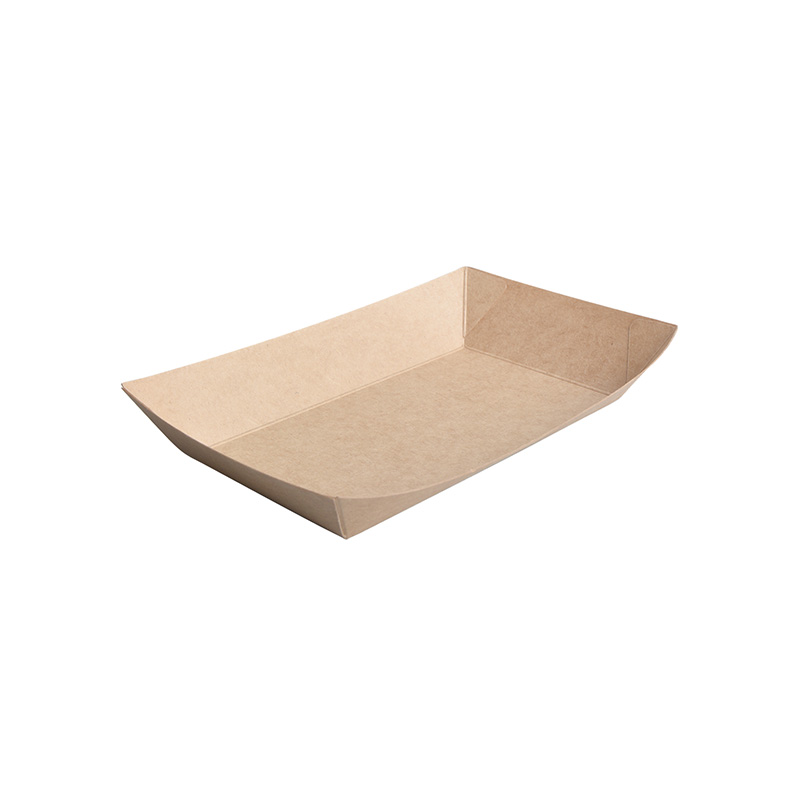
Sugarcane By-Product Fibre
Bagasse is a residue of sugar production, so the container makes use of a material that would otherwise be burned or discarded. It is straightforward to explain to customers and easy to recognise visually.

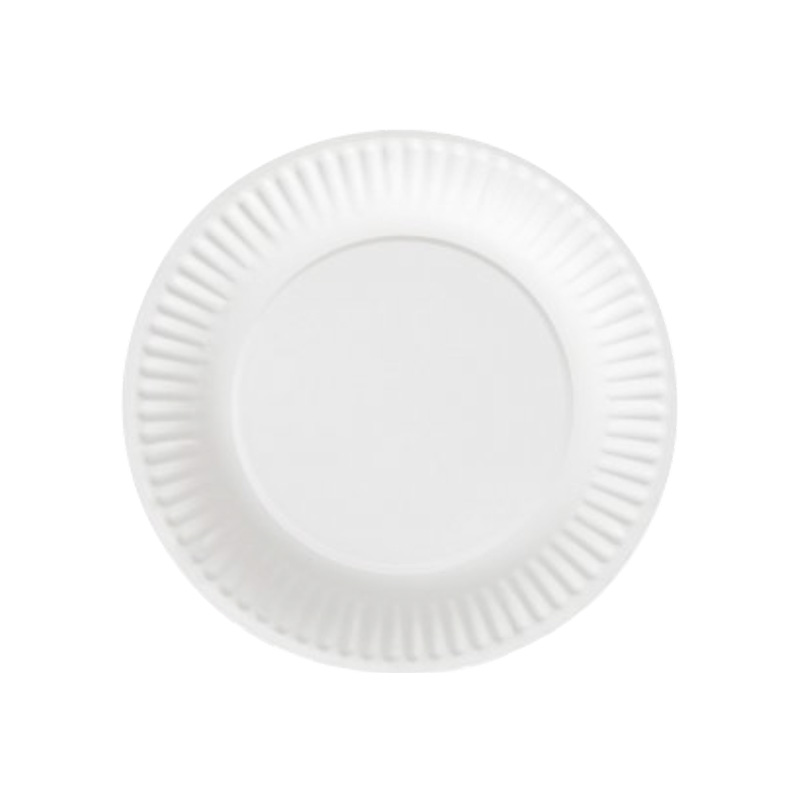
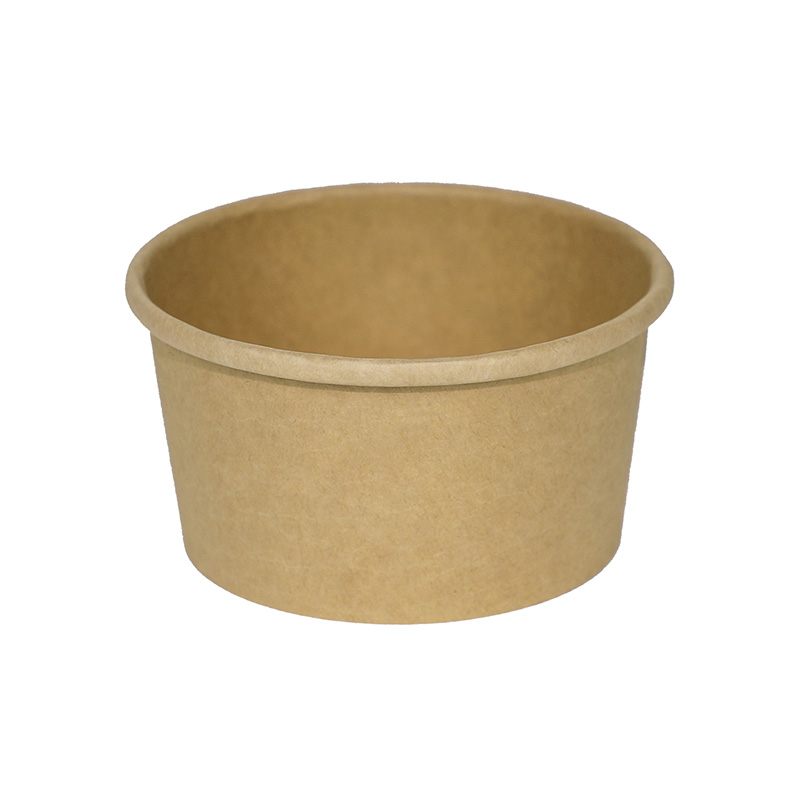
Sturdy, naturally textured bowls, plates and compartment trays moulded from sugarcane fibre. Strong with hot, oily and wet food, microwave-friendly and ready for composting after the meal.
Explore more compostable and disposable food service products from the same manufacturing group.
Where bagasse comes from, why it handles hot and oily food so well, and how moulded sugarcane fibre fits into a compost-minded food service.
Eco friendly bagasse bowls and trays are moulded food containers made from bagasse, the dry fibrous pulp that remains after juice has been extracted from sugarcane. In sugar-producing regions, bagasse used to be burned or discarded. Today, a part of it is cleaned, pulped, pressed into shape under heat and turned into plates, bowls, clamshells and compartment trays. The result is a rigid, naturally off-white container with a softly textured surface that looks and feels distinctly different from plastic or foam.
The product's real strength is how it behaves with food. Moulded fibre handles hot, wet and oily dishes better than ordinary paper. It tolerates steaming rice, saucy curries and fried snacks, and it can generally be used in a microwave for reheating at modest temperatures. It resists cutting, so a customer can slice through a steak or a chicken breast without piercing the tray. These qualities have made bagasse the standard choice for buffets, canteens, caterers and many takeaway concepts.
Bagasse also tells a story that customers can understand quickly. It is an agricultural by-product, it is fibre rather than plastic, and it is fully free of petroleum-based lining in its standard form. A tray that can be composted with the food it carried is a persuasive proposition for events, festivals and venues that already separate organic waste.
After sugarcane is crushed and its juice extracted, the fibrous residue is washed, screened and pulped with water. Natural, unbleached pulp gives a tan or off-white result; bleaching with chlorine-free methods produces a whiter finish. The slurry is poured into moulds, vacuum-formed and then hot-pressed to expel moisture and set the shape. Trimming and, for some items, a drying or sterilising step complete the process.
Each step controls performance. Pulp consistency determines wall thickness and smoothness. Mould temperature and pressure set density, and that density controls how long the tray resists oil. Edge trimming affects how well lids and bowls stack, and a smooth rim improves comfort and appearance. Factories typically test samples with hot oil, hot water and load to confirm that the product meets its specification.
There are also boundaries buyers should understand. Standard bagasse is not designed for long-term liquid storage, and prolonged soaking will soften it. Some markets are concerned about PFAS in moulded fibre, which makes it important to specify PFAS-free products and to request supporting documentation. Reliable suppliers make this information available as part of normal practice.
For disposal, bagasse is among the easiest foodservice items to explain. Where industrial composting is available, certified bagasse breaks down alongside food waste in weeks; in home composting it also decomposes, usually more slowly. For events and venues that run compost collection, bagasse trays turn a messy waste problem into a clear, single-bin solution.
Finally, remember that bagasse is a natural material with natural variation. Fibre colour, small specks and slight texture differences are part of the character of the product and should be viewed as a feature rather than a defect. If your brand requires a very uniform appearance, a bleached white range or a thin food-safe coating can reduce variation, though each option affects the cost and the end-of-life profile, so it is worth discussing the trade-offs before specifying.
Typical bagasse tableware formats are listed below. Shape, size, compartment layout and lid options can be adjusted for your service.
| Material | Moulded sugarcane bagasse fibre, chlorine-free bleached or natural |
|---|---|
| Product Types | Round bowls, plates, rectangular trays, 3 / 4 / 5 compartment trays, clamshells |
| Capacity | 350, 500, 750 and 1,000 ml bowls; trays from 600 ml upwards |
| Wall Thickness | Approximately 0.8 – 1.5 mm depending on item |
| Color | Natural tan or bleached white |
| Heat Range | Hot foods and microwave reheating at modest temperatures |
| Liquid Resistance | Resists oil and water for service periods of a few hours |
| Lid Options | Matching bagasse lid, clear PLA lid or PET lid |
| Certification | EN 13432 / ASTM D6400 / BPI (depending on item); PFAS-free option |
| Lead Time | Usually 20 – 35 days after specification and deposit confirmation |




Strong, natural and clear in their message — the container for events, canteens and kitchens that want fibre packaging that works.
Bagasse is a residue of sugar production, so the container makes use of a material that would otherwise be burned or discarded. It is straightforward to explain to customers and easy to recognise visually.
Dense pressed fibre resists grease and moisture long enough for service and delivery. Curries, stir-fries, gravies and fried items stay in the tray without soaking through.
Walls are thick enough to stay flat when loaded and to resist cutting by knives. Plates and trays can carry a full meal without bending, even when held in one hand.
Most bagasse items can be reheated in a microwave at modest temperatures, which lets customers warm leftovers or office meals without moving them to another dish.
Single bowls, divided trays and clamshells share a common material and look. Compatible lids are available in matching bagasse, clear PLA or PET to suit hot or cold foods.
Certified items can go into industrial composting with food waste, and many venues use bagasse for events where a single bin simplifies sorting and increases recovery.
We work with distributors, hospitality groups and retail brands across multiple markets and regions.
















Eight strengths that shape how we develop, manufacture and deliver moulded fibre tableware and compostable foodservice packaging at scale.
A recognised voice in the sector, participating in the development of industry standards and supported by growing demand for degradable materials at home and abroad.
R&D, production, manufacturing, sales and service are integrated under one organisation, creating an efficient and sustainable operating ecosystem.
Continuous investment in new technology and production, with targeted material development supported by academic expertise in polymer and materials science.
A broad product line paired with strong design and high customisation capability, so different industries can receive products built for their specific needs.
Intelligent production workshops and automated mechanical equipment keep output consistent and lead times predictable, even at high volume.
A global outlook with service to customers worldwide. Group headquarters in Ningbo, China, and a production base in Vietnam.
More than a decade of focus on quality, with international awards and manufacturing carried out strictly to the highest industry standards.
A diversified core management team drawn from benchmark companies in different industries, forming a distinctive corporate DNA.
A recognised position in the industry with participation in the formulation of industry standards, alongside domestic and global support for the environmentally friendly degradable sector.
R&D, production, manufacturing, sales and service are integrated to create an efficient and sustainable enterprise operation ecology.
Vigorous investment in the development and production of new technologies, with targeted technology development supported by professors from the Institute of Materials of the Chinese Academy of Sciences.
An extensive product line with excellent product design and high customisation capability, producing tailored products for the different needs of various industries.
Intelligent production workshops and automated mechanical production equipment create an industry-efficient enterprise.
Positioning global and serving the world, with the group headquarters in Ningbo, China, and a base in Vietnam.
Thirteen years focused on quality, with numerous international awards and manufacturing carried out strictly in accordance with the highest industry standards.
A diversified core management team with professionals from benchmark companies in different industries and management teams in diversified fields, forming a unique corporate DNA.
Declarations and laboratory tests that no fluorinated chemicals are intentionally added, a growing requirement for moulded fibre foodservice packaging.
Moulded fibre has two common questions: is it compostable, and is it free of fluorinated chemicals? Each is supported by documentation and by regular testing at the factory.
European standard for packaging recoverable through composting and biodegradation.
US compostability standard and certification scheme, issued by item and certificate holder.
Laboratory testing for total organic fluorine and declarations that no PFAS is intentionally added.
Pulp and process aids produced to meet food-contact requirements for the destination market.
Oil resistance test, load test, edge inspection and visual check for black specks and pinholes on every lot.
Selected certifications and awards that support our compostable and food-contact product range.






A practical look at how moulded sugarcane fibre compares with rigid plastic and polystyrene foam trays.
Foam is the cheapest and one of the best insulators, but it is banned or restricted in a growing number of places. Plastic trays are clear and strong, but they carry a negative image and are bulky to store and ship.
Bagasse competes on performance and perception. It can handle heat, oil and cutting like a rigid plastic tray, while offering a compostable end of life and a natural look. Its main trade-offs are an opaque appearance and a slightly higher price than foam.
The table on the right sets out raw material, hot-food performance, microwave behaviour, composting and regulatory outlook for each option, which is useful when comparing offers for dine-in and takeaway menus.
| Attribute | Bagasse | Plastic | Foam |
|---|---|---|---|
| Raw material | Sugarcane fibre | Petroleum polymers | Expanded polystyrene |
| Compostable | Yes, industrial | No | No |
| Hot, oily food | Excellent | Good | Good |
| Microwave use | Modest temperatures | Depends on resin | Not suitable |
| Insulation | Good | Low | Excellent |
| Visibility of food | Opaque | Clear options | Opaque |
| Unit price | Mid | Low to mid | Lowest |
| Regulatory outlook | Favourable | Mixed | Restricted |
Settings where hot, wet or oily food has to travel on a sturdy, natural-looking container that can be composted afterwards.


Changya New Material Technology Co., Ltd. was founded in 2013, and the group is headquartered in Ningbo, China. It is a limited liability company integrating R&D, production, and sales. As China Eco Friendly Bagasse Bowls And Trays Manufacturers and Wholesale Eco Friendly Bagasse Bowls And Trays Factory,, the company mainly produces paper, PLA & plastic disposable tableware, such as straws, cutlery, microwaveable box, hinged box, cup, carry-out bags, plates, dining kits, etc.
Changya New Material Technology Co., Ltd. has developed rapidly since its establishment, with constant growth each year, and has now become an enterprise in the field of high-quality disposable food and kitchen supplies in China.
Two manufacturing bases with automated production lines and strict quality control at every stage, from raw material to finished carton.

















Select the items, sizes and lids that suit your service, then add the branding that connects the tray to your brand.
Choose round bowls, square plates, rectangular trays or clamshells in sizes from 350 ml upward. Mixed orders let you cover a full menu from one supplier.
Three, four or five compartment trays can be configured for rice-and-curry sets, school lunches and mixed meals.
Pair bowls and trays with matching bagasse lids, clear PLA lids or PET lids, depending on whether you need heat, visibility or a vapour seal.
Natural tan highlights the sugarcane origin, while bleached white gives a cleaner look. Both are produced without chlorine bleaching.
Logos can be embossed into the tray through the mould, or printed on sleeves, bands and outer cartons to carry your branding.
Test reports and declarations for markets with PFAS restrictions can be supplied with each shipment.
A six-dimension comparison of bagasse, rigid plastic and foam trays. Scores are relative to the best performer in each dimension (5=best).
Excellent eco-rating and heat tolerance, with strong rigidity and good oil resistance. Cost is mid-range, higher than foam.
Good oil resistance and low cost, but weak eco-rating and limited microwave suitability, depending on the resin.
Lowest cost and best insulation, but poor eco-rating, limited rigidity and widespread restrictions.
How bagasse bowls and trays compare with plastic and foam on decomposition time and carbon footprint.
Approximate time to break down under ideal conditions for each material. Values are indicative and vary by environment.
Indicative cradle-to-gate CO₂ equivalent per kilogram of material. Lower is better.
From plant sugar to a wrapped straw on a café counter — five stages that define the quality of the finished product.
Plant sugars from corn starch or sugarcane are fermented by bacteria to produce lactic acid, the building block of the polymer.
Lactic acid molecules are linked into long chains to form PLA resin, which is then pelletised for easy handling and transport.
The resin is melted and pushed through precision dies to form straw tubes with a consistent wall thickness and smooth surface finish.
Tubes are cut to length, the ends are finished to remove burrs, and samples are checked for straightness, diameter and appearance.
Each straw is sealed into its own paper wrapper — plain or printed — then counted into inner boxes and master cartons.

From cane field to certified disposal — the full journey of an eco friendly bagasse bowl or tray.
Sugarcane is harvested and crushed to extract juice, leaving a fibrous pulp called bagasse.
Bagasse is washed, screened and mixed with water to form a pulp slurry, with optional chlorine-free bleaching.
The slurry is vacuum-formed and hot-pressed into bowls and trays, then trimmed and inspected.
Containers carry hot, wet and oily foods, stay rigid and can be reheated in a microwave at modest temperatures.
Used trays are composted with food waste, breaking down in industrial facilities within weeks and more slowly at home.
With two manufacturing bases and established export partnerships, our bagasse bowls and trays reach customers across five main regions.
Bagasse is a natural fibre and reacts to water, so careful storage keeps it performing as designed. Keep cartons sealed, off the floor and in a dry, ventilated area away from steam and spills.
Because moulded pieces are stacked, avoid placing heavy loads on top of cartons, which can crush the lowest layers. Keep trays covered or in their original sleeves to prevent dust from settling on the food surface.
In service, load trays shortly before use so that wet foods do not sit for long periods. For very saucy dishes, pair the tray with a lid or a liner and avoid leaving filled trays overnight, since long contact softens the fibre.
If you run a composting programme, bagasse trays and food waste go together, making sorting simple. Clear labelling and a single bin at the exit of the dining area increases recovery and reduces contamination from non-compostable items.
Tell us the diameter, length, color and wrapping you need. Our team will reply within 24 hours with pricing, packing details and delivery time.
PLA straws have significant advantages in raw material selection, which stems from their u...
The biodegradability of PLA straws is one of its significant advantages in the field of en...
Disposable PP Cutlery is an upstart in the catering industry, and its lightweight design h...
Copyright © Changya New Material Technology Co., Ltd.All Rights Reserved.
Wholesale Eco Friendly Bagasse Bowls And Trays Manufacturers
