 English
 中文简体
中文简体
Seams and Seals Tested
Side seams and base joints are sealed and sampled with hot water on each lot. Any seepage at the base or wall is caught before the bowls are packed.

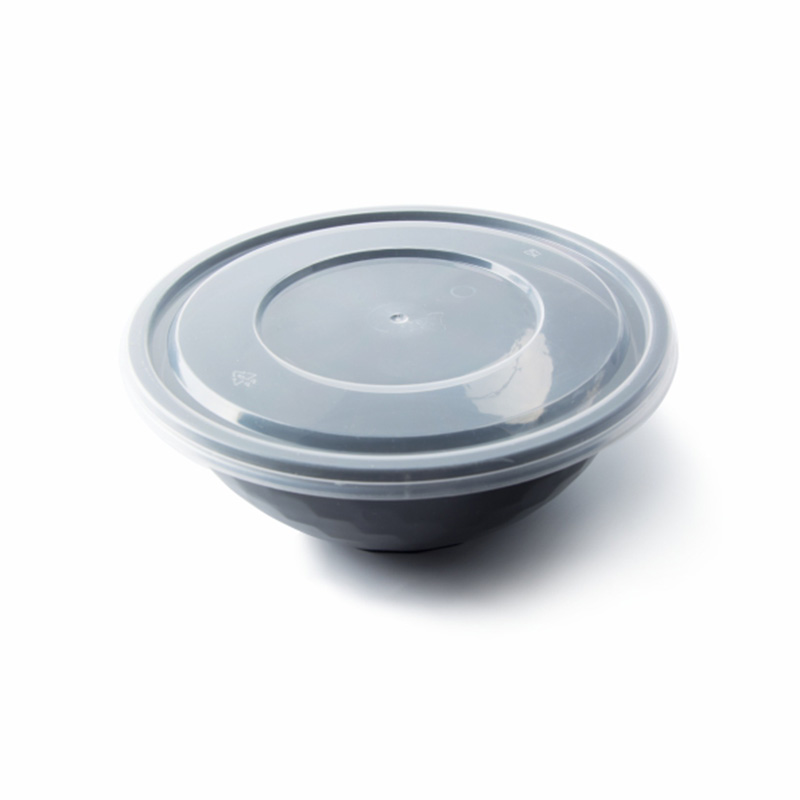
Deep, hot-fill soup bowls with firm snap-on lids that stay put in a delivery bag. Paper or PP, 8 oz to 32 oz, vented or sealed, with matching sleeves and carriers.
Explore more compostable and disposable food service products from the same manufacturing group.
Why liquids demand a different bowl, how lid fit and rim design stop leaks, and how to match bowl depth and lining to the soup.
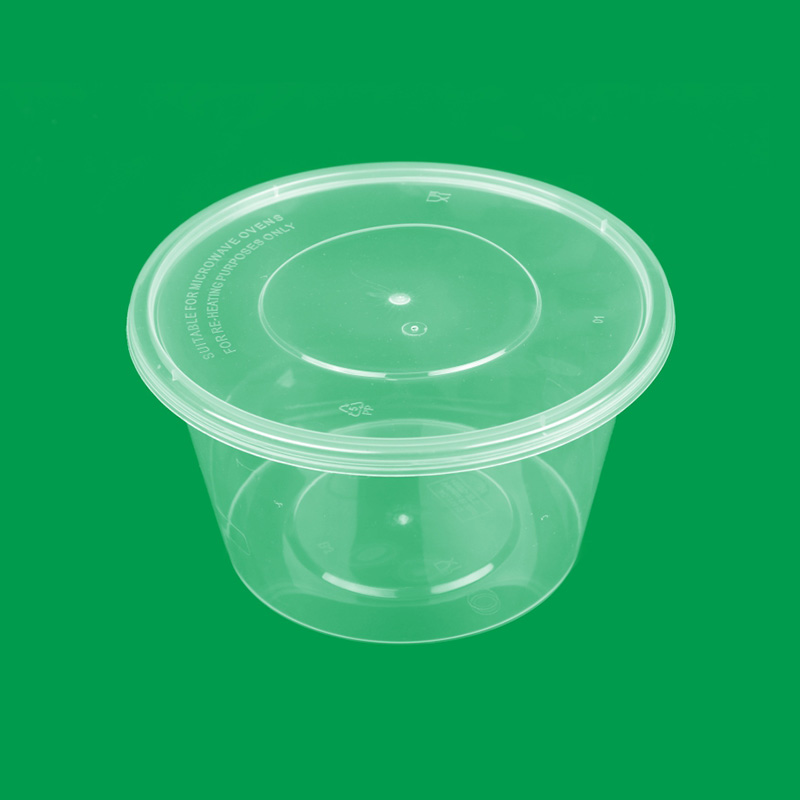
Disposable soup bowls with tight lids are deep, round containers designed to carry liquid food: broths, chowders, bisques, stews, congee, porridge and hot sauces. They are made from lined paperboard or from plastics such as polypropylene, and they are always paired with a lid that locks onto the rim with a firm snap. The defining word is tight. A soup bowl that leaks in a delivery bag is a failure of the whole order, because liquid reaches everything else in the bag.
Soup places three particular demands on a bowl. It is hot, which means the lining must withstand temperature without softening. It is liquid, which means the seam, the base and the rim all have to be watertight. And it is heavy, which means that a bowl with a thin wall can bulge or crack when lifted by the rim. A good soup bowl is therefore deeper, stiffer and more carefully sealed than a general-purpose food bowl.
The lid is the second half of the system. It has to seal against the rim without crushing it, tolerate steam pressure from hot soup and still be removable by customers without a struggle. Many soup lids carry a small vent, which can be sealed or open depending on the design, to release steam and prevent the lid from popping off during heating. Choosing the right lid for the soup is as important as choosing the bowl.
Begin with the soup. A thin broth needs a firm seal and a sturdy bowl; a thick stew can use a shallower bowl with a more open top; a creamy chowder benefits from a lined bowl that does not stain. Hot sauces and gravies need a snug lid and a thicker lining. A clear view of which items you sell most guides the size and shape to buy first.
Next, consider the material. Paper soup bowls with a PE or PLA lining look natural, have a large print area and are comfortable to hold, because the paperboard insulates better than thin plastic. PP bowls are very strong, tolerate reheating in a microwave and can handle long holding times, which makes them suitable for delivery and for customers who plan to reheat. Both materials have a place on the menu.
The lid choice is also about use. A sealed lid is best for delivery and long trips. A vented lid is better when the soup will be eaten soon and steam would otherwise condense inside. A sip-style lid with a drinking hole can suit thin broths and congee for customers on the move. Whichever is chosen, test the lid with the hottest soup on the menu.
Finally, think about the whole pack. A bowl and lid in a carrier or a paper bag, with a spoon and a napkin, forms a complete soup meal. Printed sleeves and stickers can mark flavours and allergens, and a small tamper-evident seal across lid and bowl adds confidence for delivery.
Soup season changes demand sharply. Many operators order double the usual volume in winter and then struggle to store the extra stock. Because soup bowls nest tightly, they take less space than most containers, but advance planning of cartons and lids is still wise, particularly for lids, which are often the first item to run out and can halt service even when bowls are plentiful.
Typical soup bowl configurations are listed below. Capacity, material, lid and printing can all be customised.
| Material | Lined paperboard (PE or PLA) or food-grade polypropylene (PP) |
|---|---|
| Capacity | 8, 12, 16, 24 and 32 oz (240 – 960 ml) |
| Rim Diameter | 98 mm, 115 mm and 127 mm standard options |
| Wall Type | Single wall, double wall or ripple wall paper; thick-wall PP |
| Lid Type | Snap-on lid, vented lid or sip-through lid |
| Temperature Range | Hot soups up to about 95 °C; PP microwave reheating |
| Leak Test | Filled with hot water, inverted and held for a set time |
| Printing | Plain, or up to four colours on paper; labels on PP |
| Packing | Bowls and lids nested separately in sleeves, in master cartons |
| Lead Time | Usually 20 – 35 days for stock; 30 – 45 days for printed |




Built for the one product that spills most — hot, heavy and runny — and tested to stay sealed.
Side seams and base joints are sealed and sampled with hot water on each lot. Any seepage at the base or wall is caught before the bowls are packed.
The rim and lid groove are developed as a pair, so the lid snaps on all the way round and stays on through bumps, turns and stacking in a bag.
A deeper body holds more liquid with less spillage when carried, and the rolled rim gives a firm place for fingers to lift without squeezing the bowl.
Heat-resistant paper linings and PP both handle hot soups. PP bowls also tolerate microwave reheating, giving customers a way to warm leftovers.
Choose a sealed lid for delivery or a vented lid to release steam in dine-out service. Both fit the same bowl, so one range covers different needs.
Bowls nest tightly and lids stack in sleeves, saving storage and helping staff build a bowl, lid and bag quickly.
We work with distributors, hospitality groups and retail brands across multiple markets and regions.
















Eight strengths that shape how we develop, manufacture and deliver soup bowls with lids and hot food packaging at scale.
A recognised voice in the sector, participating in the development of industry standards and supported by growing demand for degradable materials at home and abroad.
R&D, production, manufacturing, sales and service are integrated under one organisation, creating an efficient and sustainable operating ecosystem.
Continuous investment in new technology and production, with targeted material development supported by academic expertise in polymer and materials science.
A broad product line paired with strong design and high customisation capability, so different industries can receive products built for their specific needs.
Intelligent production workshops and automated mechanical equipment keep output consistent and lead times predictable, even at high volume.
A global outlook with service to customers worldwide. Group headquarters in Ningbo, China, and a production base in Vietnam.
More than a decade of focus on quality, with international awards and manufacturing carried out strictly to the highest industry standards.
A diversified core management team drawn from benchmark companies in different industries, forming a distinctive corporate DNA.
A recognised position in the industry with participation in the formulation of industry standards, alongside domestic and global support for the environmentally friendly degradable sector.
R&D, production, manufacturing, sales and service are integrated to create an efficient and sustainable enterprise operation ecology.
Vigorous investment in the development and production of new technologies, with targeted technology development supported by professors from the Institute of Materials of the Chinese Academy of Sciences.
An extensive product line with excellent product design and high customisation capability, producing tailored products for the different needs of various industries.
Intelligent production workshops and automated mechanical production equipment create an industry-efficient enterprise.
Positioning global and serving the world, with the group headquarters in Ningbo, China, and a base in Vietnam.
Thirteen years focused on quality, with numerous international awards and manufacturing carried out strictly in accordance with the highest industry standards.
A diversified core management team with professionals from benchmark companies in different industries and management teams in diversified fields, forming a unique corporate DNA.
Bowls are filled with hot water, sealed and inverted for a set time to confirm that seams, bases and lids stay watertight.
Soup is the hardest test for a food container. Compliance covers material and lining, and leak and heat tests cover the structure of the bowl and lid.
US food-contact regulations applying to paperboard, coatings and polypropylene resins.
European regulations for plastic and paper food-contact materials.
Compostability certification for PLA-lined paper bowls, where tested as a system.
Bowls filled with hot water, closed and inverted to confirm that the lid and seams do not leak.
Pull-off force measured on lids to confirm firm closure without cracking the rim.
Selected certifications and awards that support our compostable and food-contact product range.






How lined paper soup bowls compare with PP and foam bowls for hot liquids.
Foam bowls insulate well and are cheap, but they are restricted in many places and are not suited to microwave reheating. PP bowls are strong, leak-proof and microwaveable, but they are less natural-looking and have less print area.
Paper bowls offer a natural look, good insulation in double-wall forms and a large printing surface. With careful seams and a tight lid, they handle soups well for typical delivery times. For very long holding or reheating, PP is the stronger choice.
The table on the right compares leak resistance, reheating, insulation, print area and regulatory outlook, helping you decide which format suits each soup on your menu.
Cost also differs in use. A paper bowl may cost slightly more than foam per unit, but it avoids the extra step of bagging or sleeving, and it carries your branding, which a plain foam bowl cannot.
| Attribute | Paper Soup Bowl | PP Soup Bowl | Foam Soup Bowl |
|---|---|---|---|
| Leak resistance | Good with tight lid | Excellent | Good |
| Microwave reheating | Limited | Yes | No |
| Insulation | High in double wall | Low | High |
| Print area | Large | Label only | Poor |
| Natural look | Strong | Plastic look | Foam look |
| Storage space | Nested, compact | Nested, compact | Bulky |
| Unit price | Mid | Mid | Lowest |
| Regulatory outlook | Favourable | Stable | Restricted |
Any menu with hot liquids that must travel without spilling.


Changya New Material Technology Co., Ltd. was founded in 2013, and the group is headquartered in Ningbo, China. It is a limited liability company integrating R&D, production, and sales. As China Disposable Soup Bowls With Tight Lids Manufacturers and Wholesale Disposable Soup Bowls With Tight Lids Factory,, the company mainly produces paper, PLA & plastic disposable tableware, such as straws, cutlery, microwaveable box, hinged box, cup, carry-out bags, plates, dining kits, etc.
Changya New Material Technology Co., Ltd. has developed rapidly since its establishment, with constant growth each year, and has now become an enterprise in the field of high-quality disposable food and kitchen supplies in China.
Two manufacturing bases with automated production lines and strict quality control at every stage, from raw material to finished carton.

















Choose size, material and lid to match each soup, then add sleeves and labels that carry flavour, allergens and branding.
From 8 oz tasting cups to 32 oz meal bowls, with custom volumes available for larger programmes.
Select lined paper for a natural look or PP for microwave reheating and long holding times.
Sealed, vented or sip-through lids, in clear or coloured material, matched to the bowl rim.
Double-wall or ripple-wall paper bowls for hot soups held in the hand, without the need for a sleeve.
Printed paper bowls or label areas on PP bowls for flavour names, allergens and branding.
Bowl carriers, bags and sleeves sized for soup orders, packed with the bowls in a single shipment.
A six-dimension comparison of paper, PP and foam soup bowls. Scores are relative to the best performer in each dimension (5=best).
Good leak resistance, strong insulation in double wall and the best print surface. Reheating is limited.
Best leak resistance and reheating, with a lower insulation and a plain look.
Lowest cost and best insulation, but not for microwaves and widely restricted.
How soup bowls compare on heat retention and carbon footprint.
Approximate share of initial soup temperature retained with lid on. Values are indicative and depend on volume and environment.
Indicative cradle-to-gate CO₂ equivalent per kilogram of material. Lower is better.
From plant sugar to a wrapped straw on a café counter — five stages that define the quality of the finished product.
Plant sugars from corn starch or sugarcane are fermented by bacteria to produce lactic acid, the building block of the polymer.
Lactic acid molecules are linked into long chains to form PLA resin, which is then pelletised for easy handling and transport.
The resin is melted and pushed through precision dies to form straw tubes with a consistent wall thickness and smooth surface finish.
Tubes are cut to length, the ends are finished to remove burrs, and samples are checked for straightness, diameter and appearance.
Each straw is sealed into its own paper wrapper — plain or printed — then counted into inner boxes and master cartons.

From raw material to recycling — the full journey of a disposable soup bowl with tight lid.
Paperboard with heat-resistant lining, or food-grade PP granules, are prepared for forming.
Paper bowls are formed with sealed side seams and bases; PP bowls are thermoformed or moulded.
Lids are fitted, pull-off tested and nested with the bowls in sleeves and cartons.
Hot soup is filled, the lid is snapped on and the bowl is carried or delivered.
Empty bowls enter paper recycling, composting or PP recycling depending on material and local systems.
With two manufacturing bases and established export partnerships, our soup bowls reach customers across five main regions.
Soup bowls are sensitive to dents and moisture. Keep cartons sealed and store them off the floor in a dry, ventilated area. A deformed rim is the most common cause of poorly fitting lids.
Store bowls and lids close together but separately, and avoid heavy stacking. If sleeves are opened, keep them covered to keep the interior clean.
When filling, leave about 1 to 2 cm of headspace under the lid. Wipe any soup from the rim before closing, since a wet or sticky rim reduces the grip of the lid. Press the lid on firmly all around the circumference.
For long deliveries, place the bowl upright in a carrier or a compartment, and avoid stacking items on top. A tamper-evident sticker also helps keep the lid in place.
Tell us the diameter, length, color and wrapping you need. Our team will reply within 24 hours with pricing, packing details and delivery time.
PLA straws have significant advantages in raw material selection, which stems from their u...
The biodegradability of PLA straws is one of its significant advantages in the field of en...
Disposable PP Cutlery is an upstart in the catering industry, and its lightweight design h...
Copyright © Changya New Material Technology Co., Ltd.All Rights Reserved.
Wholesale Disposable Soup Bowls With Tight Lids Manufacturers
