 English
 中文简体
中文简体
Glass-Like Transparency
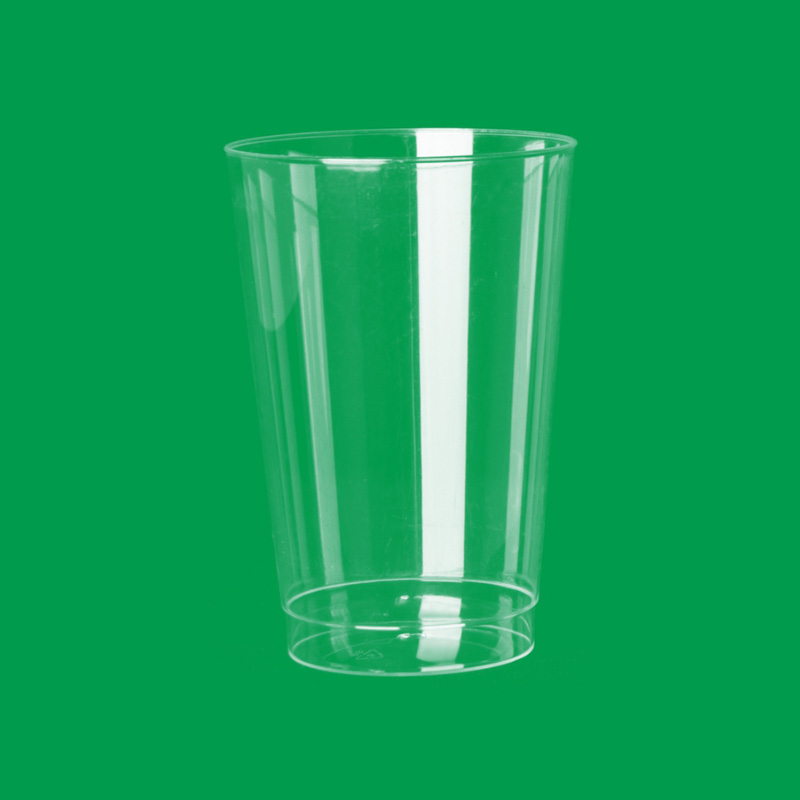
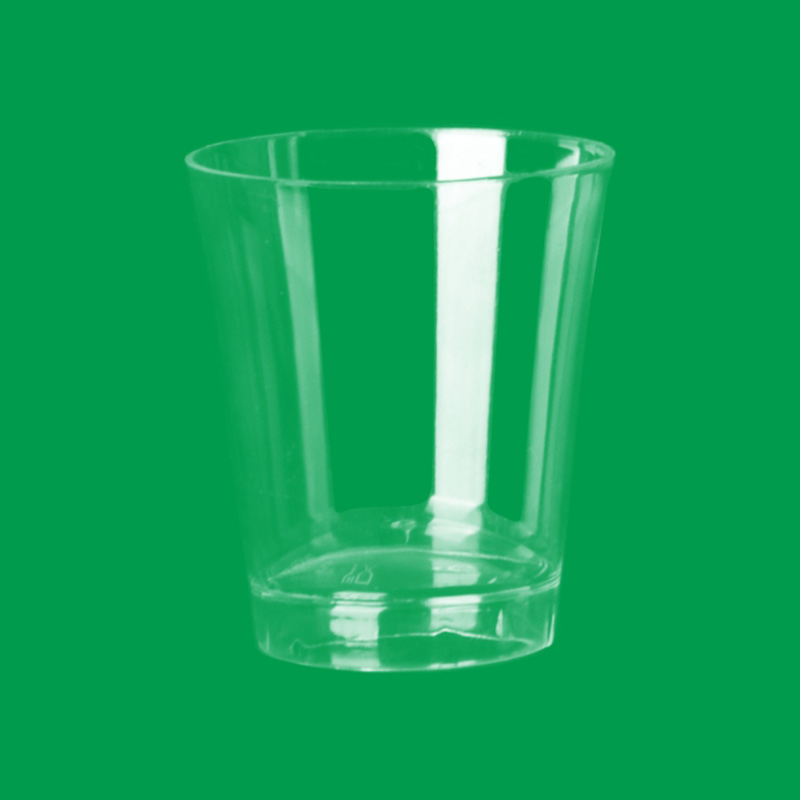
Crystal polystyrene has a bright, glossy appearance that mimics cut glass. The plate disappears under food and lets colourful dishes stand out on a table.

Rigid, glass-clear polystyrene plates with elegant rims for weddings, receptions and buffets. The look of fine tableware with the convenience of single-use service.
Explore more compostable and disposable food service products from the same manufacturing group.
What makes crystal polystyrene look like glass, where a rigid clear plate earns its place, and what to consider about material and disposal.
Clear crystal PS disposable plates are rigid, glass-like plates made from general-purpose polystyrene (GPPS), the same family of material used for clear display cases and cosmetic jars. Unlike thin, flexible plastic plates, crystal polystyrene is stiff and highly transparent, with a glossy surface that catches light. Plates are usually moulded with fluted or scalloped rims, a ridged border or a patterned base, which makes them look like cut glass or fine tableware.
For hosts, caterers and venues, the appeal is straightforward: a plate that looks upscale but is thrown away after the party. Weddings, receptions, cocktail events, buffet stations and corporate lunches often want a refined look without the breakage, washing and rental costs of ceramic. A crystal plate fits that brief, and it can be styled with coloured napkins or placemats without clashing with a table theme.
The rigidity matters in service. A heavy duty crystal plate does not flex when a guest holds it with one hand and a drink in the other, and it supports a slice of cake, a plate of starters or a stack of canapés. It also stacks flat in a cabinet, so a caterer can carry hundreds in a small space.
The first decision is size. Dessert plates of about 6 inches suit cake, canapés and tasting menus; 7.5 inch salad plates handle starters and sides; 9 inch dinner plates take a main course. Many caterers mix sizes in a single order, with a small plate for each course and a large plate for the buffet line.
The second decision is the rim. A plain smooth rim is modern and suits minimalist table settings, while a scalloped or fluted rim gives a vintage, cut-glass look. Gold or silver painted rims lift the plate to formal level and are popular for weddings, but they are usually cosmetic coatings and should be checked for suitability before use with acidic foods.
Material choice should be made with local regulations in mind. Polystyrene is widely used, inexpensive and highly transparent, but some cities restrict certain polystyrene foodservice items. If you operate in or ship to such areas, ask about alternatives, including clear PET and PLA plates, which have similar looks and different disposal paths.
In use, store plates in their original sleeves until needed, handle them by the rim and avoid sliding them across each other, since the glossy surface will scratch. A simple crystal plate, a coloured napkin and a plastic cutlery set of matching quality is often all it takes to make a casual table look carefully planned.
Presentation tips can lift a simple plate. Place a coloured paper napkin or a small doily under a crystal plate and the glass-like surface picks up the colour; add a sprig of green or a dusting of icing sugar at the rim and the table looks styled in minutes. For buffets, alternating plate sizes in a tiered stack helps guests choose the right plate for each course and cuts the number of plates taken per person.
Typical plate configurations are listed below. Size, rim style, decoration and packing can be customised.
| Material | General-purpose polystyrene (GPPS), food-grade, resin code 6 |
|---|---|
| Plate Sizes | 6 in (15 cm), 7.5 in (19 cm), 9 in (23 cm) and 10 in (26 cm) |
| Rim Styles | Plain, fluted, scalloped and double-ridge designs |
| Weight | Approximately 6 – 14 g depending on size and style |
| Clarity | High-transparency glass-like finish |
| Decoration | Plain clear, gold, silver or coloured rim paint |
| Heat Range | Room temperature and cold foods; not suitable for microwave use |
| Packing | Sleeves of 10 / 20 plates, packed 10 – 20 sleeves per carton |
| Compliance | Food-contact materials tested to destination market rules |
| Lead Time | Usually 20 – 30 days for stock designs; longer for custom moulds |




Tableware that looks more expensive than it is, built to stay flat and elegant through a whole event.
Crystal polystyrene has a bright, glossy appearance that mimics cut glass. The plate disappears under food and lets colourful dishes stand out on a table.
Thicker walls and a reinforced rim keep the plate flat when loaded and carried with one hand. Guests can stand and eat without the plate bending.
Scalloped, fluted and ridged rims create texture, while gold, silver or coloured rim paint matches wedding themes and corporate events.
From 6 inch dessert plates to 10 inch dinner plates, one range covers starters, main courses and cake, which simplifies ordering and keeps the table consistent.
Plates stack neatly in sleeves, taking little space in a van or on a buffet. Caterers can transport hundreds of plates with minimal packing volume.
Crystal polystyrene is economical compared with ceramic hire or breakable glass, with no washing, no breakage replacement and no returns to manage.
We work with distributors, hospitality groups and retail brands across multiple markets and regions.
















Eight strengths that shape how we develop, manufacture and deliver clear disposable tableware and food packaging at scale.
A recognised voice in the sector, participating in the development of industry standards and supported by growing demand for degradable materials at home and abroad.
R&D, production, manufacturing, sales and service are integrated under one organisation, creating an efficient and sustainable operating ecosystem.
Continuous investment in new technology and production, with targeted material development supported by academic expertise in polymer and materials science.
A broad product line paired with strong design and high customisation capability, so different industries can receive products built for their specific needs.
Intelligent production workshops and automated mechanical equipment keep output consistent and lead times predictable, even at high volume.
A global outlook with service to customers worldwide. Group headquarters in Ningbo, China, and a production base in Vietnam.
More than a decade of focus on quality, with international awards and manufacturing carried out strictly to the highest industry standards.
A diversified core management team drawn from benchmark companies in different industries, forming a distinctive corporate DNA.
A recognised position in the industry with participation in the formulation of industry standards, alongside domestic and global support for the environmentally friendly degradable sector.
R&D, production, manufacturing, sales and service are integrated to create an efficient and sustainable enterprise operation ecology.
Vigorous investment in the development and production of new technologies, with targeted technology development supported by professors from the Institute of Materials of the Chinese Academy of Sciences.
An extensive product line with excellent product design and high customisation capability, producing tailored products for the different needs of various industries.
Intelligent production workshops and automated mechanical production equipment create an industry-efficient enterprise.
Positioning global and serving the world, with the group headquarters in Ningbo, China, and a base in Vietnam.
Thirteen years focused on quality, with numerous international awards and manufacturing carried out strictly in accordance with the highest industry standards.
A diversified core management team with professionals from benchmark companies in different industries and management teams in diversified fields, forming a unique corporate DNA.
Resin identification code 6. Collection varies by region, so end-of-life guidance and local regulation should be reviewed for each market.
A rigid plate has to be safe for food and consistent in quality. Documentation covers material compliance, and production checks cover clarity, flatness and rim integrity.
US food-contact regulations covering polystyrene resins used in articles that touch food.
European plastic food-contact regulation, including overall and specific migration limits.
German food and feed code, often requested for tableware sold into Germany and Switzerland.
Guidance on local restrictions for polystyrene foodservice items, so you can choose the right material for each country.
Rim cracks, flash, warpage and clarity inspected on every production lot before sleeving.
Selected certifications and awards that support our compostable and food-contact product range.






How a rigid crystal plate compares with the most common alternatives for events and catering.
Ceramic plates look best, but they are heavy, breakable and require washing and transport. Paper plates are easy and cheap, but they look casual and can sag under heavy or wet food.
Crystal polystyrene gives the look of glass without the weight and with no washing at all. It is stiff, light and quick to set up, making it ideal for events where tableware is only needed for a few hours.
The comparison table shows the main differences in appearance, rigidity, heat limits, cost and disposal, and helps weigh up which plate suits your event or business.
Think also about the total cost of an event. Ceramic requires hire, transport, washing and breakage replacement; a crystal plate needs none of these. For a one-time wedding or party with a hundred guests, that difference in labour and logistics often outweighs any difference in the price of the plate itself.
| Attribute | Crystal PS | Paper Plate | Ceramic |
|---|---|---|---|
| Appearance | Glass-like, formal | Casual | Premium |
| Rigidity | High | Low to moderate | High |
| Weight | Light | Very light | Heavy |
| Hot foods | Limited | Good | Excellent |
| Washing needed | None | None | Yes |
| Breakage risk | Cracks if dropped | None | Breaks |
| Unit cost | Low to mid | Lowest | High, with hire and washing |
| Disposal | Check local PS rules | Paper or compost | Reusable |
Occasions where tableware needs to look refined without the cost and burden of washing.


Changya New Material Technology Co., Ltd. was founded in 2013, and the group is headquartered in Ningbo, China. It is a limited liability company integrating R&D, production, and sales. As China Clear Crystal PS Disposable Plates Manufacturers and Wholesale Clear Crystal PS Disposable Plates Factory,, the company mainly produces paper, PLA & plastic disposable tableware, such as straws, cutlery, microwaveable box, hinged box, cup, carry-out bags, plates, dining kits, etc.
Changya New Material Technology Co., Ltd. has developed rapidly since its establishment, with constant growth each year, and has now become an enterprise in the field of high-quality disposable food and kitchen supplies in China.
Two manufacturing bases with automated production lines and strict quality control at every stage, from raw material to finished carton.

















Select size, rim design and decoration to match the table, then pack to suit your event or retail channel.
Plain, fluted, scalloped or double-ridge rims can be selected to match the style of your event, and new mould designs can be developed for larger programmes.
Metallic and coloured rim paint can be applied to match wedding colours or corporate branding.
Dessert, salad, dinner and large plates can be combined in a single order so a full table setting comes from one supplier.
Crystal-look bowls, dessert cups and drinking cups can be added so tableware looks consistent across the event.
Printed sleeves or shrink-wrapped multipacks with hang tabs for party supply stores and online sales.
Large cartons with fewer sleeves for caterers, designed to speed up set-up and reduce packaging waste.
A six-dimension comparison of crystal PS, paper and ceramic plates for events. Scores are relative to the best performer in each dimension (5=best).
Strong on elegance, rigidity and convenience, with a low cost per event. Limited heat tolerance and no reuse.
Cheapest and easiest, with moderate heat tolerance, but casual and less sturdy.
Top elegance and heat resistance, and reusable, but heavy, breakable and costly to wash and transport.
How crystal PS plates compare with paper and ceramic on material weight and carbon footprint.
Approximate weight of each plate type. Lower weight reduces transport and material use. Values are indicative.
Indicative cradle-to-gate CO₂ equivalent per kilogram of material. Lower is better.
From plant sugar to a wrapped straw on a café counter — five stages that define the quality of the finished product.
Plant sugars from corn starch or sugarcane are fermented by bacteria to produce lactic acid, the building block of the polymer.
Lactic acid molecules are linked into long chains to form PLA resin, which is then pelletised for easy handling and transport.
The resin is melted and pushed through precision dies to form straw tubes with a consistent wall thickness and smooth surface finish.
Tubes are cut to length, the ends are finished to remove burrs, and samples are checked for straightness, diameter and appearance.
Each straw is sealed into its own paper wrapper — plain or printed — then counted into inner boxes and master cartons.

From resin to disposal — the full journey of a clear crystal PS plate.
Polystyrene resin is produced and supplied as food-grade granules for sheet extrusion.
Sheet is thermoformed or injection moulded into plates with the chosen rim design, then trimmed.
Rims are painted if needed, and every lot is checked for clarity, warpage and rim cracks.
The plate serves cold and room-temperature foods at an event or buffet, then is discarded.
Collected through local waste routes; recycling depends on regional acceptance of PS.
With two manufacturing bases and established export partnerships, our crystal plates reach customers across five main regions.
Crystal polystyrene is rigid but surface-sensitive. Plates scratch easily if slid across each other, and a scratched plate loses its glass-like sparkle. Keep plates in their sleeves until needed.
Avoid dropping cartons on hard floors, since cold-stored polystyrene is more brittle. Store in a cool, dry room away from direct sun, which may cause slight yellowing, and away from heaters.
For events, lay plates out on the buffet table just before guests arrive. Stacks of more than 25 can cause the bottom plates to stick, so use smaller stacks and alternate with fresh sleeves.
Pair plates with cutlery of matching rigidity. A thin plastic knife can slip on crystal polystyrene, so use a heavy duty set for meat and cake. Clear disposal bins help staff quickly clear tables.
Tell us the diameter, length, color and wrapping you need. Our team will reply within 24 hours with pricing, packing details and delivery time.
PLA straws have significant advantages in raw material selection, which stems from their u...
The biodegradability of PLA straws is one of its significant advantages in the field of en...
Disposable PP Cutlery is an upstart in the catering industry, and its lightweight design h...
Copyright © Changya New Material Technology Co., Ltd.All Rights Reserved.
Wholesale Clear Crystal PS Disposable Plates Manufacturers
