 English
 中文简体
中文简体A weekend brunch rush looks nothing like a Tuesday lunch counter, but the carry out paper bag on the shelf has to handle both. One order is a single pastry and a coffee; the next is two boxed mains, a side, and a drink carrier, all going into the same size bag because that is what was on hand. The bag that gets pulled off the stack rarely gets a second thought until it fails — a handle pulls loose halfway to the car, or a round soup container tips because the base was never wide enough to hold it flat. At that point, the bag is no longer packaging. It is the reason a customer's first bite of a meal is late, cold, or missing.
This expanded reference goes past the basic spec sheet. It covers how paper weight actually translates into carried load, how to match a bag to the kind of business packing it, what the compliance paperwork should actually say, and what a manufacturer's production scale tells you about whether they can keep up with your order volume next year, not just this one.
What Actually Determines Whether a Bag Survives the Trip
Paper weight, measured in grams per square meter (gsm), is the single biggest factor in how much load a bag can carry without stretching, sagging, or tearing at the seams. It is easy to size a bag by looking at its footprint and forgetting to check what it is rated to carry. The table below is a general starting reference — always confirm the exact rating with your supplier for the specific paper stock they run.
| Paper Weight | Typical Order Type | Watch For |
| ~30 gsm | Dry, light bakery items — pastries, bread, single wrapped snacks | Not suited to boxed meals or anything with liquid contents |
| 40–50 gsm | Single boxed meals, wrapped sandwiches, one main container | Base gusset width still needs to match the container footprint |
| 55 gsm and up | Multi-container orders, drinks, delivery bags, family-size orders | Handle attachment strength becomes the limiting factor, not the paper itself |
Relative Load Capacity by Paper Weight (illustrative)
General guidance only. Confirm the tested load rating for a specific bag before switching an existing order to a new weight.
The base gusset deserves as much attention as the paper weight, and it is the detail most often skipped when a buyer reorders on autopilot. A round deli container or a soup bowl needs a base wide enough to sit flat rather than balance on an edge. Before committing to a bag size, measure the actual footprint of the round or square container your kitchen uses most, then check that dimension against the bag's bottom gusset — not just its overall height and width.
Handle Styles, Side by Side
The handle is what a customer physically holds, so it shapes their impression of the order before they even open the bag. Each construction style trades off differently between comfort, load capacity, and cost.
Reinforced Fold Attachment
Carries heavier loads without cutting into the hand, thanks to a reinforced fold at the attachment point. The standard choice for multi-item takeout, delivery orders, and retail purchases where load weight varies order to order.
Clean, Compact Profile
A simple, low-profile handle that keeps the bag looking tidy on a counter or in a display. Comfortable for lighter loads and a natural fit for cafés, bakeries, delis, and boutique retail counters.
Cut Into the Bag Body
No separate part to detach or fail, since the handle is cut directly into the bag itself. Well suited to fast-casual counters, grab-and-go setups, and events where speed of packing matters as much as strength.
Basic Kraft Bag
Stacks flat, packs quickly, and keeps unit cost low. Common for grocery-style bagging, secondary wrapping inside a larger order, and high-volume self-service counters where a handle is not expected.
Matching a Bag to the Business Packing It
Two operations can serve nearly identical food and still need very different bags, because the packing environment and the trip the bag makes are not the same. The scenarios below cover the situations that come up most often when a foodservice buyer is choosing between paper weights, handle styles, and sizes.
Café & Bakery Counter
Fast-Casual Counter
Delivery-First Kitchen
Delivery-first kitchens in particular tend to underestimate handle demand, since the bag often sits in a rider's hand or a delivery box for longer than it would in a walk-in pickup. If your order mix leans heavily toward third-party delivery platforms, it is worth testing a heavier paper weight and a twisted handle even for orders that seem light on paper.
Completing the Order: Pairing Bags With the Rest of the Packaging
A carry out bag rarely travels alone. Most orders leave the counter with a main box or container, a side container, a cup with a lid, one piece of cutlery, a napkin, and the bag holding it all together. When the bag and the boxes inside it share the same kraft finish and print treatment, the order reads as a single, deliberate brand experience rather than a stack of mismatched packaging grabbed from different suppliers.
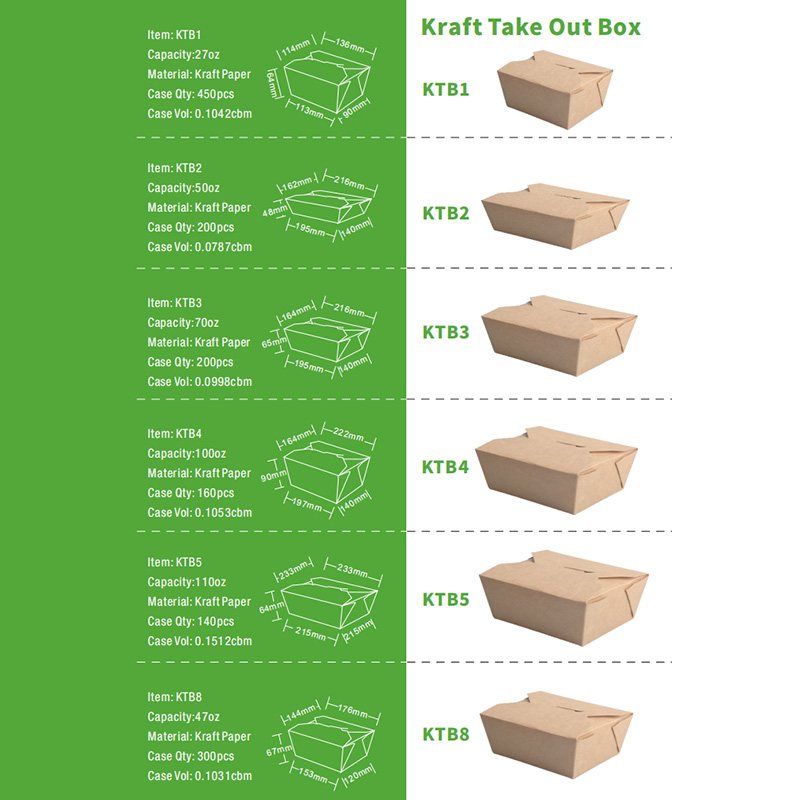 Main Course Packaging Versatile Kraft Take-Out Boxes Pairs naturally with brown paper carry-out bags to keep burgers, sandwiches, and boxed mains secure and upright inside the bag. View Product Details
Sides need their own container rather than loose wrapping, both for grease control and for keeping the load balanced inside the bag. A french fry box sized to sit beside the main container, rather than on top of it, keeps the bag from tipping when it is carried one-handed.
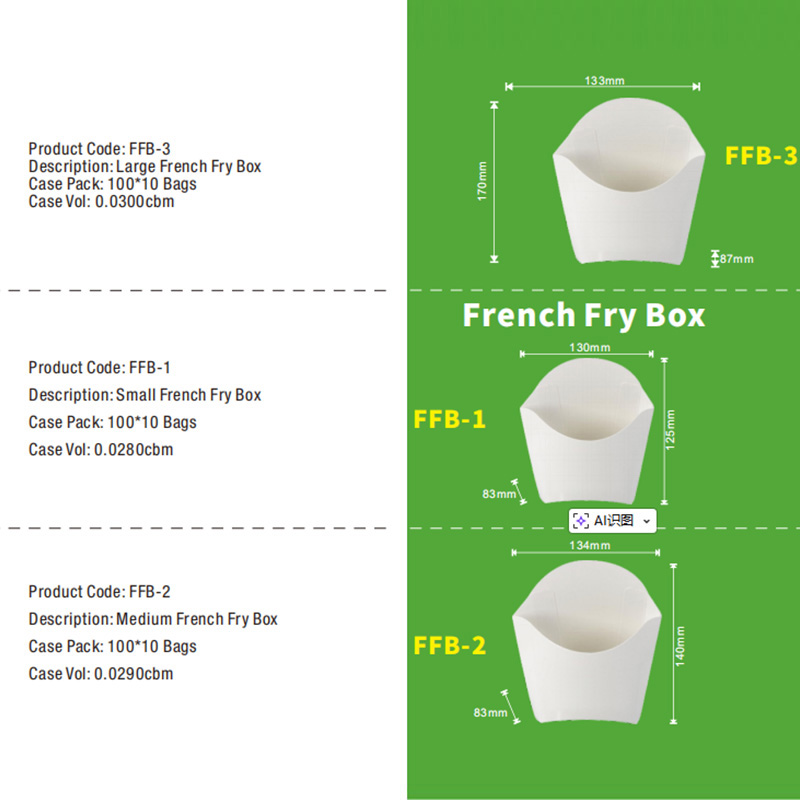 Side Dish Packaging Paper French Fry Boxes Sized to sit beside the main container inside a carry out bag without shifting the load balance during transport. View Product Details
Sourcing the bag and its packaging partners from one production line simplifies quality control considerably, since paper stock, print setup, and finishing standards stay consistent across every item in the order rather than varying between separate vendors.
Food-Contact Safety and Compliance
A carry out paper bag sits directly against packaged food for the entire trip from counter to table, which makes food-contact safety a procurement requirement rather than a marketing line on a spec sheet. Responsible suppliers test their paper against recognized standards and keep the documentation available on request, not just on file somewhere internally.
Food-Contact Test Reports
Confirms the paper itself is safe for direct contact with food, covering both US and EU testing frameworks.
Global Standard for Packaging Safety
An internationally recognized benchmark for manufacturing sites producing food-contact packaging.
Manufacturing & Food Safety Management
Confirms consistent manufacturing practices and a documented food safety management system across production.
Social Compliance Membership
Addresses working conditions and ethical sourcing practices at the manufacturing site, relevant to brand due diligence requirements.
Odor control is a smaller line item that still affects the eating experience directly. Low-grade pulp can leave a papery smell on food sitting inside the bag for a delivery trip, while clean kraft material stays neutral. If a supplier cannot explain what pulp grade they use or offer a sample to smell-test against a current bag, that is worth treating as a flag before placing a bulk order.
The Manufacturing Scale Behind the Bag
Changya New Material Technology Co., Ltd., based in Ningbo, China, has supplied disposable foodservice packaging since 2013, with a product line that spans straws, cutlery, cups, containers, plates, and carry out paper bags reaching markets across Europe, the United States, and Australia. For a buyer choosing between suppliers, the more useful question is not just what a company makes today, but whether its production capacity can keep pace as order volumes grow.
Phase 1 — Complete
Initial overseas production base established in Vietnam, adding capacity outside the original Ningbo facility.
Phase 2 — Complete
Second phase of the Vietnam facility brought online, expanding output for buyers sourcing at larger volumes.
Phase 3 — Under Construction
Additional capacity currently being built out to support continued growth in export order volume.
Phase 4 — Under Construction
Final planned phase of the current Vietnam expansion, aimed at long-term supply stability for existing clients.
For a carry-out bag specifically, that production footprint matters in a very practical way: a buyer whose order grows from a handful of cartons to a container load does not need to switch suppliers or requalify a new factory mid-relationship. The brown paper bags with handles in Changya's carry-out range are built for that kind of restaurant takeout and retail use, from a single-location café placing a first trial order through to a multi-location chain running recurring container shipments.
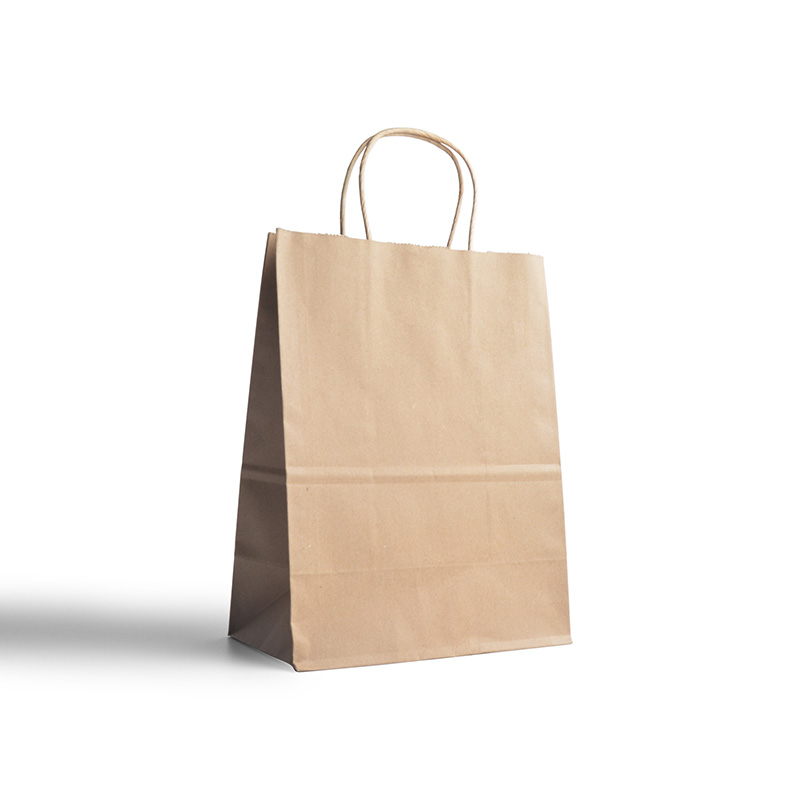 Carry Out Range Brown Paper Bags With Handles Built for restaurant takeout and retail use, with handle and paper weight options suited to both walk-in pickup and delivery orders. View Product Details
What to Verify With a Supplier Before Committing to a Bulk Order
Unit price is the easiest number to compare between suppliers, but it says nothing about what happens after the first container arrives. Work through the points below with any prospective supplier before signing off on a full production run.
| Check | What to Ask For | Why It Matters |
| Certification documents | BRC, GMP NSF, or ISO 22000 certificates, plus FDA or LFGB food-contact test reports | Confirms the documents actually cover the specific bags being purchased, not just the company in general |
| Physical samples | Production samples rather than a single hand-made mockup | Reveals real handle strength, base stability, and print quality under normal use |
| Handle durability | Several bags pulled firmly at the attachment point from the same carton | Checks consistency across a batch, not just performance of one sample bag |
| Storage guidance | Carton and inner packing details, plus recommended storage humidity | Kraft paper absorbs moisture, which weakens the bag before it ever reaches a customer |
| Lead times | Confirmed production and shipping timelines for repeat orders | Determines whether reorders will come from a consistent production line and location |
Frequently Asked Questions
Can one bag size work for both dine-in leftovers and full delivery orders?
It can in a pinch, but matching the paper weight and handle style to your heaviest regular order is safer than sizing for the average one, since an underbuilt bag fails on the order that matters most.
Does a printed logo weaken the bag compared to a plain kraft finish?
Not when flexographic printing with foodservice-safe inks is used correctly. Request a physical proof and a short production sample run to confirm the print does not affect fold strength or transfer onto packaging inside the bag.
How much does the base gusset actually matter if the bag looks the right size?
Significantly. A bag can have the correct height and width and still be unusable if the base is too narrow for a round container to sit flat, which is the most common cause of in-transit spills.
Is a heavier paper weight always the safer choice?
Not necessarily. Oversizing the paper weight adds unnecessary cost for light orders, and the handle attachment point often becomes the limiting factor before the paper itself does, so matching weight to actual order load is more efficient than defaulting to the heaviest option.