 English
 中文简体
中文简体Why Custom Carry Out Paper Bags Are a Brand Touchpoint
On a busy Friday night, a restaurant can send out more than 400 orders in carry out bags. Each one carries food, sauces, napkins, and a customer’s first impression of your brand. The bag that leaves your counter is part of your service, which is why choosing custom carry out paper bags is a real purchasing decision, not a minor supply order.
The most reliable approach is to balance strength, print quality, food safety, and cost per bag, and then verify that your supplier can hold that balance at scale. The quick conclusion is this: the best custom carry out paper bags are the ones that pass a basic load test, print your logo cleanly, meet food contact requirements, and arrive on a predictable schedule.
Why Custom Carry Out Paper Bags Matter for Your Food Business
A paper bag is one of the few packaging items that customers actually carry outside your restaurant. When they walk down the street with a branded bag, they are advertising your business for free. When they reuse it for groceries or storage, the brand awareness lasts even longer. That makes custom carry out paper bags a low-cost marketing tool, but only if the bag looks professional and holds up in real use.
A torn bag in a parking lot is a negative brand experience. A bag with a faded or smeared logo looks cheap. A bag that lacks enough load capacity can spill a customer’s dinner. In the U.S. food service market, where takeout and delivery volume remains high, the carry out bag is often the last thing a customer touches before they eat. It should feel sturdy, look clean, and perform exactly as expected.
That is why smart buyers do not order on price alone. They compare paper weight, handle construction, print quality, compliance documentation, and supplier lead times. When all of those factors line up, the bag becomes an asset rather than an expense.
What to Check Before You Start a Custom Paper Bag Order
Before sending artwork or requesting samples, define what the bag has to do. Every custom carry out paper bag order starts with five practical requirements:
- Carry capacity: Know the heaviest order you typically pack, such as a large drink plus two entrées plus sides.
- Dimensions: Match the bag depth and width to your containers, so the packaging stays upright without excess folding.
- Handle style: Choose between flat, twisted, rope, or no handle based on customer comfort and cost.
- Print surface: Decide whether your design needs the natural look of kraft paper or the bright contrast of white paper.
- Compliance: Confirm that the bag materials and inks pass food contact safety requirements for the U.S. market.
Once these requirements are clear, you can evaluate suppliers against a concrete checklist instead of guessing.
Paper Weight and Strength: Match the Bag to What It Carries
Paper weight is the most important factor in bag performance. In the U.S., paper is often described by basis weight in pounds, while many overseas manufacturers use grams per square meter, or gsm. A heavier paper creates a stiffer bag, but it also raises the cost per bag. The goal is to find the lightest paper that still handles your typical order without tearing at the seams.
A sandwich or pastry bag can use a lighter paper because the contents are low in weight. A bag that carries multiple containers, a bottle of soda, or a soup container needs a heavier paper and a reinforced bottom. Gussets, which are the folded sides of the bag, also add volume and help the bag stand upright. The bottom seal matters as much as the paper weight. A well-constructed bag with a strong bottom seam can outperform a thicker paper with weak gluing.
Ask your supplier for the bag’s basis weight, gsm, and maximum load capacity. Then test a sample with your heaviest real-world order. If the bag bulges, splits at the bottom, or tears when a customer grabs it from the top, increase the paper weight before you commit to a large run.
Kraft or White Paper: Which Paper Surface Works Better for Printing?
The paper surface directly controls how your logo and colors appear. Kraft paper has a natural brown tone that fits a rustic or eco-friendly brand. White paper offers a clean, bright surface for full-color logos and crisp text. Neither is automatically better. The choice depends on your brand image and the look you want at the point of carry.
| Factor | Kraft Paper | White Paper |
|---|---|---|
| Visual tone | Natural, rustic, eco-friendly | Clean, polished, high contrast |
| Print contrast | Best for dark and bold colors | Best for bright colors and fine details |
| Environmental perception | Recyclable and often seen as more natural | Recyclable but can look more manufactured |
| Cost | Usually lower per bag | Usually higher per bag |
| Typical use | Cafés, delis, bakeries, outdoor brands | Restaurants with colorful logos, retail food packaging |
If your logo relies on vivid color accuracy, white paper gives you the most predictable result. If you want to communicate sustainability and a handcrafted feel, kraft paper can do that with minimal printing. Some operators use a kraft bag with a small white label or window to get the best of both surfaces.
Handle Styles and Carry Comfort
The handle affects both customer comfort and the bag’s printed appearance. A flat paper handle lies against the bag and is easy to store, but it can be less comfortable for heavier weight. A twisted paper handle adds strength and is a common choice for restaurant takeout bags. A rope handle looks more premium but adds cost and can require more manual assembly. A no-handle bag reduces cost and is common for quick-service orders that fit in a hand basket, but it may not meet customer expectations for a convenient carry experience.
The handle patch also matters. A reinforced patch, where the handle connects to the bag, spreads the weight across a wider area and helps prevent tearing. For custom branded bags, the handle style can also influence the print layout because the patch can cover part of the logo if not planned correctly. Ask for a sample and check how the handle feels when the bag is packed with a realistic order.
Custom Printing: How to Protect Your Logo and Colors
Custom carry out paper bags are printed with a range of methods, including flexographic printing, offset printing, and digital printing. For large orders, flexo printing is often the most economical and works well on kraft and white paper. Digital printing is a good option for smaller runs or when you need quick turnaround. Offset printing can deliver fine detail and consistent color for large quantities.
The quality of the final print depends on the ink, the plate, and the press operator. A good supplier will ask for vector artwork, provide a proof, and confirm whether your colors require spot matching. The location of the print also matters. A logo printed on the front of the bag is visible while the customer holds the bag. A smaller logo on the bottom or side can add subtle branding without interfering with the main panel. If your design includes full-bleed color, the paper surface must accept the ink evenly.
Food safety extends to the printing side as well. Water-based or food-safe inks are preferred for all food service packaging. Confirm with your supplier that the inks and any adhesives used in the bag meet applicable food contact standards. This is especially important because the bag can indirectly contact packaged food containers.
Food Safety and Compliance: Questions Every U.S. Buyer Should Ask
Carry out paper bags are not always directly touching food, but they often hold containers that do. If the ink or adhesive contains harmful substances, there is a risk of migration through the packaging. That is why food service buyers should ask for documented compliance, not just a verbal assurance.
A reliable paper bag supplier should be able to share test results or certifications that cover:
- FDA food contact compliance for materials and inks
- BRC certification for packaging safety
- ISO 22000 food safety management
- GMP compliance for production processes
- LFGB testing if required for European exports
Changya, for example, states that it holds BRC, GMP NSF, ISO 22000, and GMP certifications, and that its products pass LFGB and FDA food safety testing. The company also reports membership in BSCI and Sedex, which reflect social compliance in the supply chain. While no factory can guarantee that every bag will be perfect, documented systems reduce the risk of a failed audit or a customer complaint.
For U.S. buyers, the key is simple: ask for the documents in writing, check that they cover the specific bag you are ordering, and request a Certificate of Analysis if the bag is part of a larger food service contract.
Why a Full-Line Manufacturer Makes Custom Carry Out Paper Bags Easier
Custom carry out paper bags do not exist in a vacuum. A restaurant that orders custom bags also needs cups, cutlery, containers, and straws. Working with a manufacturer that produces several categories of food service packaging can simplify ordering, reduce shipping complexity, and create a more consistent look across the whole takeout experience.
Changya is one such manufacturer. The company has produced paper, PLA, and plastic food service products since 2013, and its catalog includes cups, takeout containers, cutlery, straws, plates, bowls, and paper bags. That breadth matters when you are trying to keep a single order simple. Instead of coordinating three suppliers for different items, you can work with one production line for multiple categories. The same quality system that controls your paper bag can control your cutlery and cups.
For a starting point, many food service operators choose brown paper bags with handles as their carry out base. The natural kraft surface accepts bold printing, and the twisted handle is suitable for everyday takeout loads. From there, you can specify custom finishing such as your logo, a special size, or a sturdier paper weight.
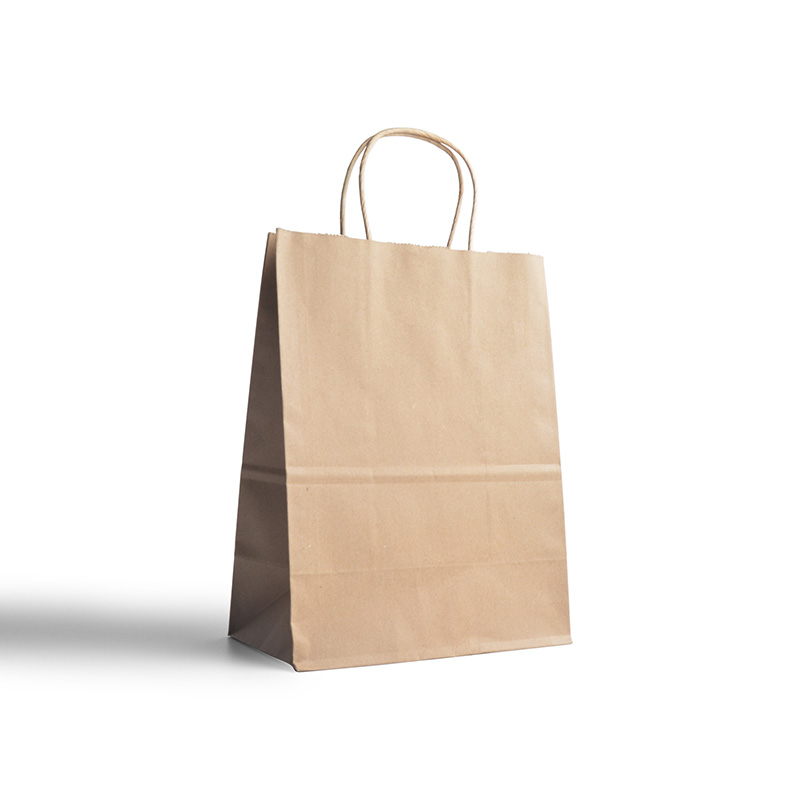 Wholesale Brown Paper Bags with Handles Suppliers, Factory, Exporter - Changya NChangya New Material Technology Co., Ltd. is China Brown Paper Bags with Handles suppliers, wholesale Brown Paper Bags with Handles facto...View Product →
Because Changya also runs production facilities in Vietnam, with additional capacity under construction, the company can serve international buyers across different regions. That kind of supply chain structure matters when you need consistent volume over several years. A local trading agent might not give you the same visibility into production schedules and quality control.
Questions to Ask Before Placing a Custom Carry Out Paper Bag Order
Before you sign off on artwork or approve a production run, use this checklist to compare quotes from different suppliers. The answers will show you which supplier understands your needs and which one is only quoting on price.
- What paper weight and gsm do you recommend for my typical order, and what is the maximum load capacity?
- Can you send a physical sample with my logo printed on the exact paper stock before production starts?
- What printing methods do you offer, and which one works best for a logo with fine text and detailed colors?
- Do the inks and adhesives meet FDA requirements for food contact packaging?
- What is your minimum order quantity for custom printed paper bags?
- How does your quality control process check the seams, handles, and print registration during production?
- What are your lead times to the U.S. market, and how much lead time do I need to plan for?
- Can you combine my paper bag order with other packaging items like cups, containers, or cutlery?
- Do you have audit certifications such as BRC, ISO 22000, or GMP that I can review?
- What happens if a production issue causes a delay or a defective batch?
These questions are not meant to push a supplier into a corner. They are designed to separate a reliable manufacturing partner from a reseller that cannot answer basic technical questions. A custom carry out paper bag is a repeat purchase, so the supplier relationship matters as much as the bag itself.
Bottom Line
Custom carry out paper bags are a branded point-of-sale item that customers touch and carry. The right bag holds up under a heavy order, prints cleanly, meets food safety standards, and arrives on time. The wrong bag tears at the worst moment, fades after one use, or fails a compliance audit.
Start with your own order profile. Know the weight, dimensions, and branding you need. Then compare suppliers on paper weight, handle construction, print quality, compliance documentation, and production capacity. When you find a supplier that can consistently deliver on those points, you have more than a bag vendor. You have a packaging partner that protects your food, your brand, and your bottom line.