 English
 中文简体
中文简体In modern catering, office spaces, and large-scale events, disposable cups are used everywhere. Whether serving as a morning energy booster in the form of takeaway coffee cups, or as paper cups for hot drinks to entertain VIPs during meetings, a high-quality paper cup not only carries the beverage itself but is also directly related to the safety experience and core interests of the users. Facing a wide variety of choices in the market, from capacity specifications to material processes, every technical parameter determines its final applicable scenario.
Core Material and Hot Drink Resistance Analysis
For disposable coffee cups and various paper coffee cups with lids, the core technical considerations lie in the stiffness of the cup body and its resistance to heat and leakage. Ordinary raw paper cannot hold liquids directly; it must be coated on the inner wall to achieve water and oil resistance.
Currently, mainstream disposable cups for hot drinks mainly use PE (polyethylene) coating or new biodegradable coatings. For paper cups for hot drinks, a double-layer structure (such as hollow cups or corrugated cups) performs much better in thermal insulation than single-layer cups. The hollow layer can effectively trap heat, keeping the temperature of the outer wall within a comfortable range for the human body to prevent burns, while slowing down the cooling rate of the internal coffee or tea. This makes it a standard feature for high-quality takeaway coffee cups.
3 oz paper cups to Standard Coffee Cups: Capacity and Application Scenario Parameter Comparison
Different capacity designs correspond to completely different beverage types and usage scenarios. The following table compares common paper cup capacities and key physical parameters available in the market to help make an accurate selection based on specific needs:
| 3 oz paper cups | Approx. 90 ml | 52 - 56 | 36 - 38 | 50 - 52 | Espresso, tasting cups, trial promotions, dental clinics, small amount of water at exhibitions |
| 4 oz paper cups | Approx. 120 ml | 62 - 65 | 45 - 47 | 60 - 62 | Double espresso, macchiato, small dose sample trials |
| 8 oz paper cups | Approx. 240 ml | 78 - 80 | 53 - 55 | 90 - 92 | Standard Americano, hot tea, vending machine matching, daily office reception |
| 12 oz paper cups | Approx. 360 ml | 80 - 90 | 55 - 60 | 110 - 112 | Latte, cappuccino, mainstream takeaway coffee cups medium size specifications |
| 16 oz paper cups | Approx. 480 ml | 90 | 60 - 62 | 130 - 135 | Large iced coffee, milk tea, various large-capacity takeaway hot drink needs |
The parameter comparison shows that 3 oz paper cups have irreplaceable precision in specific small-capacity testing or pure espresso consumption, while 8 oz to 16 oz represent the core volume range with the highest consumption for paper coffee cups with lids.
printed paper cups Process Requirements and Visual Communication
With the growing demand for customization, printed paper cups have become an important visual carrier. High-quality printed paper cups have strict technical standards regarding printing processes.
First, the printing must use eco-friendly water-based inks or vegetable inks (such as soy inks) that comply with food safety standards. This ensures that even if the cup body gets hot during the takeaway process, it will not produce any odor or release harmful substances. Second, the precision of overprinting, color saturation, and ink adhesion are crucial. If the process is substandard, when holding paper cups for hot drinks, sweat from hands or liquid overflowing from the rim can easily cause the pattern to decolorize, affecting the overall texture. Therefore, selecting high-grade raw paper with high stiffness and good surface smoothness is the foundation for ensuring that printed paper cups have clear, non-smudging patterns.
Sealing Performance and Lid Matching Technology
For disposable coffee cups that need to be transported over long distances or packaged, the tightness of the fit between the cup rim and the lid is a key indicator for checking product qualification rates.
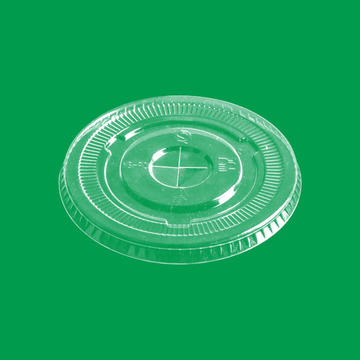
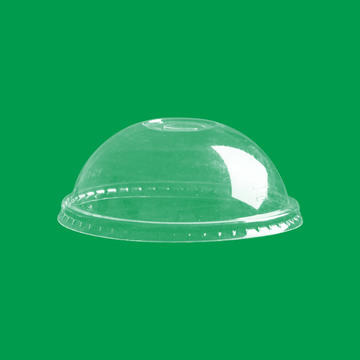
The matching lids for paper coffee cups with lids are usually made of PP, PS, or new eco-friendly materials. The rim roll must be smooth, uniform, and possess sufficient rigidity. If the rim roll is deformed or uneven in thickness, a tiny gap will remain after the lid is attached. When the liquid shakes to the rim, under the effect of hot air pressure, side leakage or surface seepage can easily occur. Professional takeaway coffee cups undergo strict tolerance control for cup rim roundness during the production process, ensuring that the lid makes a clear "click" sound when fastened, achieving a tight seal that effectively eliminates the risk of spilling during takeaway.
Understanding these core physical parameters and material processes ensures that when facing complex choices from miniature 3 oz paper cups to large-capacity disposable paper cups, you can accurately lock in high-quality products that meet safety, heat resistance, and leak-proof standards.