 English
 中文简体
中文简体A stainless steel pot sits on the back burner of a busy restaurant kitchen. The chef reaches past metal tongs, past a silicone spoon, and picks up a wooden spoon that has been worn smooth by years of service. She stirs the tomato-based sauce slowly, scraping the bottom to keep the fond from burning. The spoon will rest there for hours, the handle as cool as when she first picked it up. If you shadowed any working kitchen for a week, you would see this exact scene repeated at a dozen stations.
The question "Do professional chefs use wooden utensils?" is not really a question of whether. It is a question of why, and of how wood continues to earn its place on the line even in an era of silicone and heat-resistant nylon.
Yes, professional chefs use wooden utensils. They use wooden spoons on the line. They use wooden spatulas for delicate fish fillets. They use wooden scrapers to control the depth of the scrape on a flat-top grill. They ask the dishwashers to return their "spoon" by hand. Some of the most decorated restaurants in the world have wooden tools in their mise en place. This article explains exactly why wood stays relevant, what scientific research says about it, and how commercial food-service operations are approaching wooden tableware today.
The Direct Answer
Professional chefs use wooden utensils across a wide range of kitchen tasks. Wooden spoons are the most visible, but wooden spatulas, wooden forks for turning meat, wooden scrapers, and even wooden tongs all appear on real kitchen lines. Many chefs carry a favorite wooden spoon from one job to the next, the handle burnished and the tip worn into a shape that fits their hand. That attachment is not sentimentality.
The direct answer is that wood performs a specific group of jobs better than any alternative material. Those jobs include long simmering and stirring, deglazing stainless steel pans, gentle sautéing, and any task where the cook wants full control without adding metal-on-metal noise or excessive heat transfer. A wooden spoon is not the best tool for everything. It is the best tool for a distinct set of tasks, and that is exactly why it has never left the professional kitchen.
It is also worth noting that wood is not just a home-cook preference. In hotel kitchens, banquets, catering companies, restaurants, and institutional food services, wooden tools are used daily. The confusion about whether chefs use wood likely comes from the fact that modern cooking shows often feature silicone and metal tools on the bench. But cookbook authors and competition judges have been known to carry wood in their knife rolls. So the next time someone asks whether wood belongs in a serious kitchen, the answer is a confident yes.
Why Professional Chefs Choose Wooden Utensils
There are several distinct, practical reasons chefs reach for wooden utensils. These are not marketing claims. They come from the realities of a hot, fast, and intense work environment.
1. Heat Resistance Without Burn Risk
Wood is a poor conductor of heat. A wooden spoon can sit in simmering broth for thirty minutes and the handle will still be safe to touch. An all-metal spoon is a burn risk. On a busy line, cooks move fast and do not always have a clean towel in hand, so a handle that stays cool is a genuine safety advantage.
2. Protection of Expensive Cookware
Wood will not scratch stainless steel, enameled cast iron, ceramic-coated pans, or classic non-stick surfaces. Chefs rotate through dozens of pans each shift. A metal spoon or whisk can leave visible scratches on a pan that costs over two hundred dollars. Wood is the material that keeps the pan surface intact for years.
3. No Chemical Reaction With Acidic Food
Tomato sauce, citrus juice, wine, vinegar, and pickled ingredients all contain acids that can react with metal. The result is an off-flavor and sometimes discoloration of the food. Wood is chemically neutral. It stirs a lemon curd or a tomato ragù without introducing any metallic taste.
4. Natural Scraping and Fond Control
The flat edge of a wooden spatula or spoon is ideal for releasing fond, the browned caramelized layer on the bottom of a pan that is the backbone of many sauces. Wood lets the chef apply real pressure to deglaze without worrying about scoring a stainless steel pan. It is the controlled scrape that matters.
5. Comfort and Grip, Even When Wet
Wood offers a natural, textured grip that remains reliable even when the handle is wet, oily, or dusty with flour. Metal handles become slick. Plastic handles can feel slippery and cheap. Wood feels secure in the hand, which is important when moving a heavy pot or stirring a thick stew.
6. Quiet Operation in a Loud Kitchen
The professional kitchen is already a loud environment. Metal-on-metal noise from a spoon tapping the edge of a pot adds to that stress. Wood is quiet. A wooden spoon against a metal pot produces a dull, soft tap rather than a loud ring, which keeps the working environment calmer.
7. Durability With Easy Repair
A good birch or beech spoon, cared for properly, can last for decades. If it develops a rough spot, a quick sanding brings the surface back. If the handle feels dry, a coat of oil restores it. This type of repairability is rare in modern kitchen tools, and chefs appreciate it.
8. A Clear Sustainability Advantage
Wood is renewable, biodegradable, and typically local or regional. Chefs who track their supply chain cost and environmental footprint know that a wooden utensil from a responsibly managed forest is one of the most sustainable tools in the kitchen. Many consumers also feel reassured when they see wooden tools used in an open kitchen.
These eight reasons are not theoretical. Walk past any open kitchen in a high-volume restaurant and you will see at least three of them in action within the first minute: a wooden spoon resting in a sauce pot, a wooden spatula flipping a portion of protein, and a wooden scraper working a plancha. The pattern repeats in every cuisine and every style of service.
The Science Behind Wood in the Kitchen
The most common objection to wooden utensils is that wood is porous and therefore somehow unsafe. This concern deserves a direct scientific answer. Yes, wood is porous. It is natural, dried plant tissue. But the assumption that porosity automatically means excessive bacterial risk does not hold up under scientific scrutiny.
Research conducted at the University of California, Davis, under microbiologist Dean Cliver compared wooden and plastic cutting boards. The early results were surprising to many. Fresh, newly cut boards showed similar counts. But once the boards had been scratched and worn from daily use, the plastic boards became extremely difficult to clean. Bacteria remained trapped in the knife grooves and multiplied. The wooden boards behaved differently: surface bacteria were absorbed into the wood tissue through capillary action, and once the wood dried, the bacteria died. By the next morning, the wooden boards were significantly cleaner than the plastic ones.
The same logic applies to wooden cooking utensils. A wooden spoon used in a sauce is washed in hot water, dried, and stored in a dry rack. The moisture that wicked into the surface layer evaporates as the wood dries, and any bacteria that were absorbed do not survive the drying cycle. This is why chefs have been using wooden spoons for centuries without outbreaks of foodborne illness tied to the spoons themselves.
There is an important caveat: wood must be allowed to dry properly. Soaking a wooden spoon in water for hours is the wrong approach. The water-swollen wood becomes a favorable environment for microbes. Chefs who understand this either hand-wash wood and dry it immediately or wipe it and set it in a dry rack by the stove line. The result is a surface that is safe for the next use.
It is also worth noting that many modern food safety authorities accept wooden tools when they are maintained correctly. Commercial kitchen audit checklists generally look for cleanliness and dry storage, not for a blanket ban on wood. The idea that wood has to be banned from kitchens comes from a misunderstanding of where the risks actually live.
When Wood Is Not the Right Tool
Every seasoned chef knows that wood is not a universal answer. There are situations where a different material is the better call. Recognizing this is part of what makes a professional a professional.
Raw meat handling. Many kitchens prefer dedicated metal or high-temperature tolerant plastic tools for raw poultry, raw beef, or raw fish. This reduces any conceivable cross-contamination scenario, even though the actual risk from dry wood is low. The policy is about convenience and audit simplicity, not necessarily about science.
Deep frying. Wood submerged in hot oil for long periods will discolor, absorb oil, crack, and weaken over time. An oil-soaked wooden utensil is also unpleasant to handle and may pick up stale flavors. For frying, a metal spider or heat-resistant silicone tool is the better choice.
Very sticky or sugary dishes. Caramel, toffee, and sticky rice preparations can cling to wood more than to silicone. The porous structure of wood can trap sugar, and cleaning out a caramel-coated wooden spoon is more work than it is worth. A silicone scraper is easier to clean.
High-sanitization commercial programs. Some institutions with strict HACCP protocols specify non-porous tools as a blanket rule. This is a policy choice driven by simplify-the-system thinking, not a scientific conclusion that wood is dangerous. If a kitchen is audited under such a policy, the team will follow the rule. But in general-restaurant cooking, wood remains an accepted tool.
The key takeaway is that wood is a professional tool with clear strengths and clear boundaries. A chef picks the material to match the task. That is the same way a good contractor picks the right hammer for a specific nail.
Wood vs. Other Materials: A Side-by-Side Reference
When young cooks ask why the kitchen still has wooden spoons, the fastest answer is to show them a comparison. The table below lays out the main differences between wood, metal, silicone, and nylon-plastic utensils in everyday kitchen use.
| Property | Wood | Metal | Silicone | Nylon / Plastic |
|---|---|---|---|---|
| Heat conduction to handle | Very low, handle stays cool | High, handle gets hot | Low, moderate heat transfer | Low, but can soften near heat |
| Scratch risk to cookware | None | High | None | None for most surfaces |
| Reaction with acidic food | None | Yes, can cause off-flavors | None | Can leach in low heat |
| Temperature resistance | Very high for normal cooking | Very high | About 230°C | Often melts around 200°C |
| Typical lifespan | Decades with care | Decades | 3 to 8 years | 1 to 4 years |
| Repairability | Sanding and oiling | Not practical | Not practical | Not practical |
| Disposal / environmental profile | Biodegradable, renewable | Recyclable, energy intensive | Hard to recycle | Generally not recyclable |
| Comfort in hand | Excellent grip when dry or wet | Slippery | Good | Variable |
| Noise on cookware | Quiet | Loud | Quiet | Quiet |
The comparison above makes it obvious why wood is not a nostalgia material. It wins on heat insulation, cookware protection, chemical inertness, repairability, environmental profile, and comfort. It loses on specific tasks like deep-frying or high-sanitization policies. That is a strong set of advantages for ordinary stove-top cooking.
Relative Heat Transfer Through the Handle (lower is better)
For a more detailed comparison of wood and plastic treatment in everyday use, the article wood vs. plastic utensils: a comprehensive guide covers the same debate with an emphasis on material criteria and performance expectations.
Choosing the Right Wooden Utensil
Not every wooden spoon is made equal. For a professional who will use the same spoon for eight hours a day, the choice of wood matters a great deal.
Best Wood Species for Cooking Utensils
- Birch. Birch is dense, smooth, and neutral in flavor. It is a common choice in commercial kitchens and also one of the preferred materials for disposable wooden cutlery because it does not splinter easily and can be sanded to a clean finish.
- Beech. Beech is a traditional European choice for kitchen spoons. It has a fine grain, high hardness, and low tendency to warp. Many French and German cookware brands use beech as their standard wood.
- Maple. Maple is dense and pale, with a tight grain. It is more commonly used for cutting boards, but it also makes durable spoons and spatulas.
- Olive wood. Olive wood has a striking grain and natural antimicrobial properties. It is more expensive and usually reserved for serving pieces or specialty spoons rather than daily line tools.
- Bamboo. Bamboo is technically a grass, but it is sold as wood. It is light and eco-friendly, though generally softer and more prone to cracking after prolonged heat exposure.
For a deeper look at raw material selection, the article what are the material choices for wooden cutlery discusses the options available to both manufacturers and buyers.
What to Inspect Before Buying
When evaluating a wooden utensil, look at the surface, the handle shape, and the weight. A high-quality wooden spoon has a smooth surface with no visible cracks or raised grain. The handle should be long enough to reach into a deep pot without bringing the cook's hand close to steam or heat. The weight should be substantial enough for stirring heavy preparations but light enough for quick and agile movement.
Finish is another factor. The best commercial wooden utensils are finished with food-grade mineral oil or beeswax. Avoid utensils that feel waxy from unspecified finishes or that still have visible tree bark texture on the handle. A properly sanded piece should feel uniform from tip to handle.
For food-service operators who need wooden cutlery in large volumes, the product below is an example of a set designed for single-use sustainability.
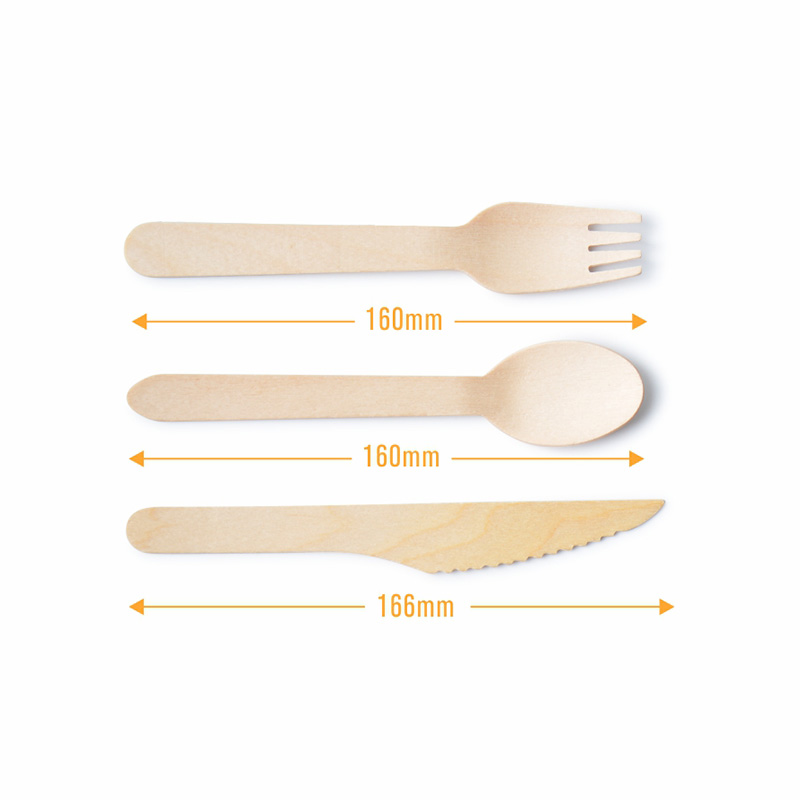 Disposable Biodegradable Birch Cutlery Set for High-Volume ServiceThis birch cutlery set suits caterers and food trucks needing sturdy, single-use utensils. Made by an experienced manufacturer with international certifications, it offers a practical alternative for large events and fast-paced kitchens.View Product →
Wooden Utensils in Catering and Food Service Operations
The conversation about wooden utensils extends beyond the reusable wooden spoon. In catering, events, food trucks, and high-volume quick-service kitchens, there is a separate question: what do you serve the food with when thousands of guests need cutlery that is clean, sturdy, and easy to handle?
This is where disposable wooden cutlery has gained strong traction. Birch is a particularly popular material because it offers a neutral flavor, a smooth texture that does not splinter during a meal, and a clean natural look that suits everything from street food to banquet service. Operators who want to avoid the aesthetic and environmental questions around plastic cutlery often switch to birch.
The advantages in commercial settings are clear. Wooden cutlery is strong enough for a full meal, including cutting soft proteins and vegetables. It does not bend like some lightweight plastic alternatives. It also photographs well on social media, which is no small thing for restaurants and caterers who want the food to look natural and thoughtfully sourced. And because birch comes from renewable plantations, it fits the sustainability narrative that many food brands are building around their operations.
For the professional chef, the choice is not either a reusable wooden spoon or disposable wooden cutlery. It is both. The same wood that performs so well on a simmering sauce also performs well as a finished disposable product for a food truck or a corporate event. That is why Changya, as a manufacturer of food-service and tableware products, keeps birch cutlery in several configurations.
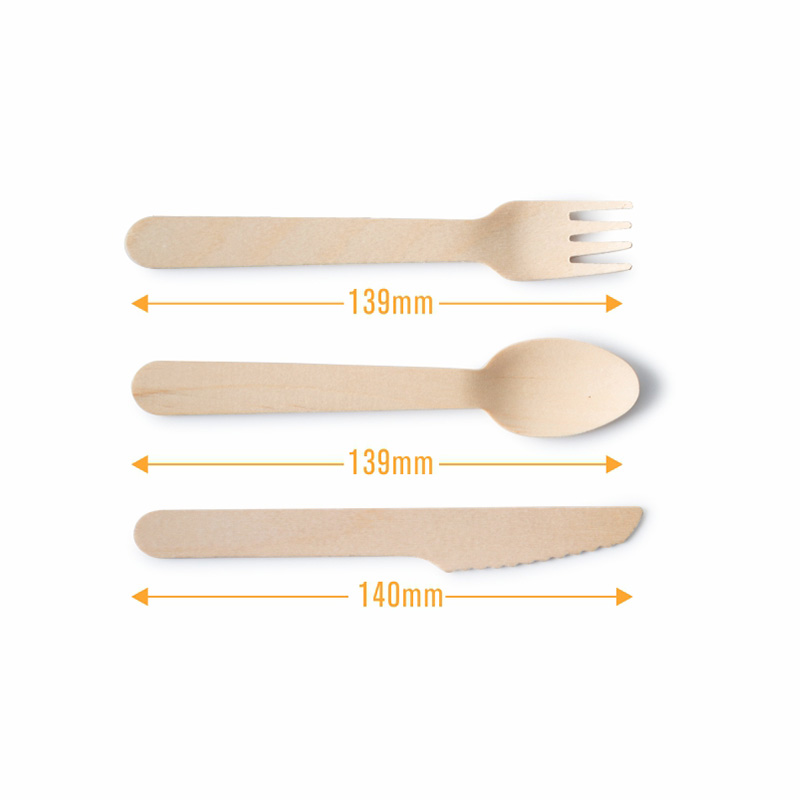 3-Piece Disposable Birch Cutlery Set for Professional KitchensPart of Changya's birch cutlery range, this three-piece set gives chefs a dependable disposable option for food trucks and corporate events. It pairs well with reusable wooden spoons while meeting high-volume service needs.View Product →
Another specific application is the coffee and bar counter. Wooden stirrers, also made from birch, are increasingly replacing plastic stir sticks in cafés, offices, and business lounges. They are clean, food-contact safe, and do not leave the stale taste that some plastic stirrers can transfer into a hot drink.
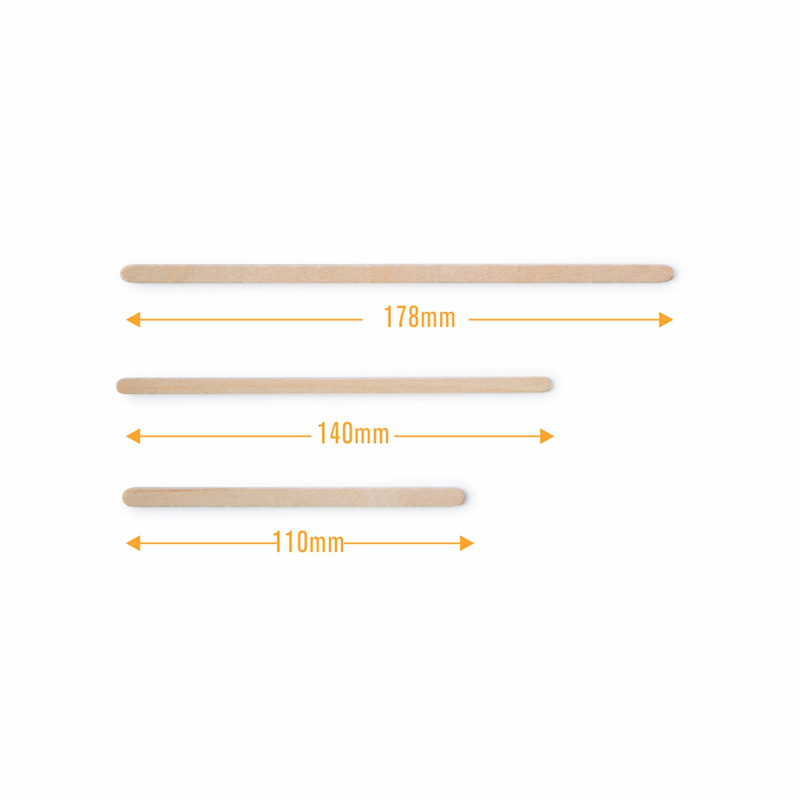 Disposable Birch Stirrer Set for Coffee and Bar CountersDesigned for cafés, offices, and lounges, these birch stirrers replace plastic sticks cleanly without affecting drink flavor. They are food-contact safe and suitable for high-turnover beverage service, making them a smart choice for operators.View Product →
For operators who want to understand how wooden products behave when stored in a pantry or supply room, the article how to store wooden tableware correctly gives practical guidance on humidity, temperature, and stacking. That article is written for both individual consumers and kitchen managers who keep inventory for events.
Caring for Wooden Utensils So They Last
A wooden utensil can serve a professional cook for decades, but only if it receives basic care. The routine is simple and the payoff is long.
- Wash wooden utensils by hand with warm water and mild dish soap. Do not leave them soaking in the sink.
- Rinse promptly and dry with a clean towel. Let the spoon finish air-drying on a rack positioned in a dry open space.
- Oil the wood once a month with food-grade mineral oil or a beeswax and mineral-oil blend. Apply a thin layer, let it absorb overnight, and buff the surface with a dry cloth in the morning.
- Store wooden utensils in a dry area, not in a drawer with damp or dirty items. A clean countertop holder with air circulation is ideal.
- Retire a wooden tool when it develops a deep crack, a splinter, or a rough surface that cannot be sanded smooth. Cracks can trap food.
- Never run wooden utensils through a dishwasher. The prolonged moisture and heat will cause warping and cracking.
For large-scale operations that use disposable wooden cutlery, the care routine is different. Disposable birch products are meant for one meal and then for composting or disposal. The key storage requirement is to keep them in a dry, temperature-consistent environment so the grain stays smooth and the surface remains clean.
Frequently Asked Questions
Are wooden utensils safe for daily cooking?
Yes. Wooden utensils are safe when washed, dried, and stored properly. The porous structure of wood does trap moisture, but once the wood dries, bacteria die off. The scientific evidence does not support the idea that wooden tools are a significant contamination risk in normal kitchen use.
Can wooden utensils go in the dishwasher?
No. Dishwasher cycles are too aggressive for wooden utensils. The heat and moisture cause wood to warp and crack. Professional chefs always hand-wash wooden tools and then dry them immediately.
What is the best wood for kitchen spoons?
Birch, beech, and maple are all excellent for everyday cooking. Birch offers a fine grain and neutral flavor. Beech is hard and stable. Maple is dense and attractive. Olive wood is premium but more expensive. The best choice for you depends on your budget and how much visual character you want in the tool.
Do wooden spoons take the flavor of the food?
Wood naturally has no taste of its own. Over many years of use, a well-cared-for wooden spoon develops a dark patina but does not transfer wood flavor into the food. The only situation where a wooden spoon might affect taste is if it was previously soaked in oil or strongly aromatic spices and then not cleaned properly.
How long can a wooden utensil last?
With regular oiling and hand-washing, a quality wooden spoon can last two decades or more in a professional kitchen. In a home kitchen, it can last a lifetime. The longevity is actually one of the main reasons chefs prefer wood over cheaper alternatives.
Is disposable wooden cutlery a real alternative to plastic?
Yes, in many food-service scenarios it is. Disposable birch cutlery is sturdy enough for a complete meal, does not leave a plastic aftertaste, and can be composted in the right facility. It is a practical fit for catering, food trucks, fast-casual dining, and corporate events where washing reusable utensils is not feasible.
A Practical Checklist for Choosing and Maintaining Wooden Utensils
The following board-ready checklist gives a quick reference for any chef, kitchen manager, or home cook who is selecting wood tools.
When Selecting
- Choose a hardwood such as birch, beech, or maple for daily use.
- Check for a smooth surface, no splinters, and no visible cracks near the handle.
- Look for a finish with food-grade mineral oil or beeswax, not showroom varnish.
- Make sure the handle is long enough for the deepest pot you use.
- Pick a weight that feels right in your hand for the stirring work you do most.
When Using
- Use wood for stirring, deglazing, gentle scraping, and sautéing with sauces.
- Avoid wood with raw meat handling unless your kitchen policy explicitly allows it.
- Do not leave wood submerged in hot oil for extended periods.
- Do not use wood for caramel or toffee cleanups that require heavy scraping.
When Maintaining
- Wash by hand with warm soapy water and dry immediately.
- Apply food-grade mineral oil once a month and buff after overnight absorption.
- Store in a dry, ventilated space away from direct heat or steam.
- Sand out rough areas with fine sandpaper and reapply oil when needed.
- Discard the tool when a crack or splinter appears that sanding cannot remove.
By following this simple framework, a wooden utensil earns its place on the line, lasts far longer than most modern alternatives, and brings a natural, quiet, and reliable performance to any kitchen. Professional chefs use wooden utensils because the material works. That is the only credential that matters, and wood has earned it a thousand times over.