 English
 中文简体
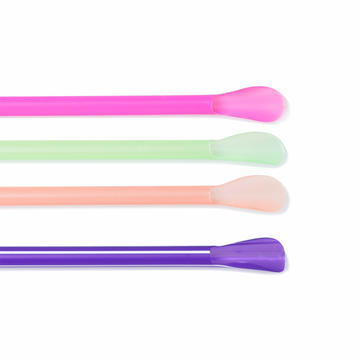
中文简体Plastic spoon straws have become widely used in the beverage and fast-moving consumer goods (FMCG) industries. The manufacturing process directly affects product quality, durability, and user experience. There are several forming processes for plastic spoon straws, including injection molding, extrusion, and blow molding. Each process has its own advantages in terms of production efficiency, cost control, and product performance.
Injection Molding Process
Injection molding is one of the most commonly used processes for producing plastic spoon straws. In this process, plastic pellets are heated and melted, then injected into a mold. After cooling, the product solidifies into the desired shape. Injection molding allows complex spoon-head designs and integrates the straw and spoon structure into a single piece, ensuring overall strength and durability. High precision and smooth surfaces are achieved, eliminating the need for additional finishing. Common materials include polypropylene (PP), polystyrene (PS), and polylactic acid (PLA), all of which meet food safety standards and have adequate heat resistance.
Mold design plays a crucial role in the injection molding process. The depth, curvature, and edge thickness of the spoon head must be carefully controlled to prevent breakage when stirring beverages or bending the straw. High-precision steel molds with cooling systems are used to accelerate the molding cycle and improve production efficiency. Key parameters such as injection temperature, pressure, and speed directly influence the plastic’s flow properties, surface finish, and internal stress distribution.
Extrusion Process
Extrusion is widely used for the production of the straw section of plastic spoon straws. In extrusion, melted plastic is forced through a die to form a continuous tube, which is then cooled and cut into the desired length. For spoon straws, the straw portion can be produced first, followed by additional processing to form the spoon head, or a combination of extrusion and injection molding can achieve integrated production.
Extrusion is suitable for high-volume production due to its high material efficiency and low production cost. By adjusting screw speed, temperature, and die dimensions, manufacturers can achieve straws of various diameters, wall thicknesses, and flexibility. Extrusion is ideal for long straws and allows customization in color, length, and rigidity.
Blow Molding Process
Blow molding is primarily used for hollow plastic structures. For plastic spoon straws, blow molding can produce spoon heads with larger diameters, creating lightweight structures with uniform strength. In this process, molten plastic is inflated within a mold cavity, causing it to conform to the mold walls and form a hollow structure. After cooling, the product is removed. Blow molding optimizes the internal structure, reducing material usage while maintaining mechanical strength.
Hybrid Processes and Innovative Technologies
Modern production often combines injection, extrusion, and blow molding processes. For example, the straw portion may be extruded while the spoon head is injection molded, followed by thermal welding or mechanical assembly. Advanced products use multi-cavity injection molding to achieve multi-color or multi-material integration, enhancing visual appeal and market competitiveness.
Additive manufacturing (3D printing) is increasingly used for prototyping and small-batch production. Rapid prototyping and structural optimization allow manufacturers to validate designs before mass production, reducing mold costs and production risks.
Impact of Forming Processes on Product Quality
The forming process directly influences the performance of plastic spoon straws. Injection molding ensures strong spoon-straw connections and smooth surfaces for a comfortable user experience. Extrusion guarantees uniform straw diameters for smooth drinking. Blow molding optimizes the spoon head for lightweight design and impact resistance, reducing material consumption. Hybrid and innovative processes combine aesthetics, functionality, and cost-effectiveness, meeting diverse market demands.
Careful selection and optimization of forming processes are essential for producing high-quality plastic spoon straws. Precision mold design, controlled temperature, and process management enhance product consistency and usability, providing reliable packaging solutions for the beverage and FMCG sectors.