 English
 中文简体
中文简体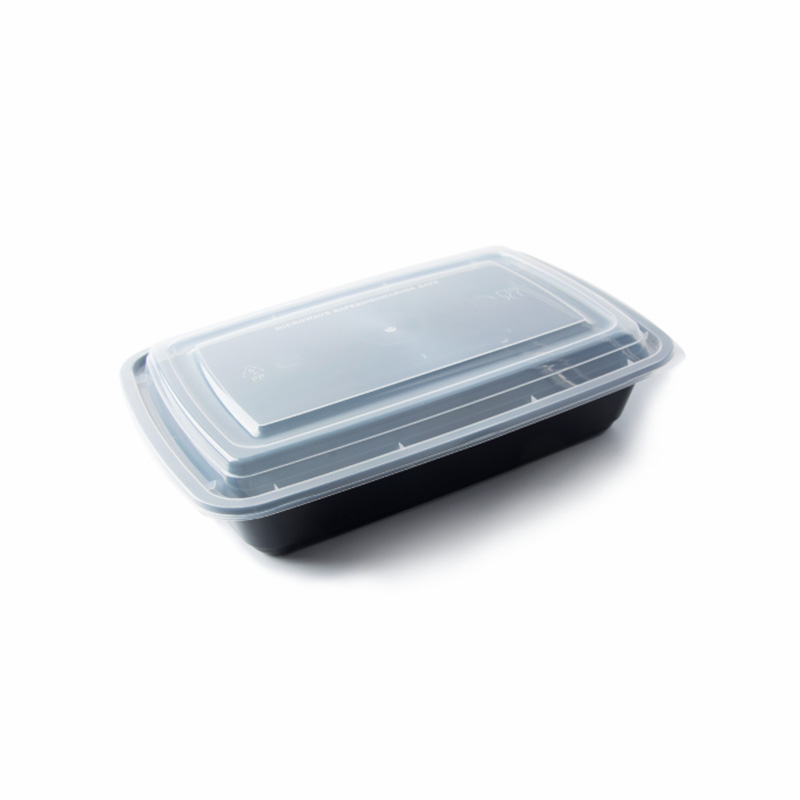
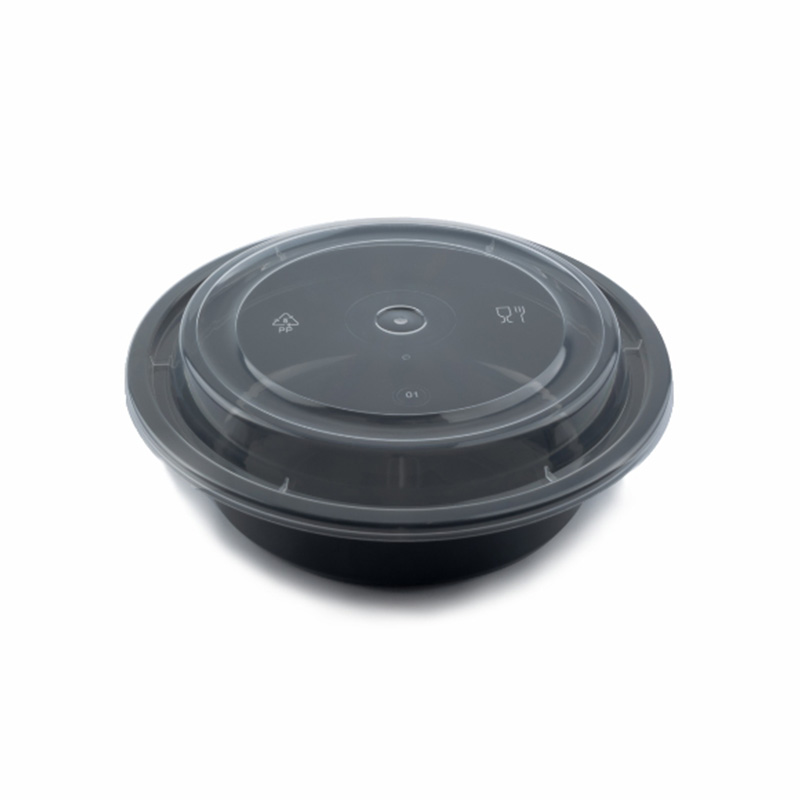
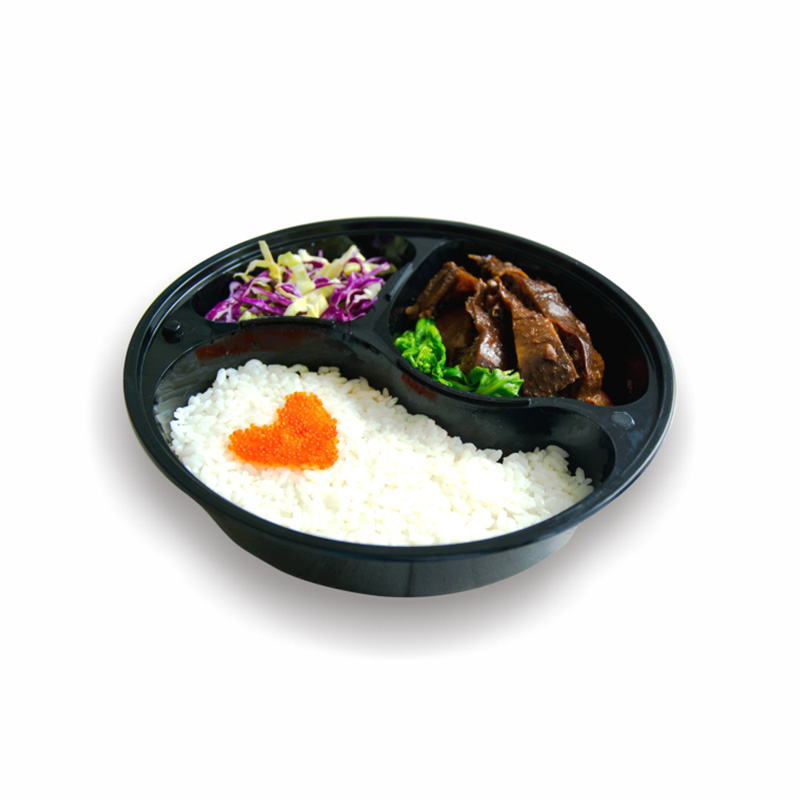
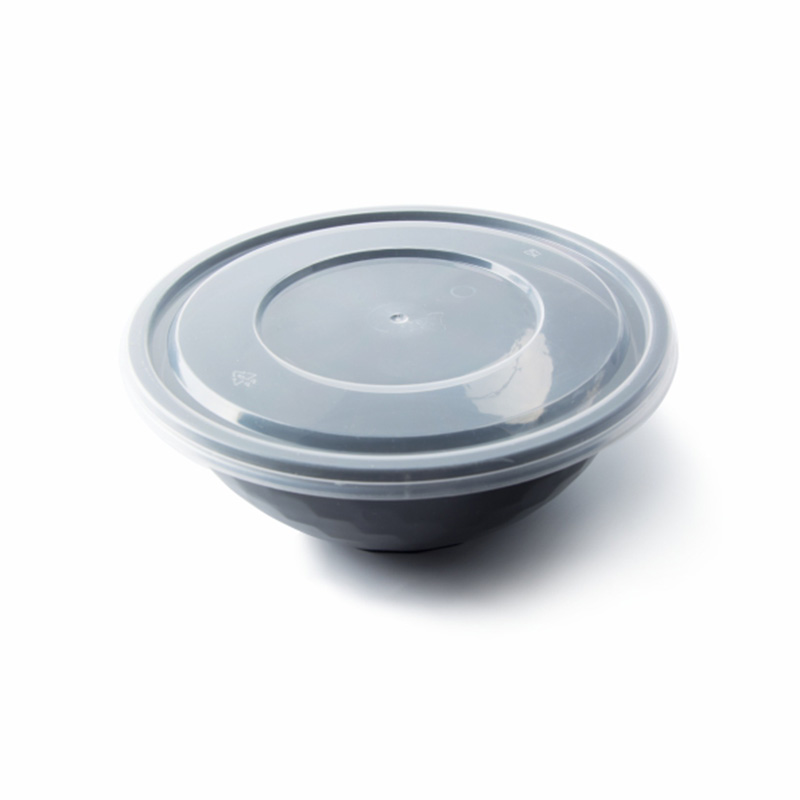
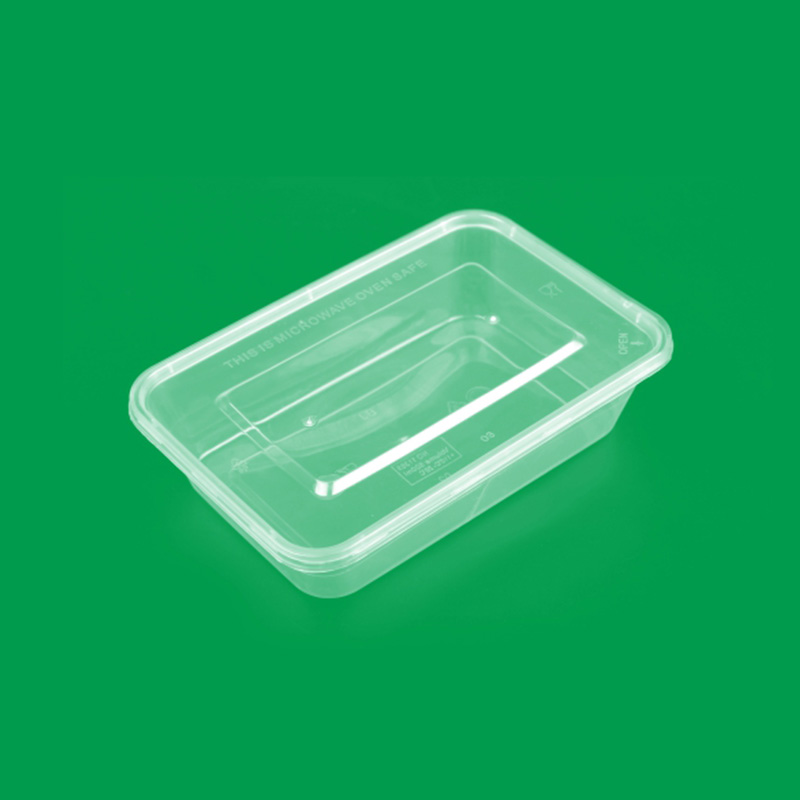
No Lids to Lose
The lid is permanently attached, so staff pick up one item and every container has its matching cover. Mismatched lids and lost lids disappear from the workflow.

Polypropylene clamshell boxes with a built-in hinge and snap closure. Fast to pack, easy to carry, ready for microwave reheating and available in one, two and three compartment layouts.
Explore more compostable and disposable food service products from the same manufacturing group.
Why a one-piece hinged lid speeds up service, how microwave safe polypropylene handles reheating, and which menus benefit from a clamshell format.
Microwave safe hinged food containers are one-piece clamshell boxes in which the lid is permanently attached to the base by a moulded hinge. The user opens the lid like a book, fills or eats from the base and closes the lid with a firm snap. They are made from polypropylene (PP), a material that stands up to hot foods, resists oil and tolerates microwave reheating, which makes the box suitable for takeaway meals that customers may warm at home or at work.
The hinge is the key difference. A separate lid and base need to be matched, stacked and handled as two parts; a hinged container is a single item. Staff pick up one piece, fill it, close it and bag it. There are no lost lids, no mismatched sizes and no time wasted on sorting. During a lunch rush, those saved seconds add up, which is why hinged containers are a fixture of quick-service restaurants, canteens and food courts.
Many designs include internal compartments that keep wet and dry food apart: rice from curry, noodles from sauce, fries from burger. A good compartment layout is not only tidier but also improves the eating experience, preventing sogginess and flavours mixing. Vent slots or a small steam vent let steam out during heating, so the lid does not bulge and the food does not turn into a wet mass.
Start with the dish. Rice-and-curry meals need compartments and a deep base; burgers and wraps prefer a shallow, square box; noodles require a large single cavity and a vent; sandwiches and pastries need a flat clamshell with a generous lid. The more precisely the container fits the food, the better it holds together and the better the dish looks when opened.
Next, consider material and wall thickness. A standard thin-wall hinged box is economical and light, while a heavier gauge gives more rigidity and heat tolerance for reusable or reheat-intensive use. Both can be microwave-safe, but heavier gauges are more forgiving when heated repeatedly, and they hold shape better with heavier meals.
Think about transport. Hinged boxes stack flat when closed, and bags can be loaded quickly. A tamper-evident tab can be added for delivery, and a small label area on the lid helps kitchens mark orders. For wet foods, check that the snap closure is strong and, if needed, apply a band or sticker.
Finally, align recycling and claims. PP is recyclable where resin code 5 is collected, although local acceptance of lidded and food-soiled containers varies. If your customers are environmentally aware, a clear message about reuse and recycling, and perhaps a rinse-and-reuse suggestion, helps to extend the life of each container.
Training matters as much as design. In a busy kitchen, new staff quickly learn that a hinged box must be filled to the line, wiped at the rim and closed with a firm press until the tab clicks. A short laminated guide at the packing station, with a photograph of a correctly packed box, reduces mistakes and keeps presentation consistent between shifts and between branches.
Typical hinged container configurations are listed below. Capacity, compartment layout, wall gauge and venting can be customised.
| Material | Food-grade polypropylene (PP), resin code 5 |
|---|---|
| Format | One-piece hinged clamshell with living hinge |
| Capacity | 450, 650, 850, 1000, 1200 and 1500 ml standard options |
| Compartments | 1, 2 and 3 compartment layouts |
| Closure | Snap-lock tab; optional tamper-evident strip |
| Venting | Optional steam vent holes or slots in the lid |
| Temperature Range | Microwave-safe; freezer-safe to about –20 °C |
| Color | Natural, white or black base; clear or coloured lid |
| Packing | Nested stacks in polybags, packed into master cartons |
| Lead Time | Usually 20 – 35 days for stock; longer for custom moulds |




Built to speed up the line and stay shut on the way home — one box, one motion, one clear job.
The lid is permanently attached, so staff pick up one item and every container has its matching cover. Mismatched lids and lost lids disappear from the workflow.
Polypropylene tolerates reheating in a microwave and keeps its shape with hot, oily food. Customers can warm meals at home or in an office without transferring them.
Rice, curry, fries and sauces stay in their own spaces, preserving texture and flavour. Layouts can be selected to match your most popular dishes.
The living hinge is designed to open and close many times, and the snap tab is positioned for secure carrying and easy one-hand opening.
A built-in vent lets steam escape during microwave heating, while keeping liquid inside during transport. Venting is optional by menu.
Closed containers stack in bags and in storage. Nested bases take little room in a stockroom, which is valuable in small kitchens.
We work with distributors, hospitality groups and retail brands across multiple markets and regions.
















Eight strengths that shape how we develop, manufacture and deliver hinged PP food containers and takeaway packaging at scale.
A recognised voice in the sector, participating in the development of industry standards and supported by growing demand for degradable materials at home and abroad.
R&D, production, manufacturing, sales and service are integrated under one organisation, creating an efficient and sustainable operating ecosystem.
Continuous investment in new technology and production, with targeted material development supported by academic expertise in polymer and materials science.
A broad product line paired with strong design and high customisation capability, so different industries can receive products built for their specific needs.
Intelligent production workshops and automated mechanical equipment keep output consistent and lead times predictable, even at high volume.
A global outlook with service to customers worldwide. Group headquarters in Ningbo, China, and a production base in Vietnam.
More than a decade of focus on quality, with international awards and manufacturing carried out strictly to the highest industry standards.
A diversified core management team drawn from benchmark companies in different industries, forming a distinctive corporate DNA.
A recognised position in the industry with participation in the formulation of industry standards, alongside domestic and global support for the environmentally friendly degradable sector.
R&D, production, manufacturing, sales and service are integrated to create an efficient and sustainable enterprise operation ecology.
Vigorous investment in the development and production of new technologies, with targeted technology development supported by professors from the Institute of Materials of the Chinese Academy of Sciences.
An extensive product line with excellent product design and high customisation capability, producing tailored products for the different needs of various industries.
Intelligent production workshops and automated mechanical production equipment create an industry-efficient enterprise.
Positioning global and serving the world, with the group headquarters in Ningbo, China, and a base in Vietnam.
Thirteen years focused on quality, with numerous international awards and manufacturing carried out strictly in accordance with the highest industry standards.
A diversified core management team with professionals from benchmark companies in different industries and management teams in diversified fields, forming a unique corporate DNA.
Polypropylene is chosen for microwaveable packaging because of its heat stability, and it carries resin code 5 for recycling guidance.
Heat, oil and repeated hinge movement all place demands on a container. Compliance documents confirm the material, and production tests confirm the hinge, the latch and the microwave behaviour.
US food-contact regulations covering polypropylene resins and additives used in articles that touch food.
European plastic food-contact regulation, including migration limits at heated conditions.
Containers filled with oil and water and heated in a microwave to check for warping, discolouration and leaks.
Repeated open-and-close cycles to confirm that the living hinge does not crack in normal use.
Polypropylene is inherently free of bisphenol A; a declaration can be provided on request.
Selected certifications and awards that support our compostable and food-contact product range.






How a one-piece hinged PP container compares with two-piece PP containers and foam clamshells.
Foam clamshells are cheap and insulating, but they are not suited to microwaves and are restricted in many places. Separate-lid PP containers are flexible and good for liquids, but they require two parts and extra handling.
A hinged PP container is quick to use, microwave safe and strong enough for hot meals. It is ideal for dry and semi-wet dishes, especially in high-volume service, where speed counts. For very liquid foods, a separate-lid container may seal better.
The table opposite compares packing speed, microwave safety, seal strength, compartments and regulatory outlook for the three formats.
It is also worth thinking about how customers use the box. A hinged lid that opens fully and stays open lets people eat directly from the base, while a lid that keeps flopping shut is irritating. Good hinge geometry lets the lid rest back at a stable angle, a small detail that customers notice without being able to explain.
| Attribute | Hinged PP | Separate Lid PP | Foam Clamshell |
|---|---|---|---|
| Packing speed | Fastest | Moderate | Fast |
| Microwave use | Yes | Yes | No |
| Liquid sealing | Good | Excellent | Poor |
| Compartment layouts | Wide choice | Wide choice | Wide choice |
| Lost-lid risk | None | Possible | None |
| Insulation | Moderate | Moderate | High |
| Unit price | Low to mid | Mid | Lowest |
| Regulatory outlook | Stable | Stable | Restricted |
Places where speed, portability and reheating are all part of the service.


Changya New Material Technology Co., Ltd. was founded in 2013, and the group is headquartered in Ningbo, China. It is a limited liability company integrating R&D, production, and sales. As China Microwave Safe Hinged Food Containers Manufacturers and Wholesale Microwave Safe Hinged Food Containers Factory,, the company mainly produces paper, PLA & plastic disposable tableware, such as straws, cutlery, microwaveable box, hinged box, cup, carry-out bags, plates, dining kits, etc.
Changya New Material Technology Co., Ltd. has developed rapidly since its establishment, with constant growth each year, and has now become an enterprise in the field of high-quality disposable food and kitchen supplies in China.
Two manufacturing bases with automated production lines and strict quality control at every stage, from raw material to finished carton.

















Choose capacity, compartments and venting to suit your dishes, then add the labels or branding that complete the pack.
One large cavity, two compartments or three compartments, with different ratios to suit rice, sides and sauces.
From 450 ml shallow boxes to 1,500 ml deep boxes, with custom depth available for larger programmes.
Add steam vent holes or slots, or keep the lid closed for liquid foods. Venting can be tested with your menu.
Natural, white or black bases with clear or coloured lids. Colour-coded lids can help sort menu items or allergens.
Branded labels, tamper-evident bands and printed sleeves can be added to carry your logo and reheating instructions.
A logo embossed into the lid through the mould for larger orders, adding branding without ink.
A six-dimension comparison of hinged PP, separate-lid PP and foam clamshell containers. Scores are relative to the best performer in each dimension (5=best).
Fastest to pack, microwave safe and stable in service, with good but not best sealing for liquids.
Best liquid sealing and flexibility, with extra handling and risk of lost lids.
Lowest cost and best insulation, but not microwave safe and widely restricted.
How hinged PP containers compare with alternatives on material weight and carbon footprint.
Approximate weight of each container type. Lower weight reduces material use and transport impact. Values are indicative.
Indicative cradle-to-gate CO₂ equivalent per kilogram of material. Lower is better.
From plant sugar to a wrapped straw on a café counter — five stages that define the quality of the finished product.
Plant sugars from corn starch or sugarcane are fermented by bacteria to produce lactic acid, the building block of the polymer.
Lactic acid molecules are linked into long chains to form PLA resin, which is then pelletised for easy handling and transport.
The resin is melted and pushed through precision dies to form straw tubes with a consistent wall thickness and smooth surface finish.
Tubes are cut to length, the ends are finished to remove burrs, and samples are checked for straightness, diameter and appearance.
Each straw is sealed into its own paper wrapper — plain or printed — then counted into inner boxes and master cartons.

From resin to recycling — the full journey of a microwave safe hinged food container.
PP granules are produced to food-grade standards and supplied for thermoforming or injection moulding.
Containers are formed with the hinge, compartments and latch, then trimmed and inspected.
Staff fill the container, close the lid with a click and pack it into delivery bags.
The customer reheats the meal in a microwave with the vent open and eats from the base.
The rinsed container is placed in the PP stream where resin code 5 is collected, or reused for storage.
With two manufacturing bases and established export partnerships, our hinged containers reach customers across five main regions.
Hinged containers are bulky when nested but easy to store if cartons are handled properly. Keep them in a dry, clean room, away from direct heat that could warp the hinge region.
Avoid compressing cartons in a way that bends the hinge or deforms the latch tab. Cartons should be stored flat and stacked to the height recommended on the label.
At the line, keep open stacks covered to keep dust out of the base. Place a stack at each packing station so staff do not have to reach, and unnest only the number of units needed.
Remind customers to open the vent or loosen the lid before microwaving, stir halfway and let the box rest briefly before handling. These simple steps protect the container and reduce the risk of burns.
Tell us the diameter, length, color and wrapping you need. Our team will reply within 24 hours with pricing, packing details and delivery time.
PLA straws have significant advantages in raw material selection, which stems from their u...
The biodegradability of PLA straws is one of its significant advantages in the field of en...
Disposable PP Cutlery is an upstart in the catering industry, and its lightweight design h...
Copyright © Changya New Material Technology Co., Ltd.All Rights Reserved.
Wholesale Microwave Safe Hinged Food Containers Manufacturers
