 English
 中文简体
中文简体
Thick, Rigid Walls
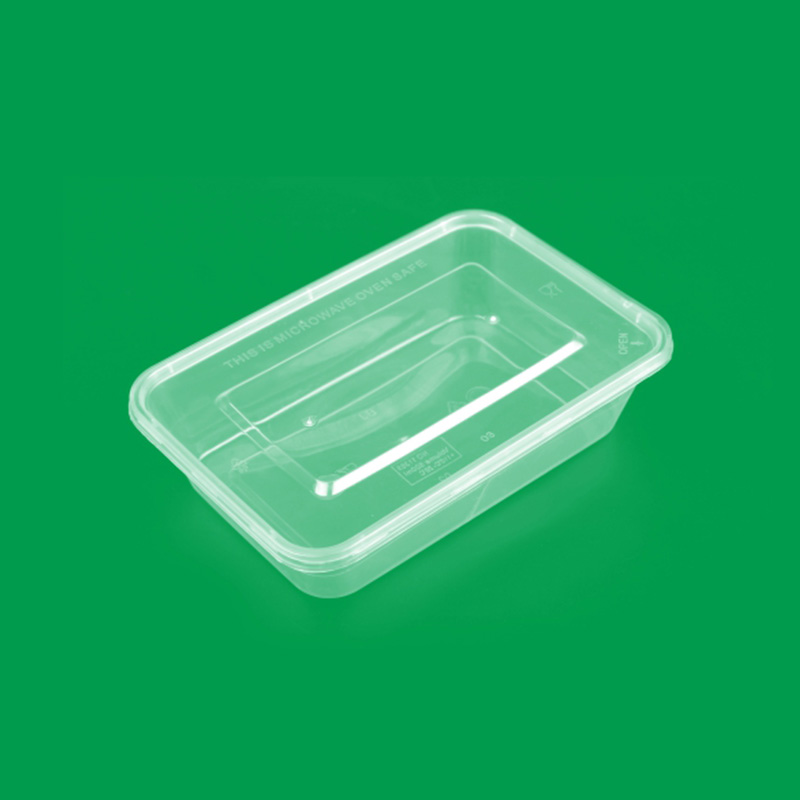
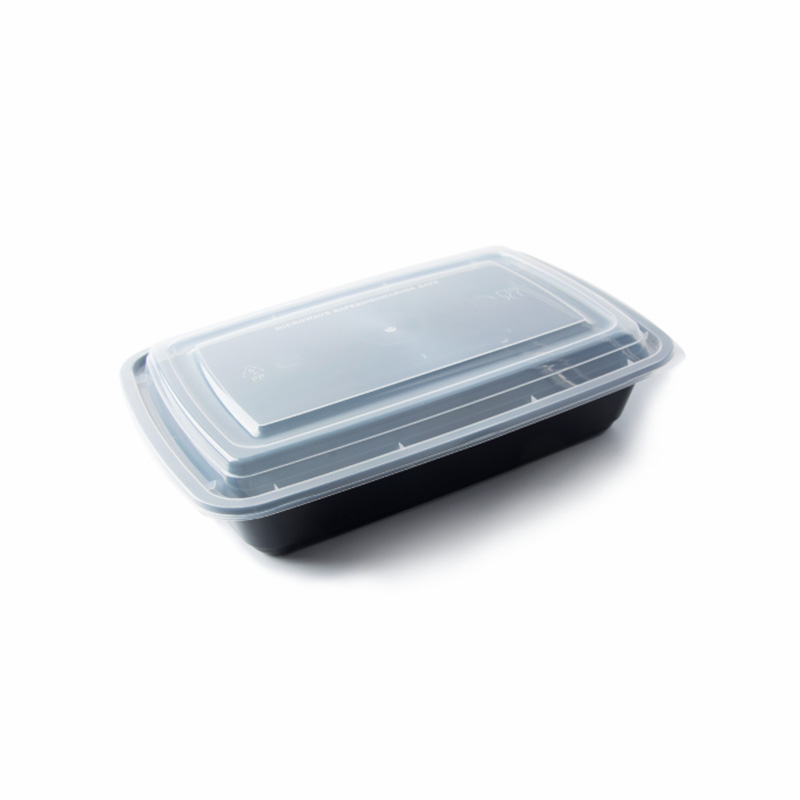
Heavier gauge polypropylene resists dents when stacked and cracks when dropped. The container keeps its shape when filled with dense meals, stews and wet foods.

Thick-walled polypropylene containers with snap-on lids, built to go from freezer to microwave to table. Leak-resistant, stackable and strong enough for repeated use and recycling.
Explore more compostable and disposable food service products from the same manufacturing group.
Why polypropylene is the standard material for microwaveable food packaging, what 'heavy duty' means in practice, and how a thicker container supports reuse and recycling.
Microwave safe heavy duty PP containers are food storage and takeaway containers moulded from polypropylene (PP), a durable thermoplastic with a high melting point and excellent resistance to heat, oil and impact. 'Heavy duty' refers to the wall thickness and rim design: these containers are noticeably thicker and stiffer than standard thin-wall takeaway boxes. They are built to be filled, sealed, carried, stored, reheated and, in many kitchens, washed and used again.
Polypropylene is the preferred material for this job because of how it behaves with heat. PP stays stable at temperatures that would soften PET or distort polystyrene. It can usually be reheated in a microwave without warping, and it can go from freezer to microwave in a single step. It is also naturally resistant to oil, which means curry and tomato sauce will not soak into the wall, and it has a smooth surface that is easy to clean.
Where other products in a packaging range are designed to disappear into compost, this one is designed to last. A heavy duty PP container may be used once for a delivery meal, or ten or twenty times for meal prep and batch cooking. Its value comes from durability, microwave safety and recyclability — it carries the resin identification code 5, and in regions with PP collection it can be processed into new products at the end of its working life.
Manufacturing is based on injection moulding. PP granules are melted and injected into a steel mould, cooled and ejected. A thicker wall requires a longer cooling time and tighter control of flow, which explains why heavy duty containers cost more than thin-wall alternatives. The reward is a rigid, consistent product with smooth surfaces and tight dimensional control, which is essential for a good lid fit.
Quality control focuses on the details that matter in daily use. Technicians check rim flatness, lid snap force, drop performance and heat resistance. Samples are filled with hot water or oil, sealed, inverted and left for a period to test leak resistance. A container that passes those checks is likely to survive repeated use in a commercial kitchen and in a customer's refrigerator.
Responsible use is part of the value. Customers should avoid overheating, heating oil-rich food without a vent and using containers with visible damage. Containers that are scratched, warped or stained badly should be recycled rather than reused. Suppliers can also provide guidance on dishwasher and freezer use, so that the product is used within its design limits.
For businesses, the main argument is total cost of use. A heavy duty container used several times may cost less per meal than a single-use alternative, and it supports a reuse programme. At the end of its life, it is a mono-material product, which is easier to recycle than multi-layer packaging. That is a practical sustainability story, even though it differs from the composting narrative of plant-based items.
One last practical point concerns food-safety handling. In commercial kitchens, containers that are reused should follow a defined wash and inspection routine, with labelling, date coding and a clear rule for retiring units. For one-way delivery programmes, a tamper-evident band around the lid adds consumer confidence. Whichever path you choose, a short written guideline for staff and customers, covering reheating, washing and recycling, makes the container safer and extends its working life.
Typical container formats are listed below. Shape, size, wall thickness, lid style and colour can all be customised.
| Material | Virgin food-grade polypropylene (PP), resin identification code 5 |
|---|---|
| Capacity | 350, 500, 750, 1000, 1250 and 1500 ml standard options |
| Shape | Round tubs, rectangular boxes and square containers |
| Wall Thickness | Heavy duty gauge, typically 0.6 – 0.9 mm depending on size |
| Temperature Range | Freezer-safe to about –20 °C; microwave-safe up to about 120 °C |
| Lid Type | Snap-on PP lid, sealed or vented, with optional leak-proof gasket |
| Color | Translucent natural, clear, white or black base |
| Reuse | Designed for multiple uses; washable by hand or dishwasher |
| Packing | Nested stacks in inner polybags, packed into master cartons |
| Lead Time | Usually 20 – 35 days for stock items; longer for custom moulds |




Made for the kitchens that need a container to keep working through freezing, reheating, stacking and repeated use.
Heavier gauge polypropylene resists dents when stacked and cracks when dropped. The container keeps its shape when filled with dense meals, stews and wet foods.
PP stays stable from freezer temperatures to microwave reheating, so a meal prepared in advance can be frozen, heated and eaten from the same container without transfer.
The non-porous surface does not soak up curry, tomato or oil, and it wipes or washes clean. Stains are reduced and odour carry-over between meals is limited.
Lids are designed together with the container rim, with a firm snap and optional gasket for liquids. Vented lids are available for steam release during reheating.
Uniform walls and a reinforced rim allow nested stacking in transport and upright stacking in refrigerators, which saves space and prevents crushing.
A container that can be used several times reduces single-use waste. At the end of its life, the mono-material PP can be recycled where facilities accept resin code 5.
We work with distributors, hospitality groups and retail brands across multiple markets and regions.
















Eight strengths that shape how we develop, manufacture and deliver heavy duty PP food packaging and sustainable foodservice solutions at scale.
A recognised voice in the sector, participating in the development of industry standards and supported by growing demand for degradable materials at home and abroad.
R&D, production, manufacturing, sales and service are integrated under one organisation, creating an efficient and sustainable operating ecosystem.
Continuous investment in new technology and production, with targeted material development supported by academic expertise in polymer and materials science.
A broad product line paired with strong design and high customisation capability, so different industries can receive products built for their specific needs.
Intelligent production workshops and automated mechanical equipment keep output consistent and lead times predictable, even at high volume.
A global outlook with service to customers worldwide. Group headquarters in Ningbo, China, and a production base in Vietnam.
More than a decade of focus on quality, with international awards and manufacturing carried out strictly to the highest industry standards.
A diversified core management team drawn from benchmark companies in different industries, forming a distinctive corporate DNA.
A recognised position in the industry with participation in the formulation of industry standards, alongside domestic and global support for the environmentally friendly degradable sector.
R&D, production, manufacturing, sales and service are integrated to create an efficient and sustainable enterprise operation ecology.
Vigorous investment in the development and production of new technologies, with targeted technology development supported by professors from the Institute of Materials of the Chinese Academy of Sciences.
An extensive product line with excellent product design and high customisation capability, producing tailored products for the different needs of various industries.
Intelligent production workshops and automated mechanical production equipment create an industry-efficient enterprise.
Positioning global and serving the world, with the group headquarters in Ningbo, China, and a base in Vietnam.
Thirteen years focused on quality, with numerous international awards and manufacturing carried out strictly in accordance with the highest industry standards.
A diversified core management team with professionals from benchmark companies in different industries and management teams in diversified fields, forming a unique corporate DNA.
Polypropylene carries resin code 5. It is accepted in a growing number of municipal collection schemes and is valued by recyclers as a clean mono-material.
Heavy duty PP containers must prove two things: that they are safe for food and heat, and that they perform in the field. Both are covered by material documentation and by routine production checks.
US food-contact regulations covering polypropylene resins and additives used in articles that touch food.
European plastic food-contact regulation, including overall and specific migration limits.
German food and feed code, often requested for tableware and food packaging sold into Germany and Switzerland.
Polypropylene is inherently free of bisphenol A, and a formal declaration can be supplied on request.
Microwave simulation, freezer cycling, drop test and inverted leak test on samples from each production lot.
Selected certifications and awards that support our compostable and food-contact product range.






How a thick-walled polypropylene container compares with thin-wall PET and foam in a hot-and-cold food service.
Thin-wall PET containers are clear and cheap, but they cannot go into a microwave and tend to crack when frozen. Foam is cheap and insulating but unsuitable for microwave use and is increasingly restricted. Neither is designed for repeat use.
Heavy duty PP is the sturdier option. It tolerates a freezer, a microwave and a dishwasher, and the wall is thick enough to survive being filled, moved and stacked many times. For operators and consumers who want one container to do several jobs, it is a practical choice.
The table on the right sets out heat range, reuse, stackability, recyclability and cost, and helps compare the real cost of a container over its lifetime rather than its price per piece.
| Attribute | Heavy Duty PP | Thin PET | Foam |
|---|---|---|---|
| Raw material | Polypropylene (PP #5) | PET (resin code 1) | Expanded polystyrene |
| Microwave safe | Yes, to about 120 °C | Generally no | No |
| Freezer safe | Excellent | Brittle when frozen | Poor |
| Reuse cycles | Many | Few | Single use |
| Recyclability | Yes, where PP accepted | Yes, widely accepted | Rarely accepted |
| Stackability | Excellent | Good | Bulky |
| Unit price | Mid | Low | Lowest |
| Regulatory outlook | Stable | Stable | Restricted |
Any place where a food container needs to withstand heat, cold and repeated handling without cracking or leaking.


Changya New Material Technology Co., Ltd. was founded in 2013, and the group is headquartered in Ningbo, China. It is a limited liability company integrating R&D, production, and sales. As China Microwave Safe Heavy Duty PP Containers Manufacturers and Wholesale Microwave Safe Heavy Duty PP Containers Factory,, the company mainly produces paper, PLA & plastic disposable tableware, such as straws, cutlery, microwaveable box, hinged box, cup, carry-out bags, plates, dining kits, etc.
Changya New Material Technology Co., Ltd. has developed rapidly since its establishment, with constant growth each year, and has now become an enterprise in the field of high-quality disposable food and kitchen supplies in China.
Two manufacturing bases with automated production lines and strict quality control at every stage, from raw material to finished carton.

















Tune the container to your menu and your reuse programme, from wall thickness to the lid that closes it.
Choose round, square or rectangular formats from 350 ml to 1,500 ml. Custom shapes can be developed for larger programmes.
Select a standard heavy duty or an extra heavy duty gauge for reusable programmes, according to the number of expected cycles.
Sealed snap-on lids, vented lids for reheating, or gasketed lids for liquids. Lid fit is verified together with the base.
Translucent natural, clear, white and black bases are available. Colour-coded lids can help kitchens identify menu items or allergens.
Branded sleeves, shrink bands and label areas let you carry your logo, nutrition panel and reheating instructions.
For larger orders, in-mould labels or embossed logos can be integrated into the container for a durable branded look.
A six-dimension comparison of heavy duty PP, thin-wall PET and foam containers. Scores are relative to the best performer in each dimension (5=best).
Best durability, reuse and heat resistance, with good leak resistance and recyclability. Unit cost is higher than thin-wall alternatives.
Clear and widely recycled, with low cost, but limited heat resistance and little suitability for reuse.
Lowest cost and good insulation, but poor durability and recyclability, and widely restricted.
How a reusable heavy duty PP container compares with thin-wall alternatives on reuse and carbon footprint per use.
Approximate number of uses before replacement under normal care. Values are indicative and depend on handling, heating and washing.
Indicative cradle-to-gate CO₂ equivalent per kilogram of material, spread across typical use cycles. Lower is better.
From plant sugar to a wrapped straw on a café counter — five stages that define the quality of the finished product.
Plant sugars from corn starch or sugarcane are fermented by bacteria to produce lactic acid, the building block of the polymer.
Lactic acid molecules are linked into long chains to form PLA resin, which is then pelletised for easy handling and transport.
The resin is melted and pushed through precision dies to form straw tubes with a consistent wall thickness and smooth surface finish.
Tubes are cut to length, the ends are finished to remove burrs, and samples are checked for straightness, diameter and appearance.
Each straw is sealed into its own paper wrapper — plain or printed — then counted into inner boxes and master cartons.

From resin to recycling — the full journey of a microwave safe heavy duty PP container.
Polypropylene resin is produced and supplied as food-grade granules, with additives limited to those approved for food contact.
Granules are melted and injection moulded into thick-walled containers and lids, then cooled and trimmed.
Meals are packed, chilled or frozen, reheated in a microwave and eaten, with the container reusable for further cycles.
Containers are washed by hand or in a dishwasher and reused until scratches, warping or stains suggest replacement.
At end of life, the mono-material PP is collected and recycled where resin code 5 is accepted.
With two manufacturing bases and long-standing export partnerships, our heavy duty PP containers reach customers across five main regions.
PP containers are among the easiest packaging items to store. They are moisture-proof and dimensionally stable, and they nest neatly for transport. Even so, a few habits protect quality and extend the working life of each unit.
Store cartons in a dry, ventilated area away from direct sun and heat sources. Long exposure to UV light and high temperature can cause slight yellowing and make the material less flexible over time. Avoid stacking heavy loads on lowest cartons.
When reheating, remove or vent the lid, avoid heating dry or very oily food at high power for long periods, and stir halfway through. Do not use containers with visible cracks, deep scratches or warping. These simple rules keep the container safe and extend its life.
For reusable programmes, wash with warm water and mild detergent, dry fully and store the lids separately to avoid trapped moisture. When a container reaches the end of its useful life, place it in the PP recycling stream if accepted locally.
Tell us the diameter, length, color and wrapping you need. Our team will reply within 24 hours with pricing, packing details and delivery time.
PLA straws have significant advantages in raw material selection, which stems from their u...
The biodegradability of PLA straws is one of its significant advantages in the field of en...
Disposable PP Cutlery is an upstart in the catering industry, and its lightweight design h...
Copyright © Changya New Material Technology Co., Ltd.All Rights Reserved.
Wholesale Microwave Safe Heavy Duty PP Containers Manufacturers
